Custom LSR Overmolded Sensor Seals for Harsh Environments
Sensors are used in automotive electronics, wearable devices, medical equipment, industrial control systems, beauty devices, smart appliances, and compact 3C products. These components often work in demanding environments where moisture, dust, vibration, temperature change, sweat, oil, cleaning agents, and assembly stress can affect long-term reliability.
A sensor may fail not because the electronic function is wrong, but because the sealing structure around it is not stable enough.
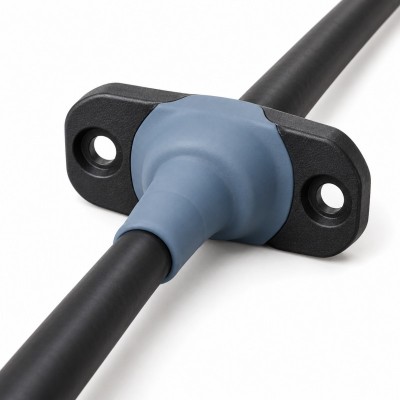
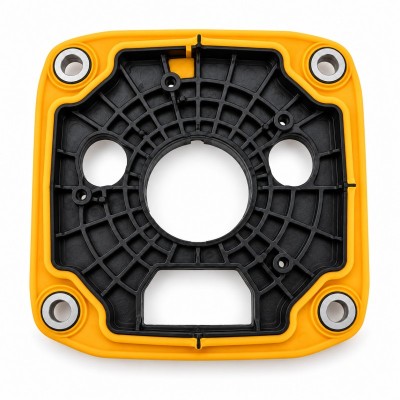
Custom LSR overmolded sensor seals are designed to protect sensitive sensor areas while supporting waterproof sealing, dust protection, vibration resistance, insulation, soft contact, and stable assembly. By molding liquid silicone rubber directly onto plastic, metal, FPC, cable, or sensor housing structures, engineers can create integrated sealing components that are more stable than separate gaskets, manual glue, or loose rubber covers.
For OEM/ODM sensor projects, the key is not only whether the silicone can cover the sensor. The real question is whether the overmolded structure can maintain sealing and protection during real use.
Answer Excerpt
Custom LSR overmolded sensor seals are silicone sealing structures molded onto plastic, metal, FPC, cable, or sensor housing components. They help protect sensors from moisture, dust, vibration, temperature change, oil, sweat, cleaning agents, and assembly stress. A reliable sensor seal depends on material selection, sealing path design, bonding area, compression control, insert positioning, mold precision, and validation testing.
What Is a Custom LSR Overmolded Sensor Seal?
A custom LSR overmolded sensor seal is a silicone sealing or protection structure formed by molding liquid silicone rubber around selected areas of a sensor component.
The substrate may be a plastic sensor housing, metal insert, FPC circuit, cable outlet, connector interface, sensor window, or electronic module. After molding and curing, the silicone becomes part of the integrated sensor assembly.
Unlike a separate rubber gasket that is installed later, an overmolded sensor seal can be positioned directly on the functional area. This helps reduce assembly movement, sealing gaps, tolerance variation, and manual installation risk.
LSR overmolded sensor seals are commonly used when the sensor must work in compact, wet, dusty, vibrating, or temperature-changing environments.
Why Sensor Sealing Is More Difficult Than a Simple Gasket
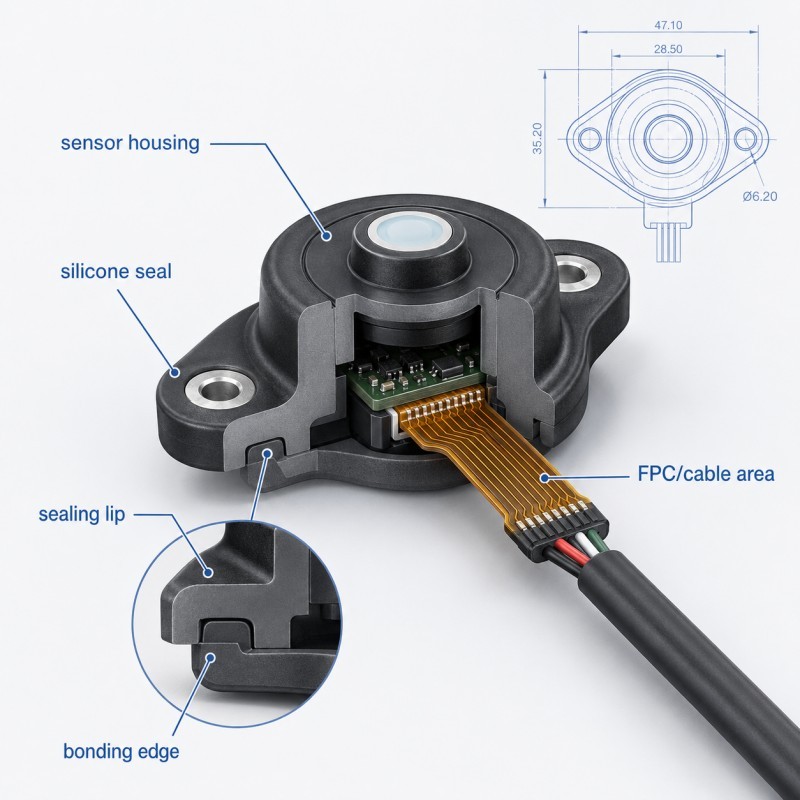
Sensor sealing is often more complex than a standard flat gasket because the sensor area may include multiple materials and functional zones.
A sensor assembly may contain plastic housing, metal terminals, FPC, cables, solder joints, connector interfaces, optical windows, pressure ports, or contact surfaces. Each area may have different sealing, bonding, insulation, and assembly requirements.
A simple gasket may shift during assembly. Manual glue may overflow or create uneven coverage. A loose silicone cover may not maintain stable compression over time.
For compact sensor components, even a small leakage path can affect electrical performance, signal stability, or product life. This is why sensor sealing should be reviewed as an integrated structure, not as an add-on accessory.
Key Benefits of LSR Overmolded Sensor Seals
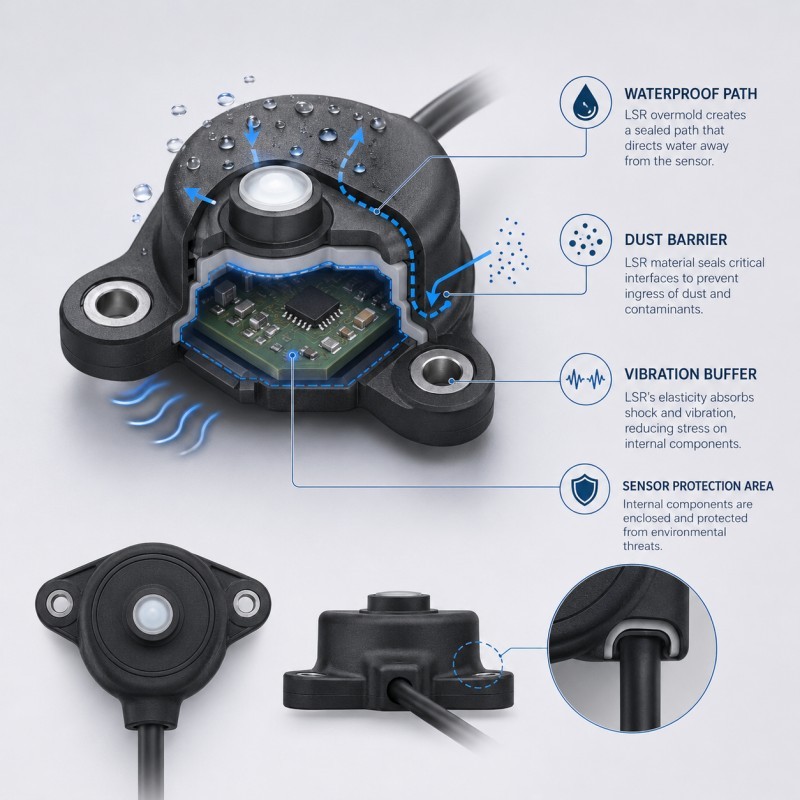
LSR overmolded sensor seals can improve waterproof and dustproof performance by forming silicone directly around the required sealing path.
They can improve vibration resistance because silicone can absorb movement and reduce stress transfer to the sensor housing, cable outlet, or FPC area.
They can improve electrical insulation by covering selected conductive or sensitive areas with a stable silicone layer.
They can reduce assembly risk because the silicone sealing structure is molded in place instead of being manually installed as a separate part.
They can also improve production consistency because the sealing geometry, thickness, edge position, and surface finish are controlled by the mold.
For mass production sensor projects, this consistency is often more valuable than the first sample appearance.
Material Selection for Sensor Sealing Parts
Material selection affects sealing performance, bonding strength, softness, insulation, temperature resistance, aging resistance, and chemical compatibility.
For automotive sensors, the silicone may need to resist heat, vibration, dust, moisture, oil, and long-term installation stress.
For wearable or medical sensor components, the silicone may need soft touch, skin-contact comfort, stable surface quality, and clean appearance.
For industrial sensors, the silicone may face oil, dust, water, pressure, and harsh operating environments.
Engineers should review silicone hardness, tear strength, compression set, temperature range, bonding performance, color requirement, transparency requirement, and application environment before confirming the material.
The selected LSR grade should match the real use conditions, not only the sample appearance.
Sealing Path and Compression Control
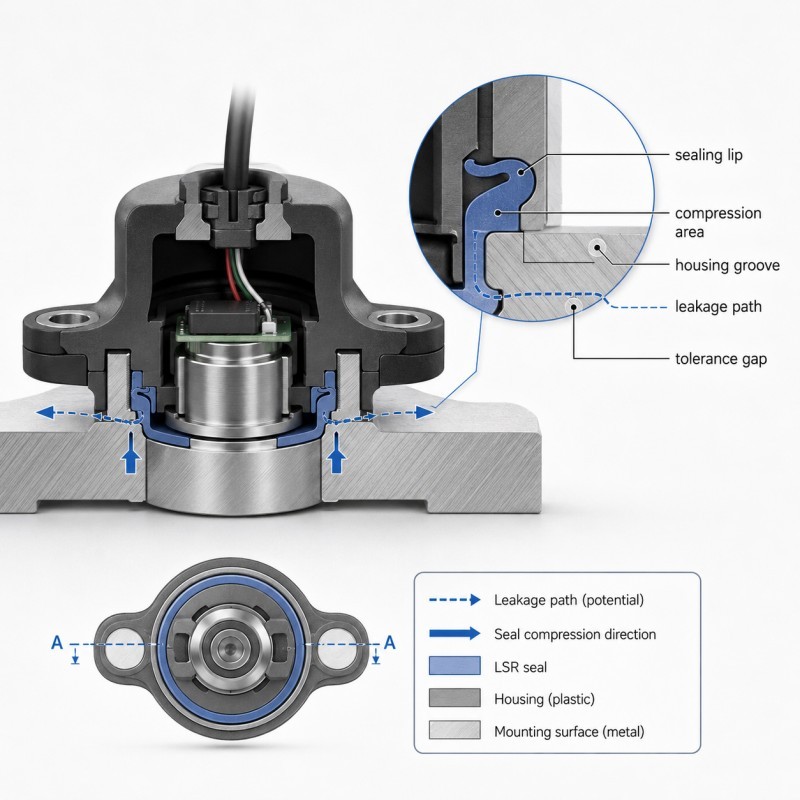
A sensor seal must have a clear sealing path. The silicone should block moisture, dust, or contaminants from entering the sensitive sensor area.
Engineers should review sealing lip height, sealing lip width, compression ratio, contact surface flatness, housing tolerance, assembly direction, and long-term compression environment.
If the silicone is under-compressed, the seal may leak. If it is over-compressed, the silicone may deform, lose recovery, or create assembly stress.
For sensors with small housings or narrow sealing areas, compression control is especially important. The seal must be soft enough to contact the housing, but stable enough to maintain its shape and pressure over time.
Bonding Area and Substrate Compatibility
Many sensor seals are overmolded onto plastic, metal, FPC, or cable structures. Each substrate has different bonding behavior.
For silicone over plastic sensor housings, engineers should check plastic material, heat resistance, surface energy, deformation risk, and bonding compatibility.
For silicone over metal sensor parts, surface cleanliness, oxidation, oil contamination, primer control, and mechanical locking may affect bonding.
For FPC sensor modules, the design must protect the circuit while avoiding excessive pressure, bending stress, and silicone misalignment.
For cable outlet areas, the overmolded silicone should support strain relief while sealing the transition zone.
A reliable sensor seal should not depend only on chemical adhesion. When needed, mechanical retention features such as grooves, holes, undercuts, wrap-around silicone, or textured surfaces can improve stability.
Mold Design and Insert Positioning
Sensor overmolding often involves small inserts, tight tolerances, and critical sealing surfaces. Mold design directly affects the final quality.
The mold must control insert positioning, silicone flow, gate location, venting, parting line position, shut-off surfaces, demolding direction, and flash-sensitive areas.
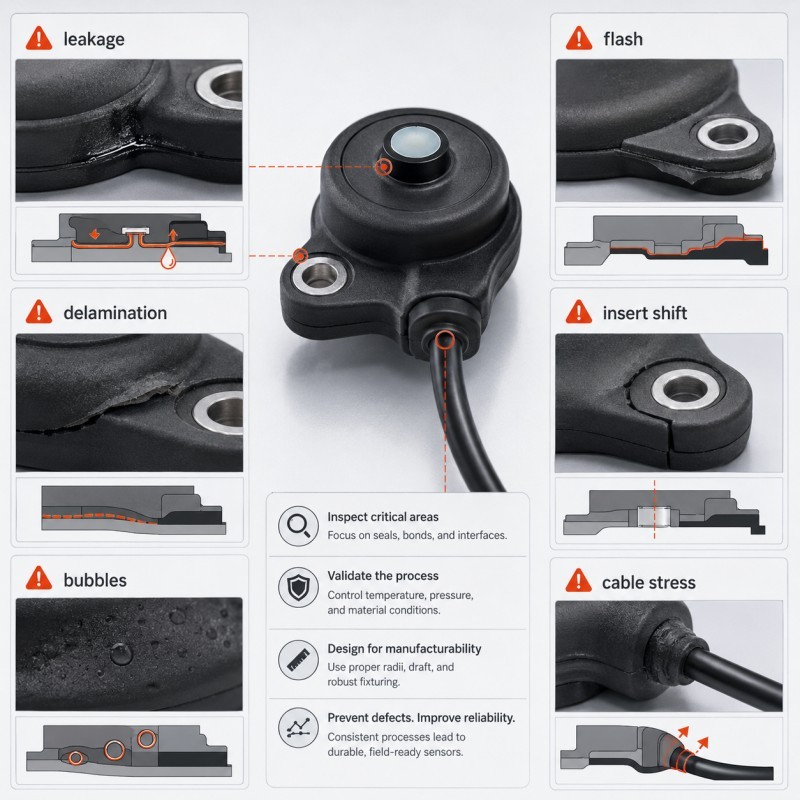
If the sensor insert shifts inside the mold, the silicone thickness and sealing lip position may become unstable. If venting is poor, bubbles or incomplete filling may appear near critical areas. If the parting line is placed on the sealing surface, flash may affect waterproof performance.
For precision sensor seals, mold design should be reviewed together with the sensor structure, not after tooling has already started.
Common Failure Risks in Sensor Overmolding
Common failure risks include leakage around the sensor housing, silicone peeling from the substrate, bubbles near the sealing area, flash on functional surfaces, incomplete filling of thin sealing lips, sensor insert shifting, cable outlet tearing, FPC bending stress, poor insulation, and unstable assembly fit.
Some failures appear immediately during sampling. Others appear only after temperature cycling, waterproof testing, vibration, pulling, bending, or customer-side assembly.
This is why a good-looking sample should not be the only approval standard. Sensor seals must be tested according to their real working environment.
Testing Before Mass Production
Before mass production, LSR overmolded sensor seals should be tested based on the real application environment.
Common validation tests include waterproof testing, air leakage testing, dustproof testing, pulling force testing, peeling testing, bending fatigue testing, vibration testing, temperature cycling, aging testing, dimensional inspection, visual inspection, assembly testing, and electrical function testing.
For automotive sensors, vibration and temperature cycling may be especially important. For wearable sensors, sweat, movement, skin contact, and compact assembly should be considered. For medical-related sensors, cleanliness, surface quality, and material safety may need additional review.
Testing should confirm whether the seal can maintain bonding, compression, insulation, protection, and assembly stability during long-term use.
Applications of Custom LSR Overmolded Sensor Seals
In automotive electronics, LSR overmolded sensor seals can be used for connector sensors, battery-related sensors, lighting sensors, pressure sensors, temperature sensors, and EV electronic modules.
In wearable devices, they can protect health monitoring sensors, skin-contact sensor modules, smart watch components, smart ring structures, and compact FPC sensor assemblies.
In medical electronics, silicone overmolded sensor seals can support soft contact, insulation, sealing, and stable assembly for handheld or wearable medical devices.
In industrial equipment, they can protect sensor housings, cable outlets, machine interface sensors, control modules, and harsh-environment electronic assemblies.
In beauty and personal care devices, they can help protect sensor interfaces, metal contact areas, waterproof control zones, and soft-touch user-contact structures.
How SiliconePlus Supports Custom Sensor Overmolding Projects
SiliconePlus supports custom LSR overmolding projects involving plastic, metal, FPC, silicone, cable, connector, and electronic sensor structures. For sensor sealing projects, our team can review drawings, samples, substrate materials, sealing paths, silicone coverage, bonding areas, insert positioning, mold design, and testing standards before mold development.
We can support DFM review, silicone material selection, custom tooling, sample production, bonding evaluation, process optimization, inspection, and OEM/ODM mass production.
For automotive sensors, wearable sensor modules, medical electronic sensors, industrial sensor seals, 3C sensor components, and beauty device sensor parts, early engineering review can help reduce leakage, delamination, bubbles, flash, insert shift, and mass production instability.
Conclusion
Custom LSR overmolded sensor seals are important for electronic products that need waterproof sealing, dust protection, vibration resistance, insulation, soft touch, and long-term reliability.
A successful sensor seal depends on more than adding silicone around a sensor. Engineers should review material selection, sealing path, compression ratio, bonding area, substrate compatibility, insert positioning, mold venting, flash control, and validation testing before tooling.
If you are developing a custom LSR overmolded sensor seal or sensor protection component, send us your drawings, samples, substrate material information, application requirements, testing standards, and estimated quantity. SiliconePlus can help evaluate the right overmolding solution from prototype to mass production.