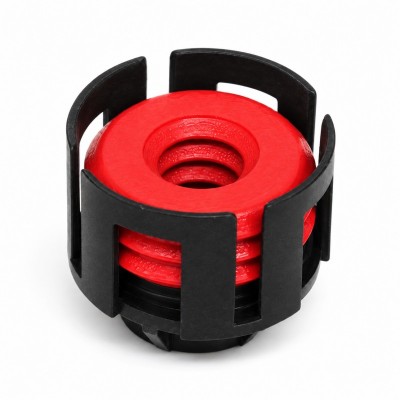
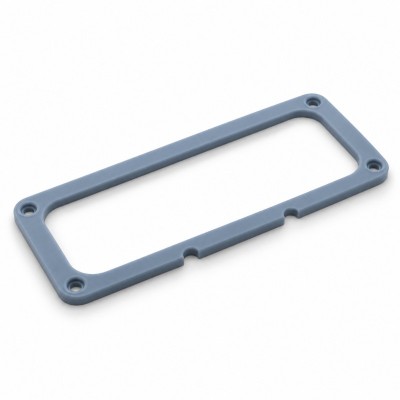
Custom LSR Overmolding for Waterproof Electronic Components
Waterproof performance is no longer a simple add-on feature for electronic components. In automotive electronics, wearable devices, medical electronics, industrial sensors, and 3C products, sealing reliability directly affects product safety, service life, user experience, and long-term stability.
For many compact electronic parts, traditional sealing methods such as separate rubber gaskets, manual glue dispensing, adhesive bonding, or assembled sealing rings may not be stable enough. Once the part becomes smaller, thinner, more complex, or exposed to vibration, bending, moisture, dust, and temperature changes, the sealing structure can become a weak point.
This is why more engineers are choosing custom LSR overmolding for waterproof electronic components.
What Is Custom LSR Overmolding?
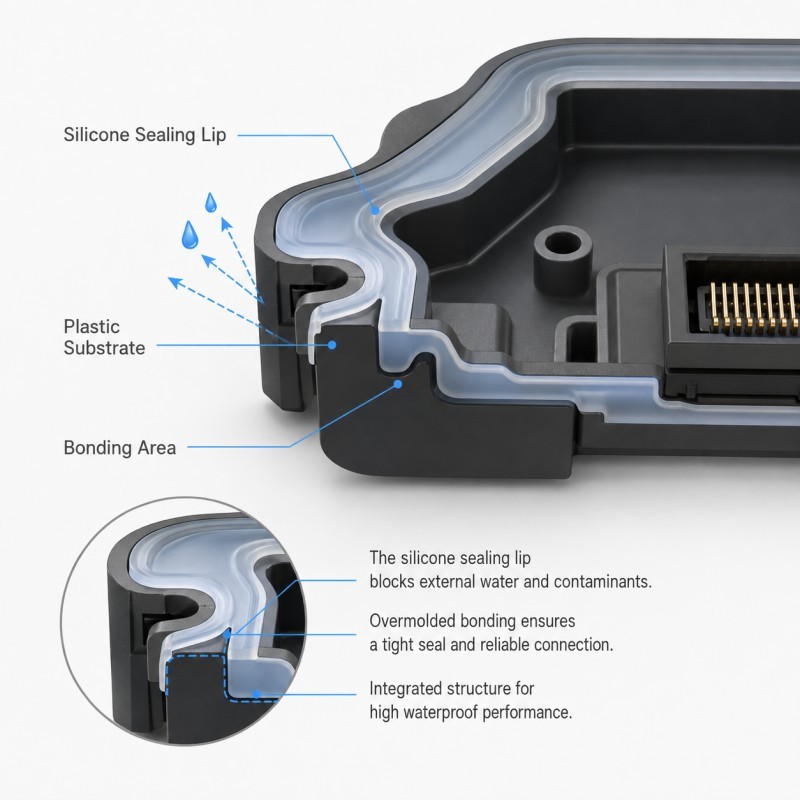
Custom LSR overmolding is a manufacturing process where liquid silicone rubber is molded directly onto another substrate, such as plastic, metal, FPC, metal inserts, or existing silicone parts.
Instead of producing a separate silicone seal and assembling it later, the silicone layer is formed directly on the required sealing, bonding, or protection area. This helps create a more integrated and reliable waterproof structure.
It is commonly used for:
- Waterproof connector seals
- Cable strain relief parts
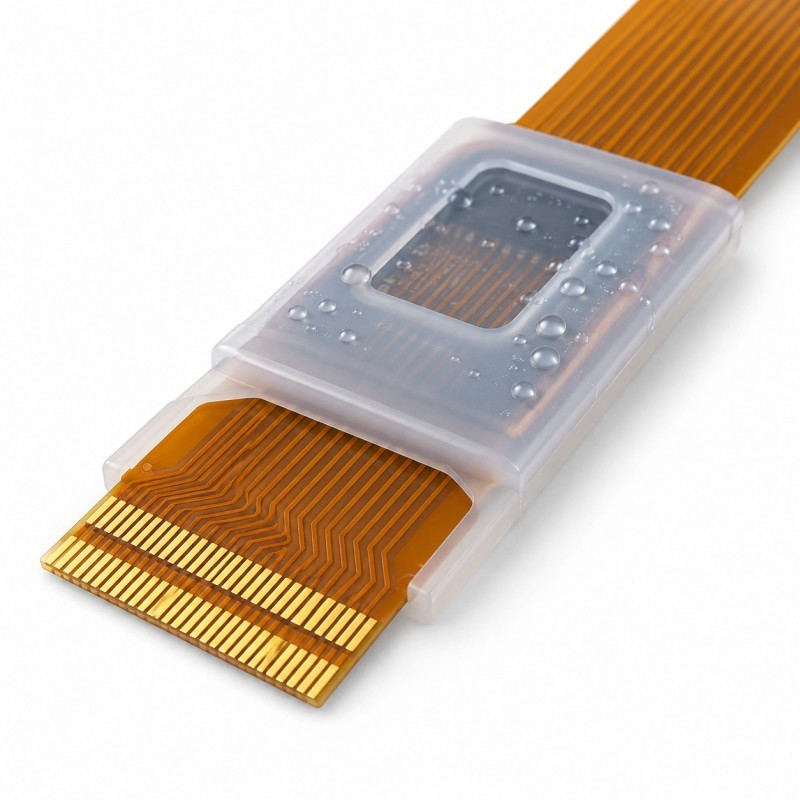
- FPC waterproof sealing areas
- Silicone over plastic components
- Silicone over metal inserts
- Sensor sealing structures
- Wearable device sealing parts
- Medical electronic silicone components
- 3C interface sealing parts
For compact electronic products, this integrated structure can reduce assembly steps and improve sealing consistency.
Why Waterproof Electronic Components Need More Than a Simple Gasket
Traditional gaskets can work in many applications, but they depend heavily on assembly accuracy, compression force, housing tolerance, and long-term material stability.
If the gasket shifts during assembly, if the compression ratio is not controlled correctly, or if the housing tolerance changes, leakage risk may increase.
Common problems include:
- Water leakage around connector interfaces
- Silicone seal displacement during assembly
- Poor bonding between silicone and plastic
- Delamination after temperature cycling
- Flash affecting assembly accuracy
- Uneven sealing pressure
- Dust ingress around small gaps
- Cracking after repeated bending
- Glue overflow from manual dispensing
LSR overmolding helps solve these problems by integrating the silicone sealing function directly into the component structure.
How LSR Overmolding Improves Waterproof Sealing
1. Integrated Sealing Structure
With separate gaskets, the sealing part and the main component are independent. During assembly, the gasket may move, deform, or compress unevenly.
With LSR overmolding, the silicone is molded directly onto the substrate. The sealing area becomes part of the component itself. This improves positioning accuracy and reduces the risk of assembly-related leakage.
This is especially useful for waterproof connectors, electronic buttons, sensors, FPC modules, and compact 3C components.
2. Better Bonding Between Silicone and Substrate
In many waterproof electronic applications, silicone needs to bond firmly with plastic, metal, or FPC. Weak bonding can lead to peeling, delamination, water channels, or product failure after aging tests.
A stable overmolding project usually requires evaluation of:
- Substrate material
- Surface treatment
- Primer or self-adhesive LSR selection
- Bonding area design
- Mold temperature
- Injection pressure
- Silicone hardness
- Part tolerance
- Pulling and peeling force requirements
When these factors are controlled properly, LSR overmolding can create a stronger and more reliable sealing interface.
3. Reduced Manual Assembly Risk
Manual glue dispensing can be difficult to control for small electronic components. Glue overflow, insufficient glue, air bubbles, uneven curing, and unstable appearance are common problems.
LSR injection overmolding offers better repeatability because the silicone is injected into a precision mold cavity. This allows the sealing shape, thickness, edge position, and surface finish to be controlled more consistently.
For OEM/ODM projects, this is important because the product must not only pass prototype testing but also remain stable in mass production.
4. Support for Complex Component Designs
Modern electronic products are becoming smaller and more integrated. Some parts require waterproof sealing, soft touch, insulation, shock absorption, and strain relief at the same time.
LSR overmolding can help combine multiple functions into one component.
For example, a wearable sensor may need FPC sealing and skin-friendly silicone protection. An automotive connector may need waterproof sealing and vibration resistance. A Type-C interface part may need a precise sealing lip and low-flash molding. A cable assembly may need silicone strain relief around the connection area.
Key Design Factors Before Starting an LSR Overmolding Project
A successful waterproof overmolding project should not begin directly with mold production. Before tooling, engineers should review the sealing path, substrate material, silicone structure, tolerance, and application environment.
Substrate Material Selection
Not every plastic or metal surface bonds well with silicone. The substrate must be evaluated before mold development.
Common substrate types include PC, PA, PBT, PPS, metal inserts, stainless steel, aluminum components, FPC, and existing silicone substrates.
For silicone over plastic, heat resistance, deformation risk, surface energy, and bonding compatibility are important. For silicone over metal, surface cleaning and pre-treatment are often critical. For FPC silicone overmolding, the design must protect the circuit while controlling pressure and sealing position.
Silicone Hardness and Material Grade
Silicone hardness affects sealing compression, touch feel, assembly force, and deformation. Softer silicone may improve sealing contact, while harder silicone may improve structural stability.
Material selection should consider hardness, tear strength, tensile strength, temperature resistance, aging resistance, transparency, electrical insulation, bonding performance, and medical-grade or food-grade requirements.
Sealing Path and Compression Ratio
Waterproof performance depends heavily on the sealing path. The silicone sealing lip must have enough contact pressure, but excessive compression can cause assembly difficulty, deformation, or long-term stress relaxation.
Before tooling, the design should define sealing lip height, compression ratio, contact width, assembly direction, housing tolerance, waterproof test requirements, and long-term compression environment.
A good sealing structure is not only about adding silicone. It is about controlling how the silicone is compressed and how the sealing force is maintained over time.
Mold Precision and Flash Control
For small waterproof electronic components, flash can affect assembly, appearance, and sealing performance. Thin flash around the sealing edge may create interference or prevent proper compression.
Therefore, mold design should consider parting line position, venting design, insert positioning, mold accuracy, injection balance, clamping force, demolding direction, and flash control standards.
High-precision mold development is especially important for connector seals, FPC overmolded parts, wearable components, and small waterproof buttons.
Common Applications of Waterproof LSR Overmolding
Automotive Electronics
Automotive electronic components are exposed to vibration, moisture, dust, temperature changes, and long-term stress. LSR overmolding can be used for connector seals, sensor sealing parts, cable strain relief, battery-related sealing structures, and waterproof interface components.
Wearable Devices
Wearable products often require soft touch, waterproof sealing, comfort, and compact design. LSR overmolding is suitable for sensor sealing, charging interface protection, button sealing, FPC sealing, and skin-contact silicone structures.
3C Electronic Components
For consumer electronics, waterproof performance and appearance consistency are both important. LSR overmolding can support small buttons, interface seals, protective covers, cable parts, and precision silicone sealing structures.
Medical Electronic Components
Medical electronic products often require clean production, stable material selection, precision molding, and reliable sealing. LSR overmolding can be used for soft protective parts, sealing structures, silicone over metal parts, and silicone over plastic components.
Industrial Sensors
Industrial sensors and electronic modules may face moisture, oil, dust, vibration, and harsh operating environments. Silicone overmolding can improve protection and reduce assembly complexity.
Why Work With a Custom LSR Overmolding Manufacturer?
Waterproof electronic components are usually not standard parts. Each project may have different substrate materials, sealing requirements, assembly conditions, tolerance standards, and test methods.
A professional LSR overmolding manufacturer should be able to support DFM review, silicone material selection, silicone over plastic development, silicone over metal development, FPC silicone overmolding, insert molding, custom tooling, prototype sampling, waterproof structure optimization, and mass production quality control.
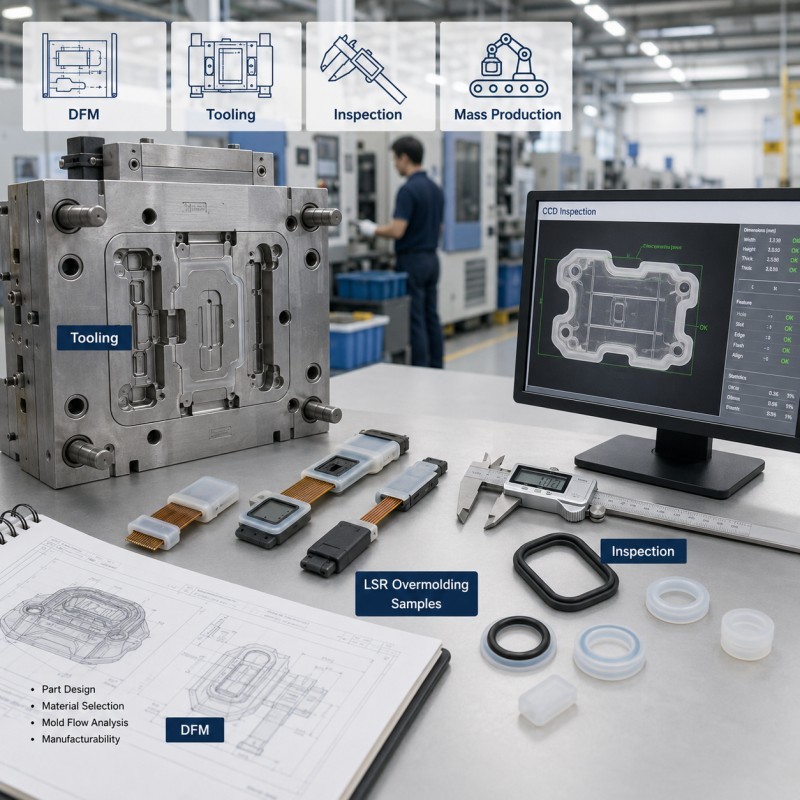
This is especially important for projects that require both engineering support and stable production capacity.
How SiliconePlus Supports Custom Waterproof LSR Overmolding Projects
SiliconePlus focuses on custom silicone overmolding and LSR injection molding for B2B projects. We support silicone over plastic, silicone over metal, FPC silicone overmolding, silicone over silicone, insert molding, custom tooling, sample production, and OEM/ODM mass production.
Our engineering team can review your drawings, samples, application environment, sealing requirements, substrate material, and estimated quantity before mold development. This helps reduce project risk and improve the stability of waterproof silicone components from prototype to mass production.
If you are developing waterproof electronic components, automotive connector seals, wearable device seals, FPC overmolded parts, sensor seals, or custom LSR overmolded components, SiliconePlus can help evaluate the right manufacturing solution.
Conclusion
Custom LSR overmolding is an effective solution for waterproof electronic components that require stable sealing, strong bonding, compact structure, and repeatable mass production.
Compared with separate gaskets or manual glue dispensing, LSR overmolding can improve sealing accuracy, reduce assembly risk, enhance durability, and support more integrated product designs.
For automotive electronics, wearable devices, medical electronics, 3C components, sensors, and compact waterproof modules, the key to success is not only choosing silicone material. It is also important to review substrate compatibility, sealing path, compression ratio, mold precision, flash control, bonding strength, and mass production stability.
If your project requires custom waterproof silicone overmolded parts, send us your drawings, samples, material requirements, application details, and estimated quantity. SiliconePlus can help you develop a reliable OEM/ODM LSR overmolding solution.