How Does DFM Review Reduce Risks in LSR Overmolding Projects?
Answer Excerpt
DFM (Design for Manufacturing) review helps engineers identify potential manufacturing risks before silicone tooling begins.
For LSR overmolding projects, a successful design is not only about creating the desired product shape.
The design must also consider:
• Silicone flow behavior
• Mold structure
• Insert positioning
• Sealing requirements
• Demolding direction
• Production repeatability
• Inspection method
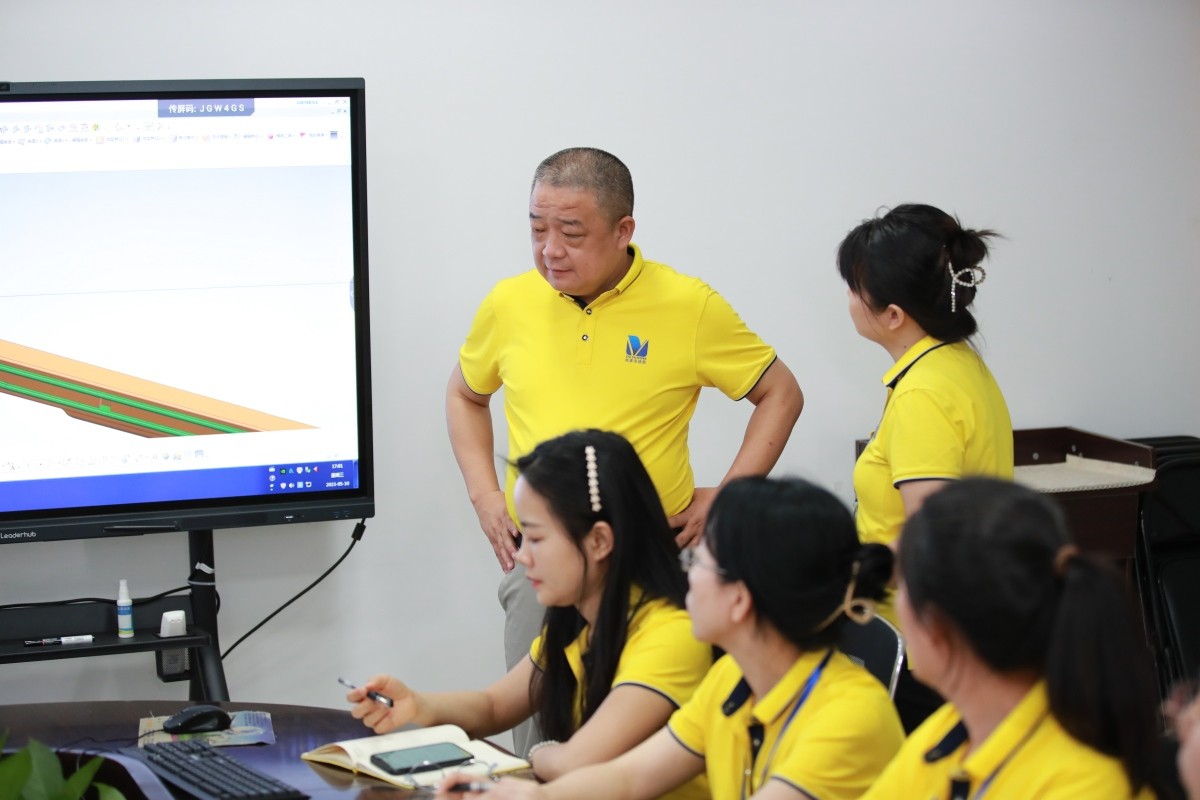
Early DFM communication allows engineers and manufacturers to solve potential problems before they become expensive tooling modifications or production delays.
For custom silicone components, DFM review connects product design requirements with realistic manufacturing capabilities.
Why Is DFM Review Important Before LSR Tooling?
Many problems discovered during mass production actually originate from decisions made before tooling.
Without DFM review, potential risks may include:
• Difficult demolding
• Uneven silicone filling
• Excessive flash
• Weak sealing areas
• Insert movement
• Difficult inspection
• Higher tooling modification cost
A DFM review allows engineers to evaluate whether the product design can be manufactured consistently rather than only checking whether the CAD model looks correct.
For LSR parts, manufacturing feasibility should be considered before mold steel is produced.
Review Silicone Wall Thickness and Geometry
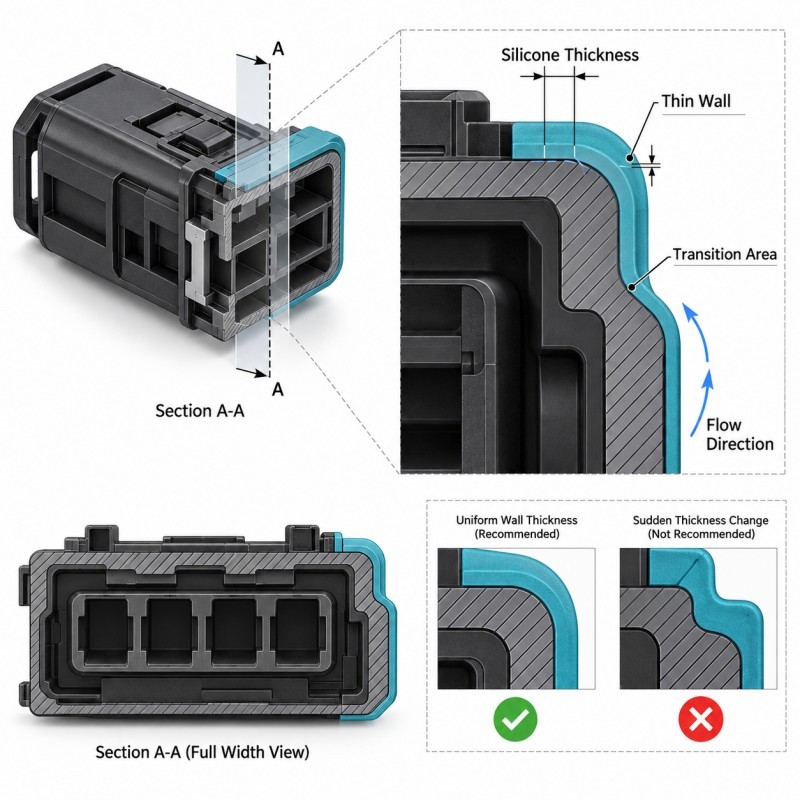
Silicone thickness directly affects filling, curing, flexibility and product performance.
During DFM review, engineers should evaluate:
• Minimum silicone thickness
• Thickness variation
• Thin sections
• Sharp transitions
• Silicone flow distance
• Local stress concentration
Extremely thin silicone areas may create filling difficulty.
Large thickness changes may influence curing behavior and dimensional stability.
A balanced silicone structure improves molding reliability and production consistency.
Evaluate Insert Design Before Overmolding
Many LSR overmolding projects combine silicone with:
• Metal components
• FPC parts
• Electronic structures
The insert design affects:
• Silicone coverage
• Bonding area
• Mold positioning
• Sealing performance
• Production handling
During DFM review, engineers should confirm:
• Insert dimensions
• Loading direction
• Positioning method
• Required exposed areas
• Potential interference with mold movement
A good insert design reduces production risk before the first mold trial.
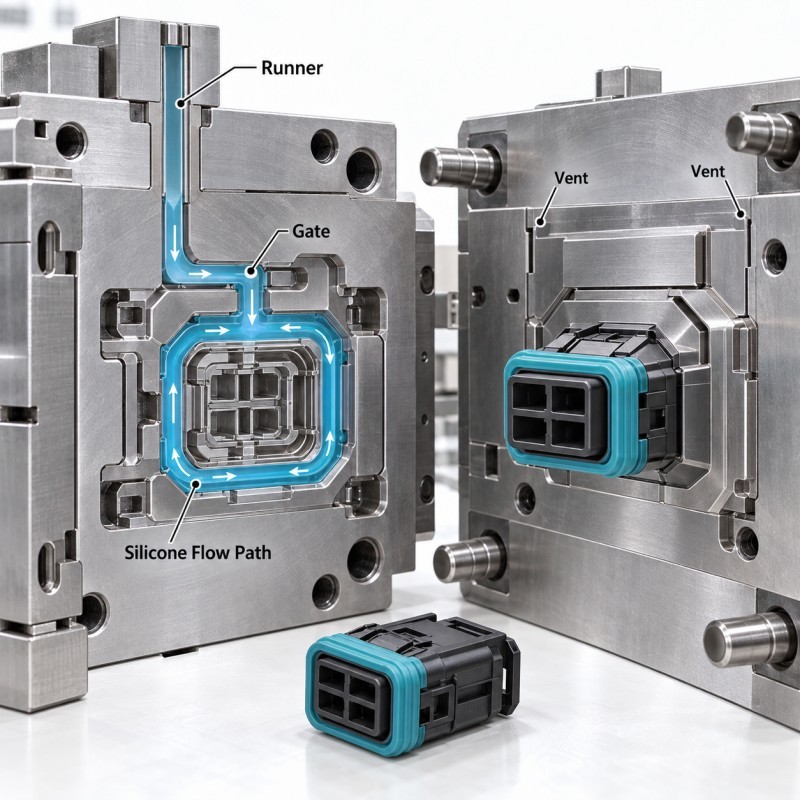
Analyze Mold Filling and Venting Conditions
LSR is injected as a liquid material, so silicone flow behavior must be considered during tooling design.
DFM review should analyze:
• Injection location
• Flow direction
• Filling balance
• Air evacuation
• Vent position
• Potential trapped air areas
Poor filling analysis may result in:
• Short shots
• Air traps
• Surface defects
• Uneven appearance
A proper DFM review helps optimize the mold concept before production begins.
Review Sealing and Waterproof Requirements
Many silicone components are designed for sealing applications.
Examples include:
• Connector seals
• Housing gaskets
• Sensor seals
• Liquid cooling seals
• Electronic protection components
DFM review should confirm:
• Sealing compression area
• Contact surface
• Compression direction
• Assembly tolerance
• Waterproof testing requirements
A sealing feature that looks acceptable in CAD may require adjustment after considering actual assembly conditions.
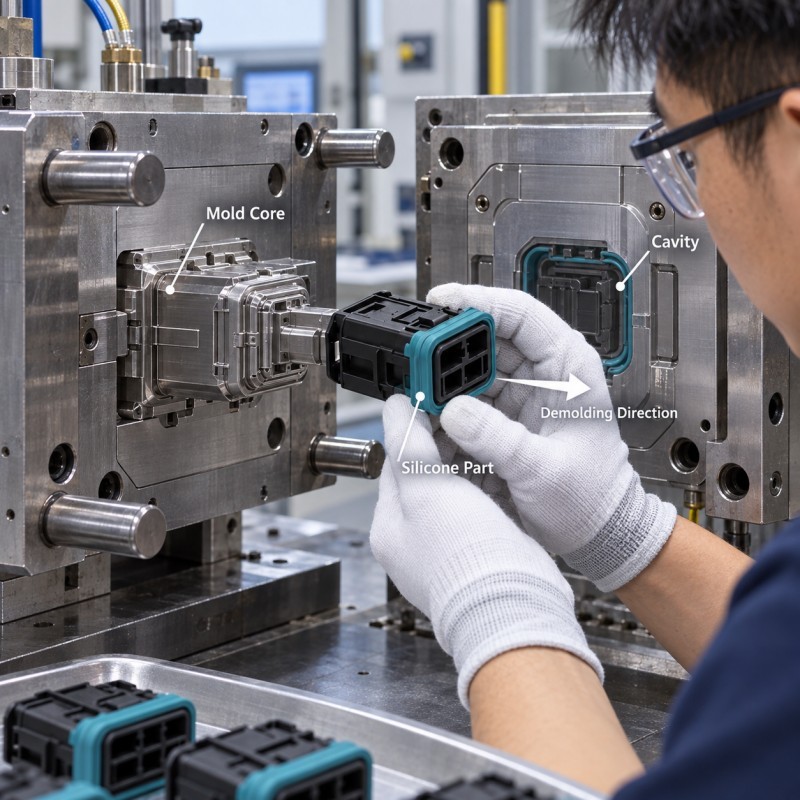
Consider Demolding and Mold Structure
Silicone parts must be removed from the mold without damaging critical features.
During DFM review, engineers should evaluate:
• Demolding direction
• Undercuts
• Parting line location
• Ejection method
• Flexible silicone deformation
A design that ignores demolding requirements may increase:
• Tool complexity
• Cycle time
• Defect risk
• Maintenance difficulty
DFM helps balance product appearance, function and manufacturability.
Define Inspection Requirements Before Production
Inspection requirements should be discussed during DFM, not only after samples are produced.
Engineers should define:
• Critical dimensions
• Appearance requirements
• Functional areas
• Sealing requirements
• Test methods
• Acceptance criteria
Clear inspection requirements help manufacturers control production quality and avoid disagreements during approval.
DFM Review Item | Why It Matters | Potential Risk |
Silicone thickness | Controls filling and curing | Short shot or unstable dimensions |
| Insert design | Controls positioning and bonding | Misalignment or weak interface |
Flow analysis | Controls silicone filling | Air trap or incomplete filling |
| Sealing design | Controls waterproof performance | Leakage |
| Demolding | Controls part release | Damage or deformation |
| Inspection plan | Controls acceptance | Quality disputes |
How Does DFM Improve LSR Mass Production Success?
A successful DFM process connects engineering design with manufacturing execution.
Benefits include:
• Reduced tooling changes
• Faster sample approval
• Lower production risk
• Better quality consistency
• More predictable mass production
For overseas customers working with a silicone manufacturing partner, DFM communication is especially important because it allows technical decisions to be confirmed before production begins.
How SiliconePlus Supports DFM Review for Custom LSR Projects
SiliconePlus provides engineering support for custom silicone manufacturing projects from design review to mass production.
DFM support includes:
• Product structure review
• Silicone material discussion
• Mold feasibility analysis
• Insert structure evaluation
• Sealing design review
• Prototype validation
• Mass production preparation
By reviewing manufacturing risks early, SiliconePlus helps customers develop reliable silicone overmolded components with better production stability.
FAQ
When Should DFM Review Start?
DFM review should begin before tooling development because design changes are usually easier and less expensive before mold manufacturing.
Can DFM Reduce LSR Tooling Cost?
Yes. Early design optimization can reduce unnecessary tooling modifications and improve production feasibility.
What Information Is Needed for DFM Review?
Useful information includes 3D drawings, material requirements, insert information, sealing requirements, production quantity and functional expectations.
Is DFM Only About Mold Design?
No. DFM considers product structure, material, molding process, inspection, assembly and mass production requirements together.
Conclusion
DFM review is a critical step for successful LSR overmolding projects.
By evaluating silicone geometry, inserts, mold filling, sealing requirements, demolding and inspection methods before tooling, engineers can reduce manufacturing risks and improve production reliability.
A strong DFM process transforms product concepts into manufacturable silicone components.