How Does LSR Overmolding Bond to Plastic and Metal Inserts?
Answer Excerpt
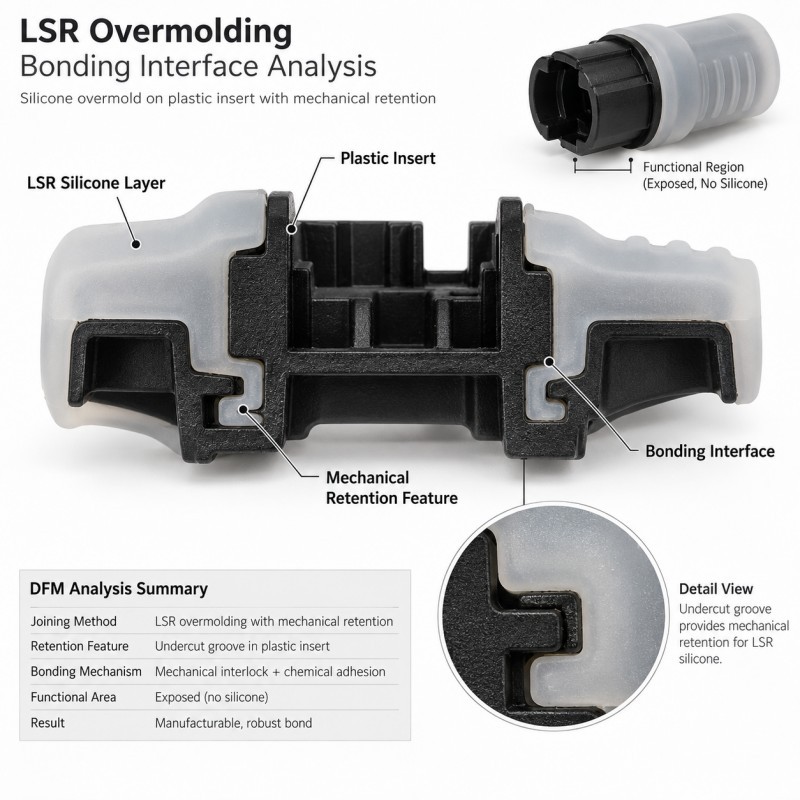
LSR overmolding combines liquid silicone rubber with another substrate such as plastic, metal or electronic components to create an integrated part.
However, silicone does not automatically bond strongly to every material.
A reliable silicone overmolded component depends on several factors:
• Silicone and substrate compatibility
• Surface preparation
• Chemical bonding treatment
• Mechanical retention design
• Mold temperature and curing conditions
• Production process stability
For engineers, the goal is not simply making silicone stick to another material.
The real objective is creating a durable interface that survives assembly, temperature changes, vibration, environmental exposure and long-term use.
Why Is Silicone Bonding Different From Traditional Adhesive Bonding?
Many engineers initially compare silicone overmolding with adhesive bonding.
However, these two methods create different types of interfaces.
Adhesive bonding depends mainly on an external adhesive layer between two materials.
LSR overmolding integrates silicone during the molding process.
The final interface depends on:
• Silicone chemistry
• Substrate material
• Surface energy
• Mold conditions
• Interface geometry
Compared with adhesive assembly, overmolding can reduce additional assembly steps and create a more integrated component structure.
However, the bonding performance must be considered during product design, tooling development and material selection.
How Does Silicone Bond to Plastic Inserts?
Silicone over plastic is widely used in automotive electronics, consumer electronics, medical devices and wearable products.
Common plastic substrates include:
• PC
• ABS
• PC+ABS
• PBT
• Nylon
The bonding result depends on the specific silicone grade and plastic surface characteristics.
Important factors include:
Material Compatibility
Some plastics provide better bonding conditions with silicone than others.
The silicone formulation, primer system and plastic chemistry should be evaluated together.
Surface Condition
Contamination, mold release residue, oil or dust can reduce interface reliability.
Clean and consistent surfaces are essential for stable production.
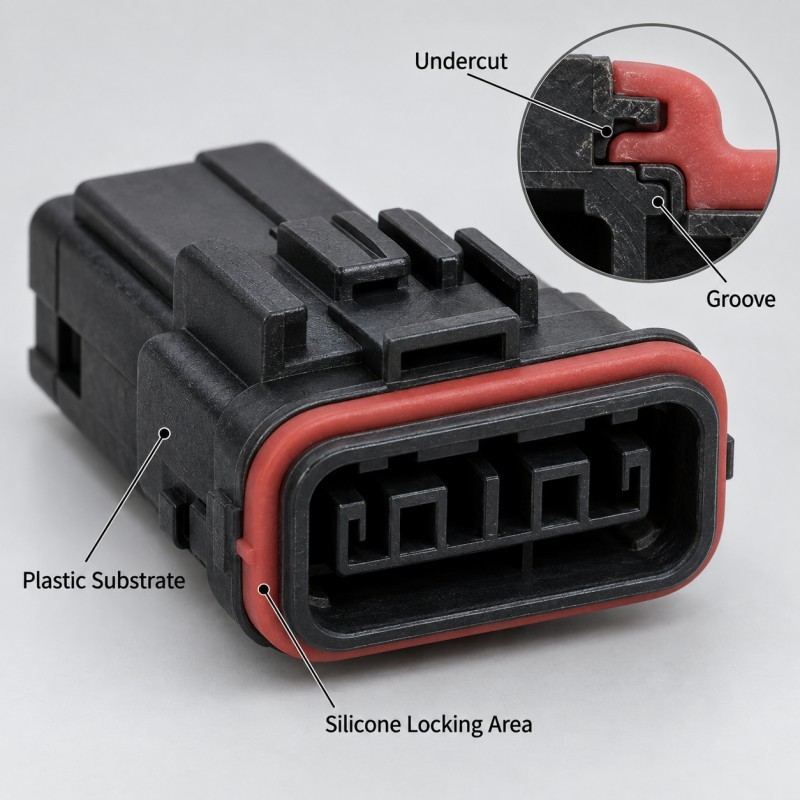
Mechanical Retention
Chemical bonding is not the only method.
Engineers may also use:
• Undercuts
• Grooves
• Holes
• Surface structures
• Retention features
These designs help silicone remain mechanically locked to the substrate.
How Does Silicone Bond to Metal Inserts?
Silicone over metal applications are common in:
• Automotive sensors
• Electrical components
• Industrial equipment
• Sealing assemblies
Metal inserts provide strength and dimensional stability, while silicone provides:
• Elastic sealing
• Protection
• Vibration absorption
• Environmental resistance
However, metal surfaces usually require careful preparation before overmolding.
Important considerations include:
• Surface cleanliness
• Surface treatment
• Roughness
• Insert handling
• Oxidation control
A stable metal-silicone interface requires controlling both material selection and manufacturing conditions.
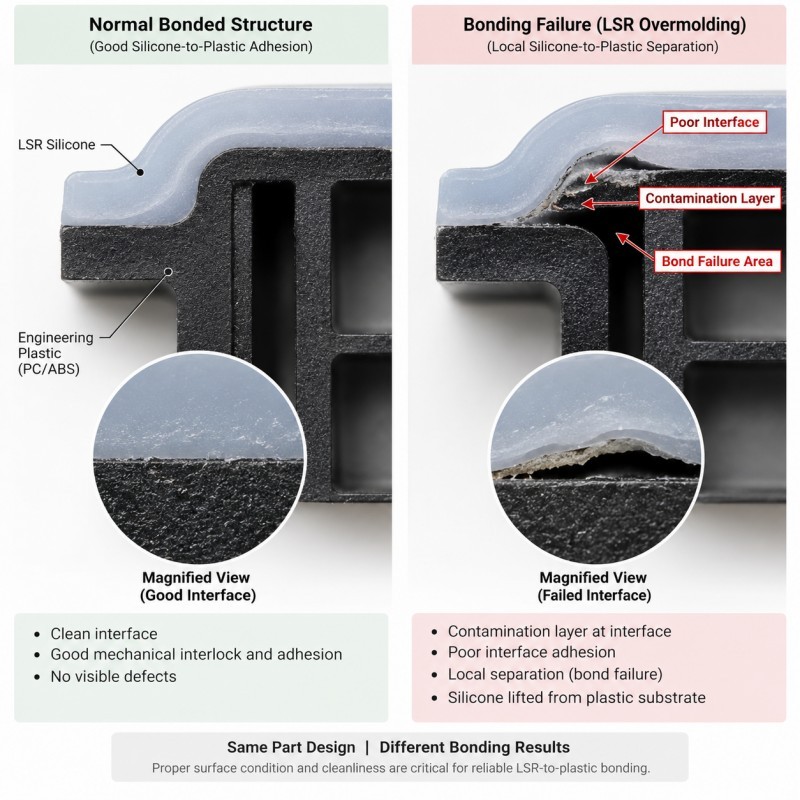
Common Causes of Silicone Overmolding Bonding Failure
Interface failure usually does not come from one single cause.
Common problems include:
Incorrect Material Combination
The silicone and substrate may not provide sufficient bonding compatibility.
Surface Contamination
Oil, dust or release agents may create a weak boundary layer.
Poor Surface Preparation
The substrate surface condition may not support reliable bonding.
Excessive Mechanical Stress
Sharp transitions, thin silicone sections or repeated movement may concentrate stress at the interface.
Incorrect Process Conditions
Molding temperature, curing conditions and handling process may affect final bonding performance.
Bonding issues should be investigated from material, design and manufacturing perspectives together.
How Can Engineers Improve LSR Overmolding Bond Reliability?
Improving bonding reliability starts before tooling.
Engineers should review:
1. Select Compatible Materials
Confirm silicone grade and substrate compatibility early.
2. Design the Interface
Add appropriate mechanical retention features where needed.
3. Control Insert Preparation
Maintain consistent cleaning and handling procedures.
4. Validate the Process
Confirm bonding performance through:
• Peel testing
• Pull testing
• Environmental testing
• Temperature cycling
• Aging evaluation
5. Review Mass Production Stability
A good prototype bond must also remain stable during continuous production.
Chemical Bonding vs Mechanical Retention in Silicone Overmolding
| Bonding Method | Principle | Advantage | Consideration |
Chemical bonding | Silicone chemically interacts with substrate surface | Strong integrated interface | Requires material compatibility |
| Primer-assisted bonding | Additional bonding layer improves adhesion | Wider material options | Process control required |
| Mechanical retention | Silicone locks into physical features | Improves holding strength | Requires structural design |
| Combined approach | Chemical + mechanical support | Higher reliability | Requires DFM review |
How Should Bonding Be Validated Before Mass Production?
Before mass production, bonding performance should be validated using the actual material combination and production process.
Validation may include:
• Interface inspection
• Adhesion testing
• Environmental aging
• Thermal cycling
• Chemical exposure
• Assembly testing
• Functional testing
Testing should represent the real application environment.
A silicone bond that performs well at room temperature may behave differently after long-term exposure to heat, chemicals or repeated mechanical stress.
How SiliconePlus Supports Silicone Overmolding Projects
SiliconePlus supports custom silicone overmolding projects involving:
• Silicone over plastic
• Silicone over metal
• Insert molding
• Waterproof sealing structures
• Precision silicone components
Engineering support includes:
• Material evaluation
• Interface design review
• Mold development
• DFM analysis
• Prototype validation
• Mass production support
The objective is to create reliable silicone-substrate interfaces that meet product requirements from prototype through production. Engineers can contact SiliconePlus for support with material evaluation, tooling development and mass production.
FAQ
Can Silicone Bond Directly to All Plastics?
No. Bonding performance depends on silicone grade, plastic chemistry, surface condition and process parameters.
Why Does Silicone Separate From Plastic After Testing?
Possible causes include poor material compatibility, contamination, insufficient surface preparation, improper design or process instability.
Does Silicone Overmolding Need Adhesive?
Not always. Some applications rely on chemical bonding, some use primers, and some combine bonding with mechanical retention.
Can Silicone Overmolding Be Used for Waterproof Products?
Yes. Silicone overmolding is widely used for sealing and protection, but the interface design and validation must match the actual application requirements.
Conclusion
LSR overmolding bonding is a combination of material science, surface engineering and product design.
A reliable silicone-to-plastic or silicone-to-metal interface requires:
• Correct material selection
• Controlled surface preparation
• Proper mechanical design
• Stable molding conditions
• Real application validation
By reviewing bonding requirements early, engineers can reduce production risks and develop more reliable silicone overmolded components.