How Should PA Moisture Be Controlled Before LSR Overmolding a Connector Seal?
Answer Excerpt
PA (polyamide) connector frames can absorb moisture from surrounding air. Changes in moisture condition can affect their dimensions and mechanical behavior.
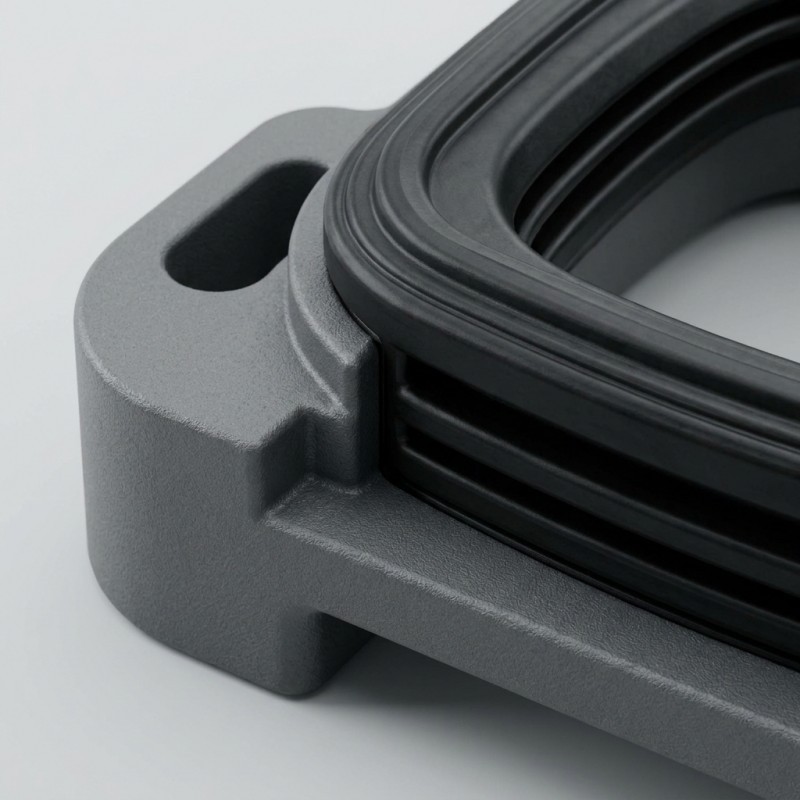
In an LSR overmolded connector, the PA frame locates the silicone multi-lip seal and its mating interface.
The solution is not simply to “always dry the insert.” Define the exact resin grade, conditioning state, storage conditions and inspection state before approving seal dimensions and tooling.
Why Does PA Moisture Matter Before LSR Overmolding?
The SiliconePlus PA + LSR overmolded connector seal combines a PA plastic connector frame with liquid silicone rubber and an integrated multi-lip sealing structure.
If PA inserts are measured at different moisture conditions, their critical dimensions may not be directly comparable. Dimensional changes can affect the position of the molded sealing lips relative to the mating connector.
This does not mean moisture is always the cause of a sealing problem. Engineers should also check the PA frame, mating part, assembly gap and silicone profile.
See the PA + LSR overmolded connector seal product page for the confirmed product structure.
What Should Be Controlled Before Overmolding?
Use this practical control plan:
1. Identify the exact PA grade. Record the resin manufacturer, grade, reinforcement and relevant additives. Do not specify only “nylon” or “PA.”
2. Define the conditioning state. Follow the resin supplier's recommendations and consider the product's intended service environment. Do not apply one universal moisture percentage or drying time to every PA grade.
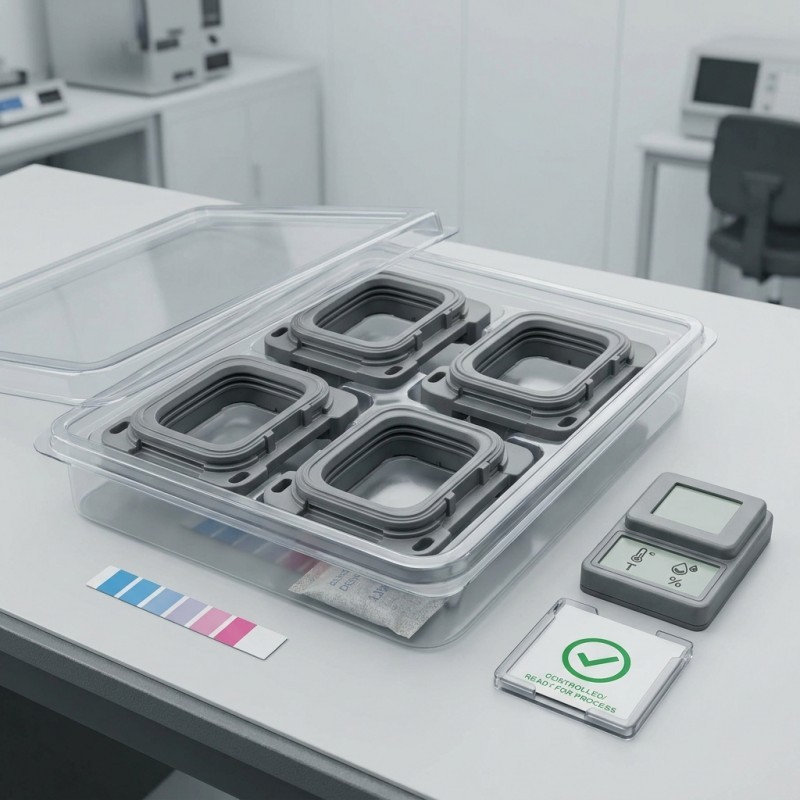
3. Control storage and handling. Define how conditioned inserts are packaged, stored and handled before LSR molding.
4. Standardize measurement. Measure critical PA dimensions under a defined moisture condition so sample and production results can be compared consistently.
5. Control material changes. Review any change in resin grade, supplier or reinforcement before applying the existing tooling and inspection plan.
For the broader material-pairing question, see our LSR bonding compatibility with PA guide.
How Can Moisture Variation Affect the Multi-Lip Seal?
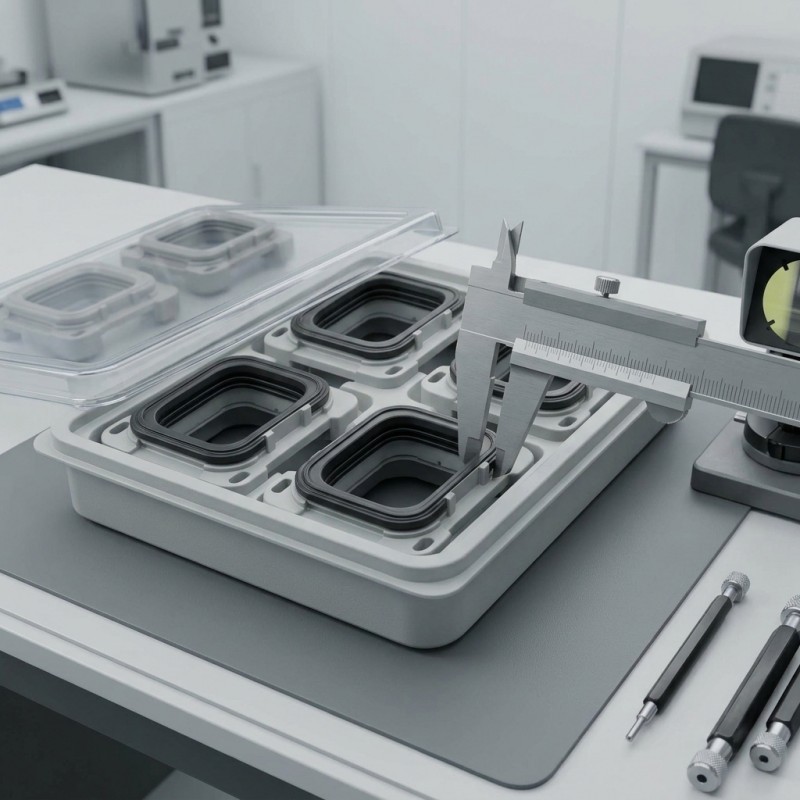
Do not inspect only the overall length of the PA frame.
Identify the dimensions that locate the overmolded seal, including:
- PA frame reference surfaces.
- Mating features and seating faces.
- Seal position relative to the connector.
- Final assembly gap.
Compare the PA frame and finished seal using a consistent measurement condition. Then assemble the component with the actual mating connector and evaluate the fit and seal compression against the approved drawing.
Do not simply increase silicone lip height to compensate for an unstable PA dimension. First confirm the tolerance chain and conditioning baseline.
The related plastic with silicone overmolding capability page explains the broader process scope.
| Control item | What to define | Why it matters |
PA resin | Exact grade, supplier and reinforcement | Moisture response varies by material |
Conditioning | Approved condition and measurement state | Keeps comparisons consistent |
| Storage | Packaging and exposure controls | Reduces uncontrolled moisture changes |
| Critical dimensions | Datums and mating features | Maintains seal location |
| Assembly validation | Mating connector and acceptance criteria | Confirms the real sealing interface |
What Should Be Validated Before Mass Production?
A practical validation sequence should include:
1. Inspect the incoming PA frame under the defined conditioning state.
2. Record critical frame dimensions before LSR molding.
3. Inspect the finished silicone lip position and profile.
4. Assemble the part with the specified mating connector.
5. Evaluate fit, compression and sealing using the customer's acceptance criteria.
6. If required, repeat the evaluation under specified humidity or temperature conditions.
The actual process should be reviewed within the liquid silicone injection molding plan using the selected PA insert and LSR grade.
Do not claim a waterproof rating or leakage performance until the finished assembly has been tested against the defined project requirements.
FAQ
Should every PA insert be dried before LSR overmolding?
Not necessarily. The required conditioning state depends on the exact resin grade, supplier recommendations and product requirements. There is no universal drying condition for every PA insert.
Does PA moisture affect LSR bonding?
Moisture is one possible material and process variable. Bonding also depends on the exact PA grade, surface condition, LSR formulation and molding process. The actual material combination should be evaluated.
Can the same dimensional inspection standard be used for dry and conditioned PA?
If dimensions are moisture-sensitive, the inspection standard should define the conditioning state. Sample approval and production inspection should use comparable conditions.
Conclusion
For a custom PA + LSR connector seal, define the exact PA grade, insert conditioning state, storage conditions, mating connector and required validation criteria before tooling.
Send SiliconePlus your 2D/3D drawing, PA material information and sealing requirements for an engineering review.
Contact SiliconePlus to discuss your custom LSR overmolding project.