How to Choose Between Silicone Compression Molding and LSR Injection Molding?
Answer Excerpt
Choosing between silicone compression molding and LSR injection molding is an important decision during product development.
Both processes can produce high-quality silicone components, but they have different advantages depending on:
• Product geometry
• Production volume
• Precision requirements
• Material characteristics
• Automation needs
• Surface requirements
• Assembly method
Compression molding has been widely used for traditional silicone products, while LSR injection molding provides advantages for high-precision, complex and automated silicone manufacturing.
The best process depends on the actual application requirements rather than choosing one process universally.
What Is Silicone Compression Molding?
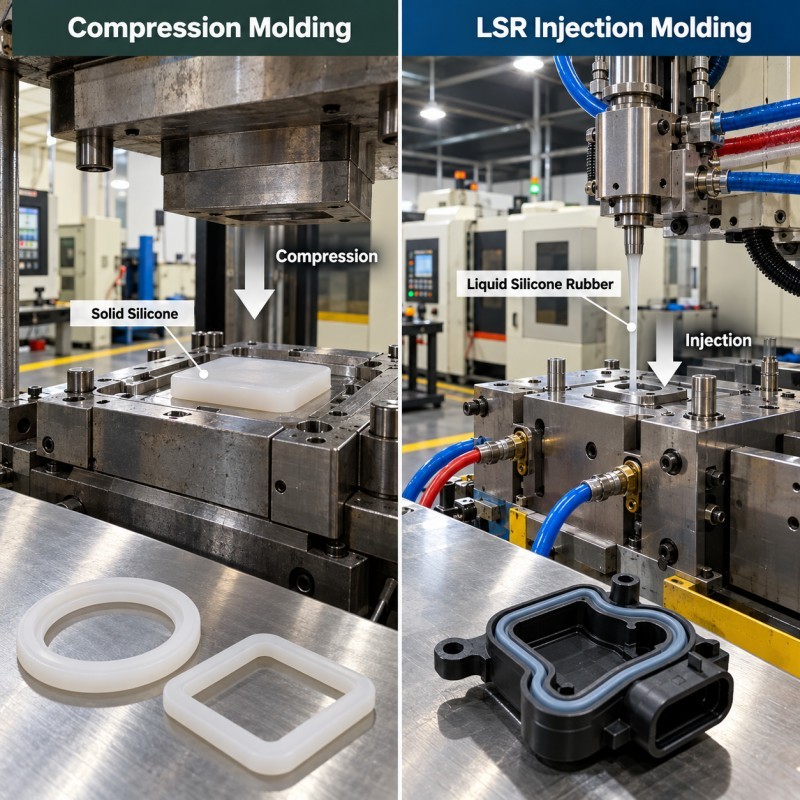
Silicone compression molding is a traditional manufacturing process where silicone material is placed into a mold cavity and compressed under heat and pressure.
The material cures inside the mold and forms the final silicone component.
Compression molding is commonly used for:
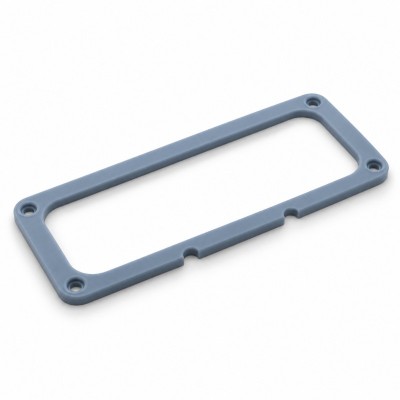
• Silicone gaskets
• Silicone seals
• Rubber pads
• Large silicone parts
• Products with relatively simple geometry
Advantages include:
• Lower initial tooling complexity
• Suitable for various silicone materials
• Flexible production for different product sizes
• Good performance for many standard silicone components
However, compression molding may require more manual handling and may be less suitable for highly automated high-volume production.
What Is LSR Injection Molding?
LSR injection molding uses liquid silicone rubber that is precisely mixed, metered and injected into a heated mold.
The process allows silicone to flow into complex cavities before curing.
LSR injection molding is commonly used for:
• Medical silicone components
• Automotive sealing parts
• Electronic waterproof components
• Wearable device parts
• Precision overmolded components
Key advantages include:
• High production consistency
• Automated manufacturing capability
• Complex geometry capability
• Reduced manual handling
• Stable mass production
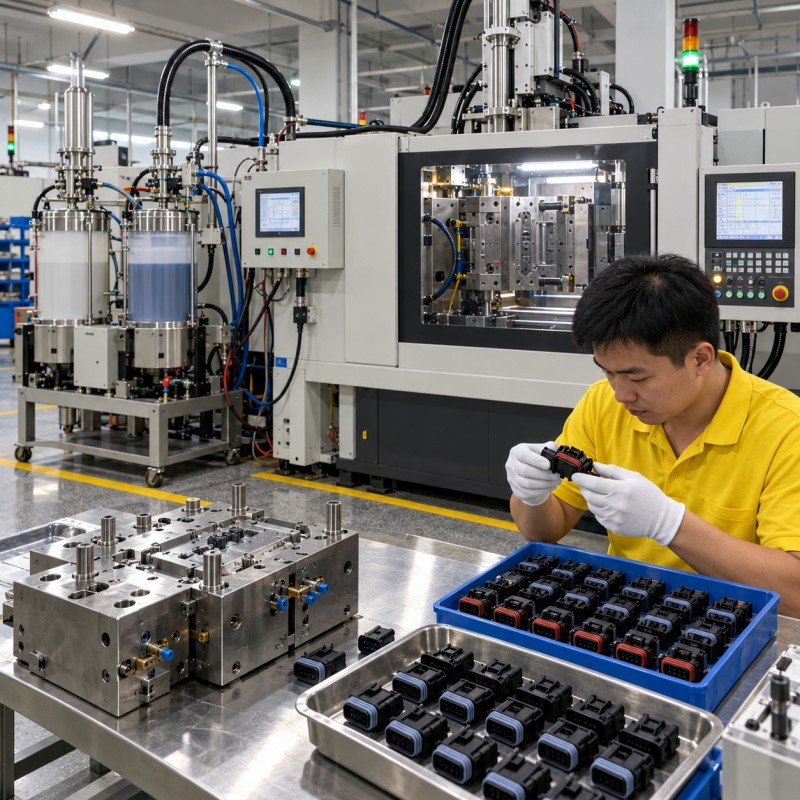
For precision silicone overmolding projects, LSR injection molding is often selected when repeatability and dimensional control are critical.
Key Differences Between Compression Molding and LSR Injection Molding
| Comparison Item | Compression Molding | LSR Injection Molding |
Material Form | Solid silicone compound | Liquid silicone rubber |
Automation Level | More manual operation | Highly automated potential |
Production Volume | Small to medium volume | Medium to high volume |
Complex Geometry | Suitable for simpler designs | Better for complex structures |
Precision Control | Depends on tooling and process | High process repeatability |
| Cycle Stability | More operator influence | More automated control |
| Insert Overmolding | Possible | Excellent suitability |
| Initial Tooling Investment | Usually lower | Usually higher |
When Is Compression Molding the Better Choice?
Compression molding can be a practical choice when the product requires:
• Larger silicone dimensions
• Lower production volume
• Simple geometry
• Lower tooling investment
• Flexible production changes
For some silicone seals, pads and industrial components, compression molding provides an effective manufacturing solution.
However, engineers should still consider:
• Dimensional requirements
• Flash control
• Labor requirements
• Long-term production consistency
The right process depends on the complete product requirement.
When Is LSR Injection Molding the Better Choice?
LSR injection molding becomes more attractive when the project requires:
• Complex silicone geometry
• Tight dimensional control
• High production volume
• Automated production
• Insert molding
• Consistent appearance
• Stable sealing performance
Typical applications include:
• Automotive connectors
• Electronic waterproof components
• Medical devices
• Smart wearable products
• Precision industrial parts
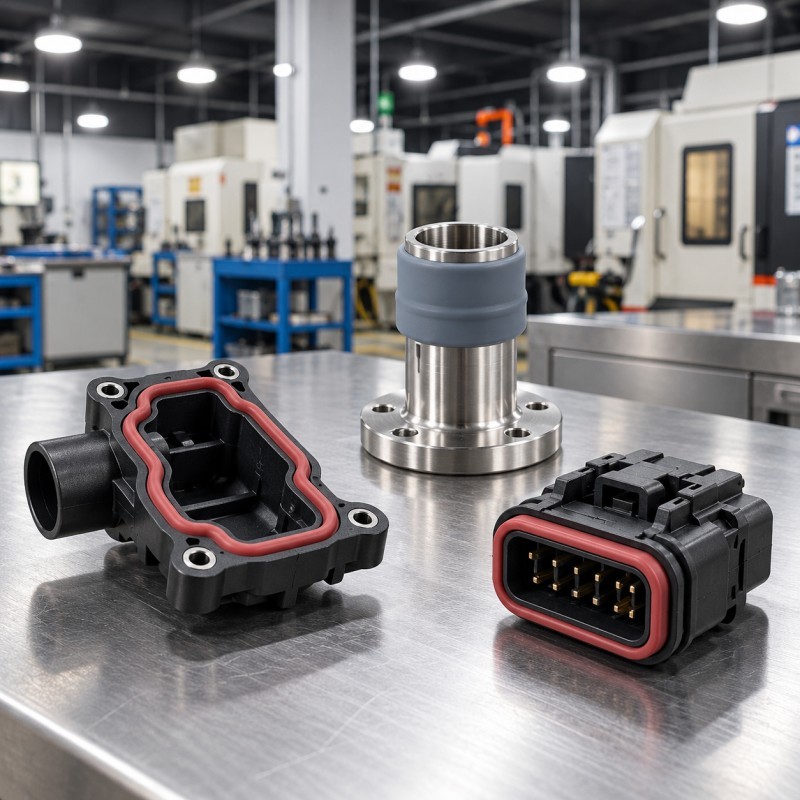
LSR is especially suitable when silicone must be integrated with another substrate such as plastic, metal or FPC.
How Does Product Design Affect Process Selection?
The molding process should be considered during product design.
Important factors include:
• Part size
• Silicone thickness
• Undercut structure
• Insert requirements
• Sealing function
• Surface requirements
• Production quantity
A product designed for compression molding may require changes if later transferred to LSR injection molding.
Similarly, selecting LSR too early without considering tooling cost and production requirements may increase unnecessary investment.
Early manufacturing discussion helps create a balanced solution.
How Does Production Volume Influence the Choice?
Production volume is one of the most important factors when selecting a silicone molding process.
Lower volume projects may prioritize:
• Tooling flexibility
• Lower initial investment
• Faster design changes
Higher volume projects usually prioritize:
• Cycle consistency
• Automation
• Reduced labor dependency
• Stable quality
For long-term production, the manufacturing process should support repeatable output rather than only satisfy initial samples.
How SiliconePlus Helps Customers Select the Right Process
SiliconePlus evaluates each silicone manufacturing project according to:
• Product structure
• Material requirements
• Production volume
• Precision requirements
• Insert requirements
• Functional performance
• Quality expectations
Engineering support includes:
• Process selection
• Tooling development
• Prototype validation
• Mass production support
The goal is to select a silicone manufacturing process that provides the right balance between performance, cost and production reliability.
FAQ
Is LSR Injection Molding More Expensive Than Compression Molding?
LSR injection molding may require higher initial tooling investment, but it can provide better automation, consistency and efficiency for suitable production volumes.
Can Compression Molding Produce Precision Silicone Parts?
Yes. Compression molding can produce many high-quality silicone parts, but the suitable process depends on geometry, tolerance and production requirements.
Is LSR Suitable for Silicone Overmolding?
Yes. LSR is widely used for silicone overmolding applications involving plastic, metal and other inserts.
How Should I Choose a Silicone Manufacturing Process?
The decision should consider product design, volume, tolerance, material requirements and application conditions.
Conclusion
Both silicone compression molding and LSR injection molding are valuable manufacturing processes.
Compression molding provides flexibility for many traditional silicone components, while LSR injection molding offers advantages for precision, automation and complex overmolded structures.
The best process depends on the product requirements, production goals and long-term manufacturing plan.
Early communication with an experienced silicone manufacturer helps reduce development risks and select the most suitable solution.