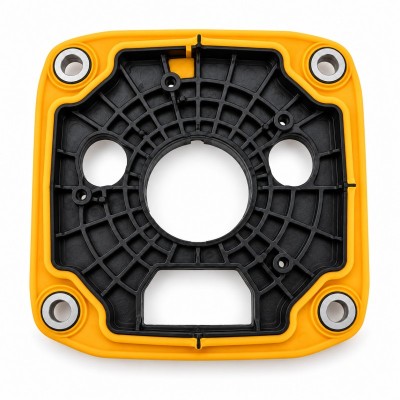
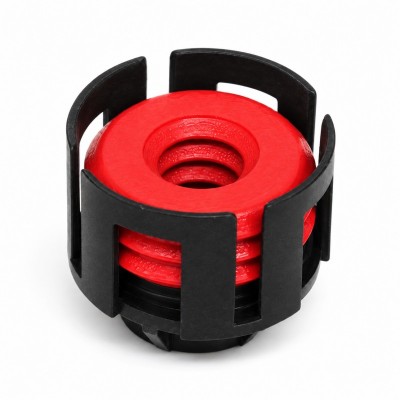
Medical Grade LSR Guide: FDA Silicone Standards, IP67 Waterproof Design & Cost-Saving Mold Tips
Medical grade liquid silicone rubber, commonly known as medical grade LSR, is widely used in medical devices, healthcare equipment, wearable electronics, diagnostic instruments, and precision sealing components. For manufacturers developing products that require biocompatibility, stable sealing, soft-touch surfaces, high precision, and long-term durability, LSR is often one of the most reliable material choices.
At SiliconePlus, we focus on custom liquid silicone rubber injection molding and silicone overmolding solutions for medical, electronics, automotive, and industrial applications. Our work covers silicone overmolding on plastic, metal, FPC, and silicone substrates, helping customers improve waterproof sealing, structural stability, product reliability, and manufacturing efficiency.
What Is Medical Grade LSR?
Medical grade LSR is a two-component platinum-cured liquid silicone rubber material designed for high-precision injection molding. Compared with traditional solid silicone compression molding, LSR injection molding offers better automation, higher repeatability, cleaner processing, and more stable dimensional control.
For medical and healthcare applications, LSR is commonly used in:
- Medical device seals and gaskets
- Respiratory device silicone components
- Diagnostic equipment sealing parts
- Medical connector seals
- Wearable health monitor components
- Soft-touch medical handles
- Silicone valves and membranes
- Overmolded medical electronic components
Medical-grade silicone overmolding is especially valuable when the product needs both a rigid support structure and a soft, sealed, skin-friendly silicone surface. For example, silicone can be overmolded onto plastic, metal, or FPC parts to create a seamless protective layer.
Why Medical Device Manufacturers Choose LSR
Medical and healthcare products often face strict requirements for safety, cleanliness, sealing performance, and long-term reliability. LSR helps solve several key product design challenges:
1. Biocompatibility and Patient-Contact Safety
For patient-contact applications, material selection must be evaluated based on the final device use, contact duration, and contact type. Medical device manufacturers often consider ISO 10993-based biological evaluation, USP Class VI materials, and FDA-related requirements during material selection and product development. FDA guidance also explains the use of ISO 10993-1 for evaluating the biological response of materials in medical devices that contact the human body.
This is why simply choosing a “soft silicone” is not enough. The material grade, supplier documentation, molding process, post-curing, cleanliness, and traceability all affect the final product risk profile.
2. Stable Sealing and Waterproof Protection
Medical devices, diagnostic instruments, and wearable health electronics often need sealing protection against moisture, dust, cleaning agents, sweat, and repeated handling. Silicone overmolding can create a continuous sealing structure around connectors, buttons, sensor housings, and device interfaces.
Your product design may require IP67 or IP68 waterproof performance depending on the use environment. IEC 60529 is the international standard used to classify ingress protection levels against dust and liquid intrusion for electrical and electronic enclosures.
At SiliconePlus, silicone overmolding is already positioned around waterproof and dustproof protection, with the website highlighting IP67 and above sealing performance for medical-grade silicone overmolding applications.
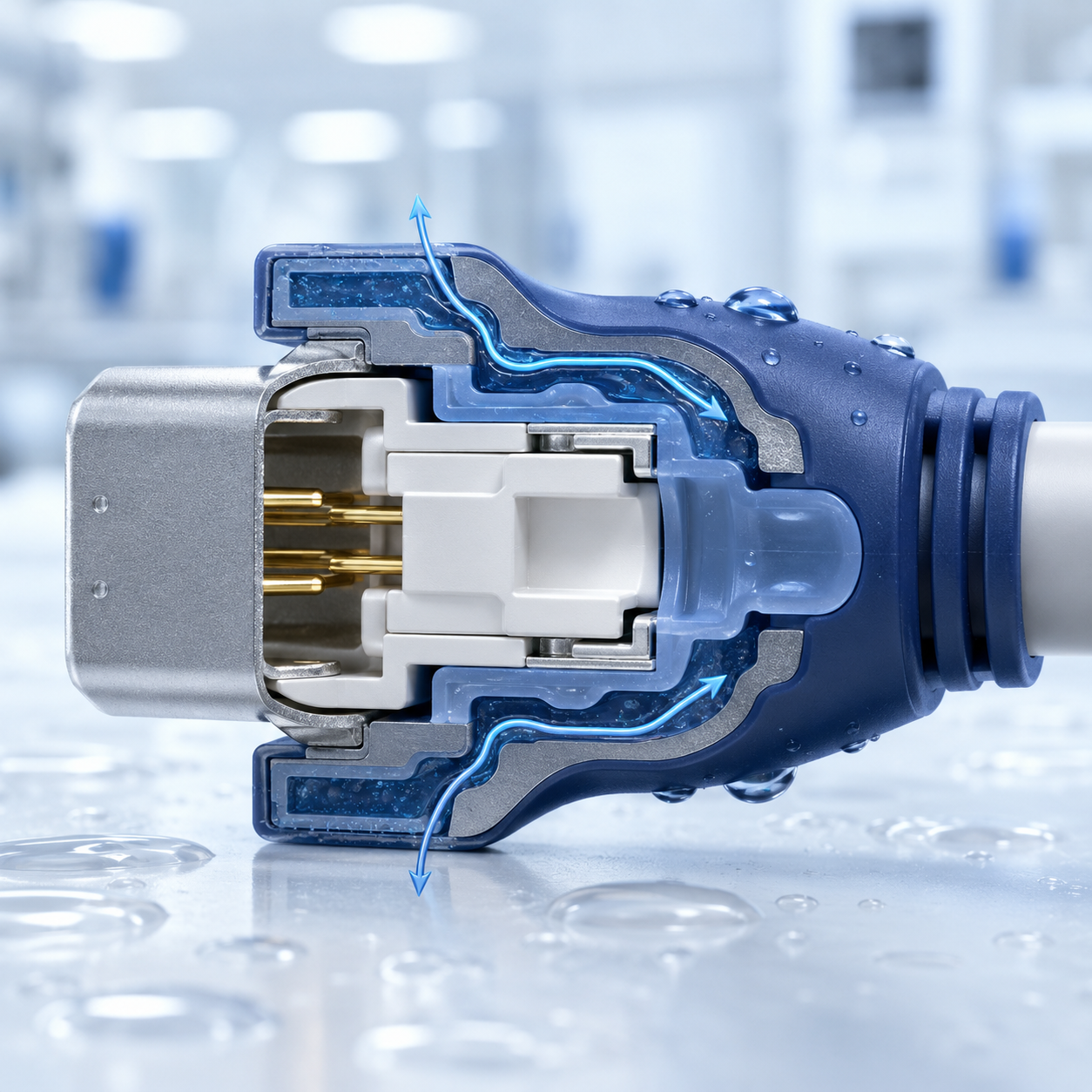
IP67 waterproof silicone design for medical grade LSR overmolding
3. Strong Bonding to Plastic, Metal, or FPC
Many medical and electronic products require multi-material bonding. LSR can be overmolded onto PC, ABS, PBT, stainless steel, aluminum, FPC, or other substrates when the material, surface treatment, mold design, and bonding method are properly controlled.
Typical bonding solutions include:
- Self-adhesive LSR material selection
- Plasma or primer surface treatment
- Mechanical locking design
- Proper gate and venting design
- Controlled mold temperature and curing conditions
- DFM optimization before mold making
For medical and electronic applications, strong bonding helps reduce peeling, water leakage, delamination, and assembly failure.
FDA Silicone Standards: What Buyers Should Understand
Many customers search for “FDA silicone standards” when developing medical or healthcare silicone parts. However, it is important to understand what FDA-related silicone compliance really means.
For rubber articles intended for repeated food contact, 21 CFR 177.2600 is a commonly referenced U.S. regulation. It covers rubber articles intended for repeated use in producing, manufacturing, packing, processing, preparing, treating, packaging, transporting, or holding food.
This regulation also includes extractives limits for rubber articles used with aqueous and fatty foods, and requires finished rubber articles intended for repeated food contact to be thoroughly cleansed before first use.
For medical devices, FDA compliance is not only about the silicone material itself. The complete device design, intended use, contact type, sterilization method, manufacturing process, and testing documentation may all be involved. Therefore, when selecting a medical grade LSR supplier, buyers should ask for:
- Material data sheet
- FDA-related declaration if applicable
- ISO 10993 or biocompatibility support when needed
- USP Class VI documentation if required
- RoHS / REACH reports for electronic or export markets
- Batch traceability
- Production process control documents
- Clean production capability for sensitive applications
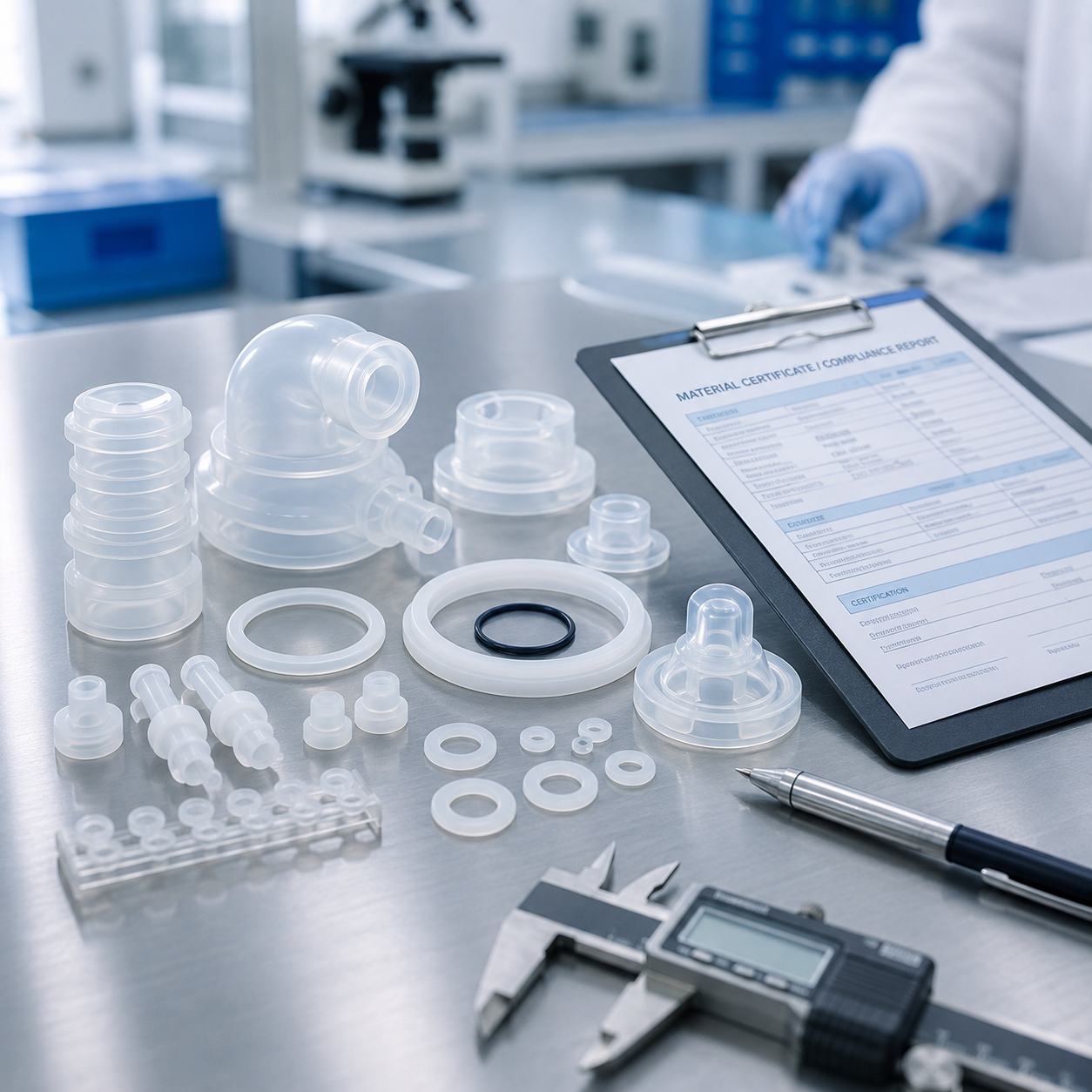
FDA silicone standards and medical grade LSR material documentation
How to Reduce LSR Mold Cost Without Sacrificing Quality
LSR mold cost is one of the biggest concerns for custom silicone projects. Medical and electronic parts often require tight tolerances, complex sealing structures, and high-precision tooling. However, mold cost can be optimized during the early design stage.
1. Start With DFM Before Mold Making
DFM, or design for manufacturing, helps identify risks before tooling starts. A good LSR manufacturer can review wall thickness, parting line, gate location, undercuts, bonding area, sealing compression, and demolding direction.
Early DFM can reduce unnecessary mold changes, shorten sampling time, and avoid expensive redesign.
2. Simplify the Part Structure Where Possible
Complex structures increase mold difficulty. If the product does not require multiple undercuts, deep ribs, sharp corners, or unnecessary decorative details, simplifying the geometry can lower mold cost and improve production stability.
3. Choose the Right Cavity Number
For early-stage projects, a single-cavity or low-cavity prototype mold may be more cost-effective. For mass production, a multi-cavity mold can reduce unit cost but requires higher initial investment.
The right choice depends on:
- Annual demand
- Tolerance requirement
- Product size
- Material cost
- Sampling timeline
- Expected product lifecycle
4. Confirm Material and Bonding Requirements Early
Changing from standard LSR to self-adhesive LSR, medical grade LSR, or special high-temperature LSR after mold design may affect shrinkage, flow, bonding, curing, and mold structure. Confirming material requirements early helps avoid mold rework.
5. Use an Experienced LSR Overmolding Manufacturer
A professional manufacturer can help optimize mold structure, substrate positioning, sealing design, bonding area, and production process before the first mold is made. This is especially important for medical connectors, wearable electronics, diagnostic equipment seals, and waterproof electronic components.
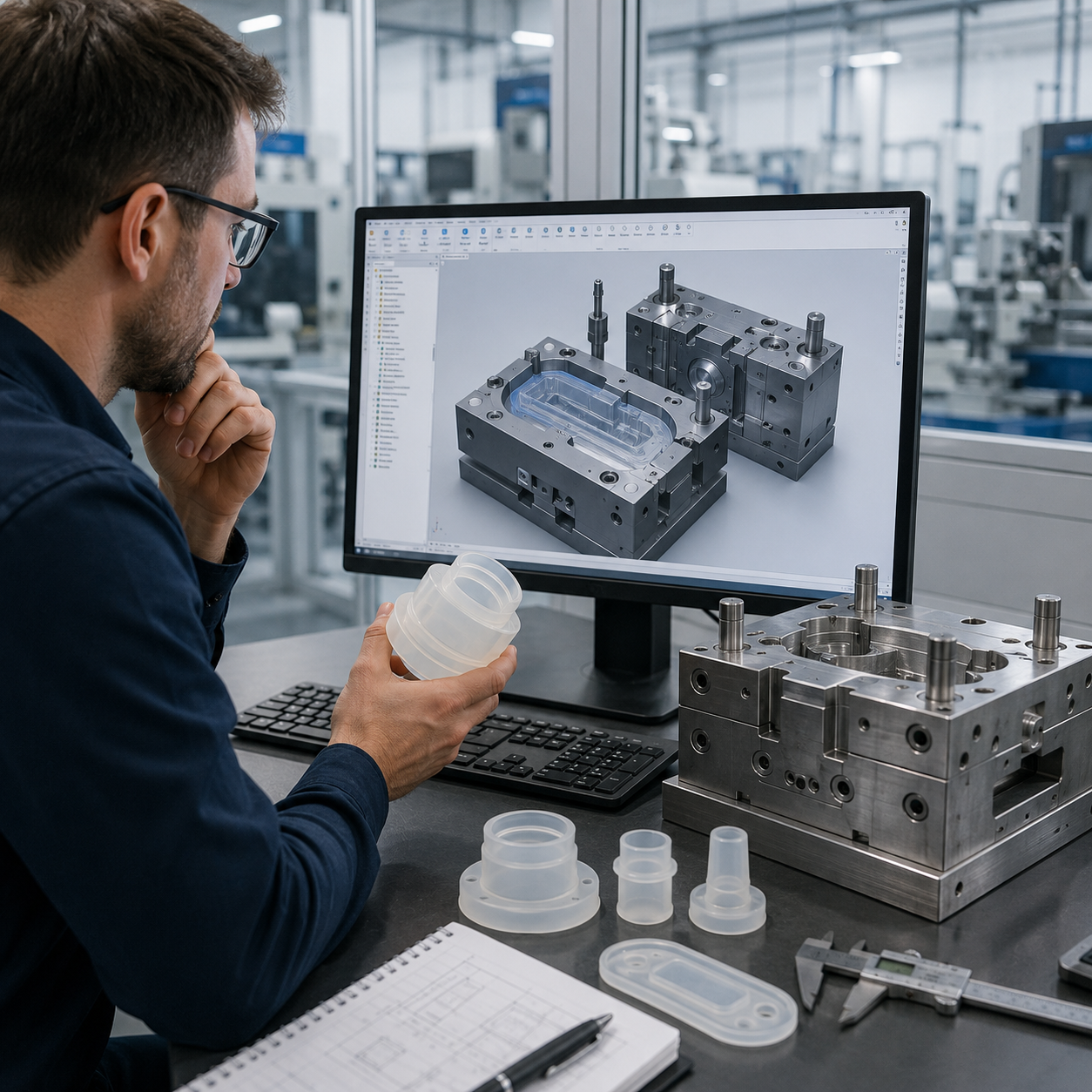
How to reduce LSR mold cost with DFM and custom mold design
IP67 Waterproof Silicone Design: Key Points
IP67 waterproof silicone design is not achieved by material alone. It depends on the full structure, including silicone hardness, compression ratio, sealing groove design, tolerance stack-up, bonding strength, and final assembly method.
Key design factors include:
1. Proper Compression Design
A silicone seal must have enough compression to block water and dust, but not so much that it causes deformation, assembly difficulty, or long-term compression set.
2. Stable Tolerance Control
For IP67 or IP68 sealing, small dimensional deviations can affect performance. LSR injection molding provides high repeatability, which is useful for precision medical and electronic sealing parts.
3. Seamless Overmolding
Overmolding can reduce assembly gaps by forming silicone directly around plastic, metal, FPC, or electronic components. This helps improve waterproof performance and reduce leakage risk.
4. Material Hardness Selection
Softer silicone may improve sealing contact, while harder silicone may provide better structural support. The final hardness should be selected based on sealing pressure, use environment, assembly method, and durability requirements.
Silicone Overmolding for Electronics in Medical and Healthcare Devices
Medical electronics and healthcare devices increasingly require waterproof, dustproof, soft-touch, and compact structures. Silicone overmolding for electronics is widely used in:
- Wearable medical sensors
- Health monitoring devices
- Medical cable connectors
- Diagnostic equipment buttons
- FPC protection parts
- Waterproof charging ports
- Smart healthcare device seals
Silicone overmolding protects sensitive electronic components from moisture, dust, vibration, and repeated handling. Your website already emphasizes that silicone overmolding can improve durability and precision across FPC, metal, plastic, and silicone substrates.
For B2B buyers, the key is not just finding a silicone part supplier. The key is finding a partner who understands material selection, mold design, bonding process, waterproof structure, and mass production quality control.
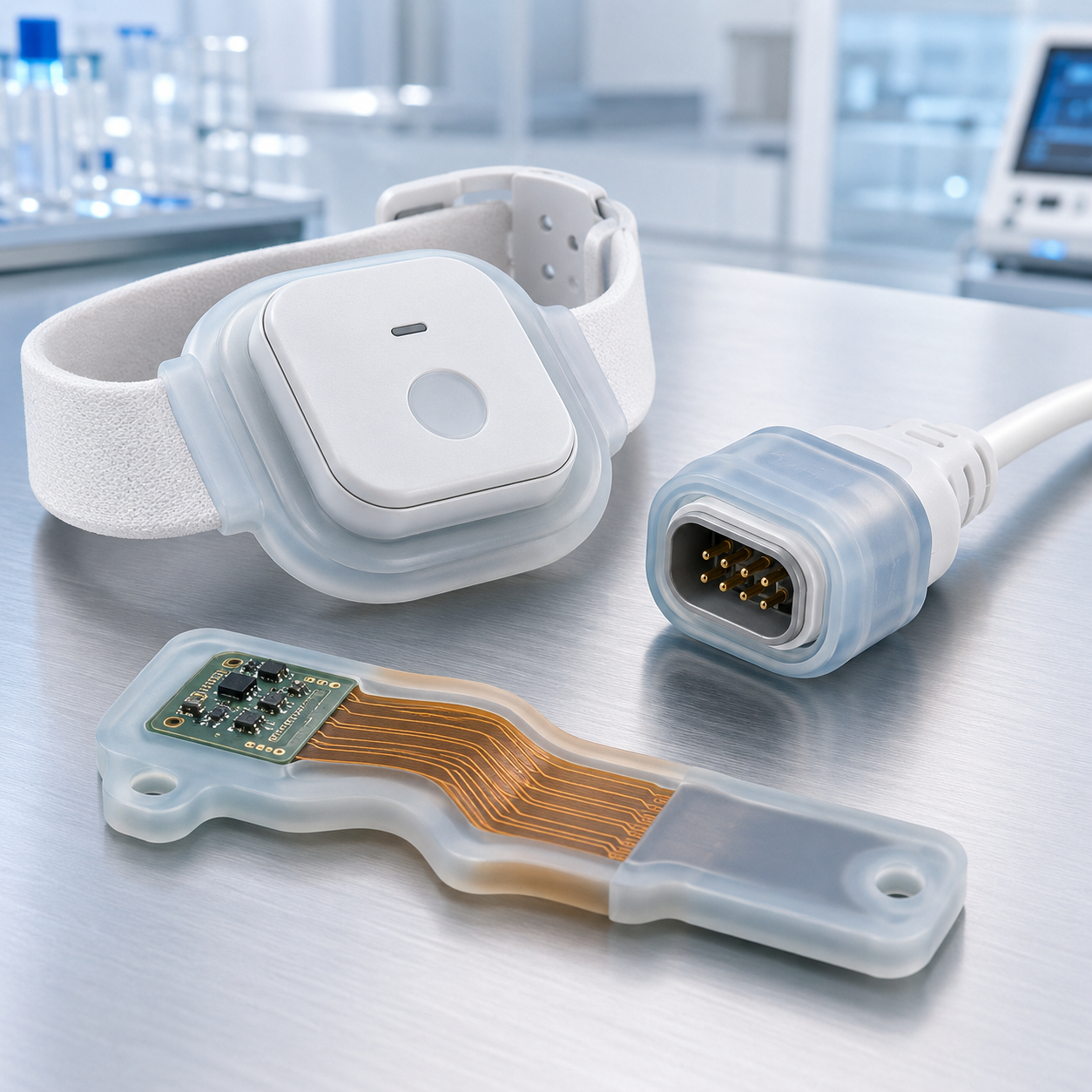
Silicone overmolding for electronics in medical and healthcare devices
How SiliconePlus Supports Custom Medical Grade LSR Projects
SiliconePlus provides custom LSR injection molding and silicone overmolding solutions from product evaluation to mass production. Our services include:
- Product structure analysis
- Material selection support
- DFM review
- LSR mold design and manufacturing
- Prototype sampling
- Silicone overmolding on plastic, metal, FPC, and silicone
- Waterproof sealing design support
- Mass production quality control
- OEM / ODM custom manufacturing
Whether your project involves a medical silicone seal, an overmolded connector, a diagnostic equipment component, or a waterproof electronic healthcare device, our engineering team can help optimize the structure, material, mold, and production process.
Conclusion
Medical grade LSR is more than a soft silicone material. It is a precision manufacturing solution for medical, healthcare, wearable, and electronic products that require safety, sealing, durability, and consistent quality.
To build a successful medical grade LSR product, buyers should consider FDA-related silicone standards, ISO 10993-based biological evaluation, IP67 waterproof silicone design, bonding performance, mold cost, and long-term production stability from the beginning of the project.
If you are developing a custom medical grade LSR part or silicone overmolding project, SiliconePlus can support you from design review and material selection to tooling, sampling, and mass production.
Contact SiliconePlus today to discuss your custom LSR overmolding project and get professional engineering support.
FAQ 1: What is medical grade LSR used for?
Medical grade LSR is used for medical device seals, diagnostic equipment components, respiratory device parts, medical connectors, silicone valves, wearable health device seals, and soft-touch overmolded components.
FAQ 2: Is FDA silicone the same as medical grade silicone?
Not exactly. FDA-related silicone compliance often refers to food-contact regulations such as 21 CFR 177.2600, while medical device applications may also require biocompatibility evaluation, ISO 10993-related testing, USP Class VI materials, and device-level regulatory review depending on the intended use.
FAQ 3: Can LSR overmolding achieve IP67 waterproof performance?
Yes, LSR overmolding can support IP67 or higher waterproof sealing when the part structure, material hardness, compression design, bonding strength, and assembly tolerances are properly engineered.
FAQ 4: How can I reduce LSR mold cost?
You can reduce LSR mold cost by doing DFM before tooling, simplifying unnecessary structures, choosing the right cavity number, confirming material requirements early, and working with an experienced LSR overmolding manufacturer.
FAQ 5: Can SiliconePlus overmold silicone onto plastic, metal, or FPC?
Yes. SiliconePlus provides custom silicone overmolding solutions for plastic, metal, FPC, and silicone substrates, supporting medical, electronics, automotive, and industrial applications.