Silicone Overmolding Design Guide for Waterproof Components
For many waterproof electronic, automotive, wearable and medical device projects, the silicone part is not just a soft rubber accessory. It is often the key structure that protects the product from water, dust, vibration, compression loss and long-term assembly failure.
Silicone overmolding is widely used when silicone needs to be integrated with plastic, metal, FPC or another silicone substrate. Instead of assembling a separate gasket after production, liquid silicone rubber can be molded directly onto the insert to create an integrated sealing, bonding or protection structure.
However, silicone overmolding is not successful by material selection alone. Many failures happen because the sealing lip is too thin, the bonding area is too small, the insert tolerance is unstable, the mold shutoff is not controlled, or the application environment is not evaluated before tooling.
This guide explains the key design points engineers and sourcing teams should consider before starting a custom LSR overmolding project.
Answer Excerpt
Silicone overmolding is a manufacturing process that molds liquid silicone rubber onto plastic, metal, FPC or silicone inserts to create integrated sealing, bonding and protective structures. Successful silicone overmolding requires correct material selection, insert tolerance control, bonding design, sealing lip geometry, mold precision, venting, surface treatment and production inspection.
What Is Silicone Overmolding?
Silicone overmolding is a process where silicone is molded directly over or around another substrate. The substrate may be plastic, metal, FPC, electronic components or pre-molded silicone.
Common silicone overmolding types include silicone over plastic, silicone over metal, silicone over FPC, silicone over silicone, insert molding with silicone and waterproof silicone sealing overmolding.
In industrial applications, LSR injection molding is often used to improve waterproofing, insulation, shock absorption, grip, sealing stability and assembly efficiency.
Where Is Silicone Overmolding Used?
1. Automotive and EV Components
Automotive electronics and new energy vehicle parts often require long-term sealing performance under heat, vibration, dust and moisture.
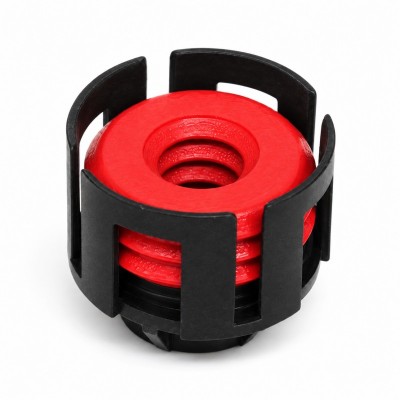
Typical applications include EV connector silicone seals, automotive wire harness grommets, sensor sealing parts, battery module sealing components, charging port silicone seals, waterproof connector inserts and anti-vibration silicone structures.
For these products, the silicone structure must remain stable after assembly pressure, temperature cycling and repeated vibration.
In EV connector and charging port projects, automotive silicone overmolding can help improve waterproof sealing and long-term assembly reliability.
2. Consumer Electronics and 3C Devices
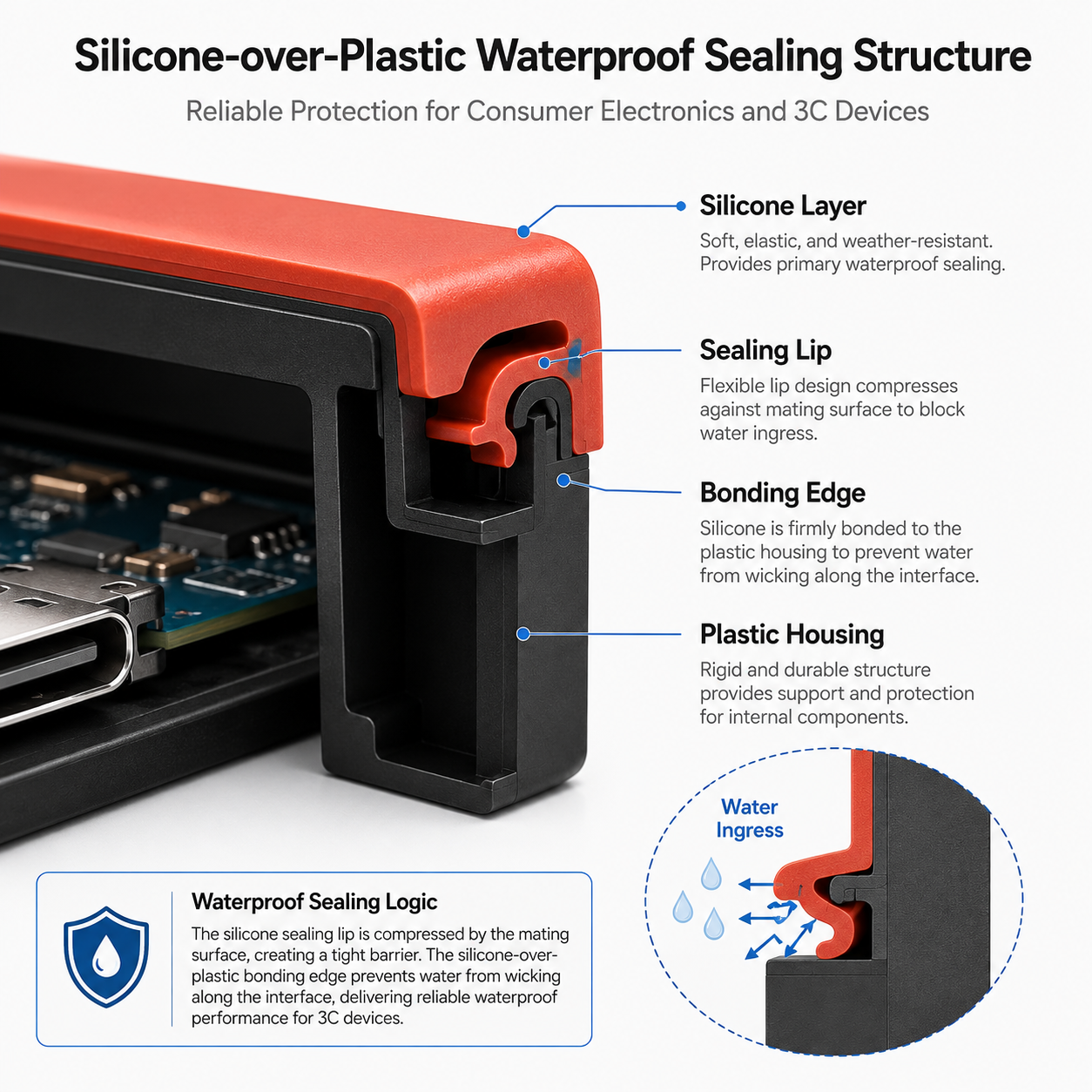
In electronic devices, silicone overmolding is often used for waterproof and dustproof structures.
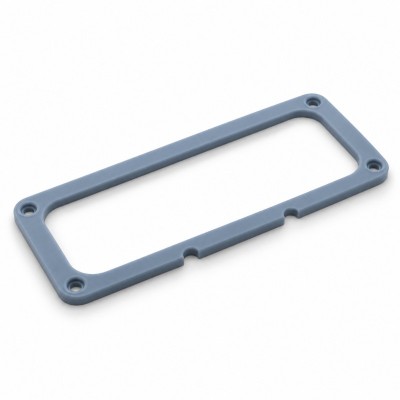
Typical applications include Type-C waterproof seals, SIM card tray sealing structures, button seals, speaker and microphone gaskets, electronic housing seals, FPC waterproof protection and small precision silicone gaskets.
These parts are usually small, thin and tolerance-sensitive. Even a slight flash, deformation or size deviation can affect assembly.
For housings, buttons and connector structures, silicone over plastic is commonly used to create integrated waterproof sealing areas.
3. Medical and Health Care Devices
Medical and health care devices may use silicone overmolding for sealing, fluid control, grip, soft touch or protection.
Typical parts include medical silicone valves, device housing seals, soft-touch overmolded handles, fluid control silicone components, wearable health device seals and transparent silicone protective parts.
For medical-related projects, material grade, clean production, dimensional consistency and inspection standards must be confirmed early.
For healthcare and device sealing projects, medical silicone components should be designed with material safety, dimensional stability and inspection requirements in mind.
4. Wearable and Beauty Devices
Wearable and beauty devices often require soft touch, waterproofing and skin-contact comfort.
Examples include smartwatch sensor seals, wearable device gaskets, beauty device handle overmolding, waterproof silicone rings, charging interface seals and flexible skin-contact silicone parts.
For these products, appearance, touch, color, sealing and assembly fit are all important.
Key Design Points for Silicone Overmolding
1. Confirm the Insert Material Before Tooling
The insert material strongly affects bonding, deformation risk and molding stability.
Common insert materials include plastic, metal and FPC. Each material behaves differently during molding. Plastic inserts may deform if the temperature resistance is not enough. Metal inserts may need surface treatment or mechanical locking. FPC inserts require careful positioning and protection.
Before tooling, engineers should confirm insert material, insert thickness, heat resistance, surface condition, tolerance range, assembly method, bonding requirement and functional test requirement.
If the insert is unstable, the overmolding process will also be unstable.
2. Design Enough Bonding or Mechanical Locking Area
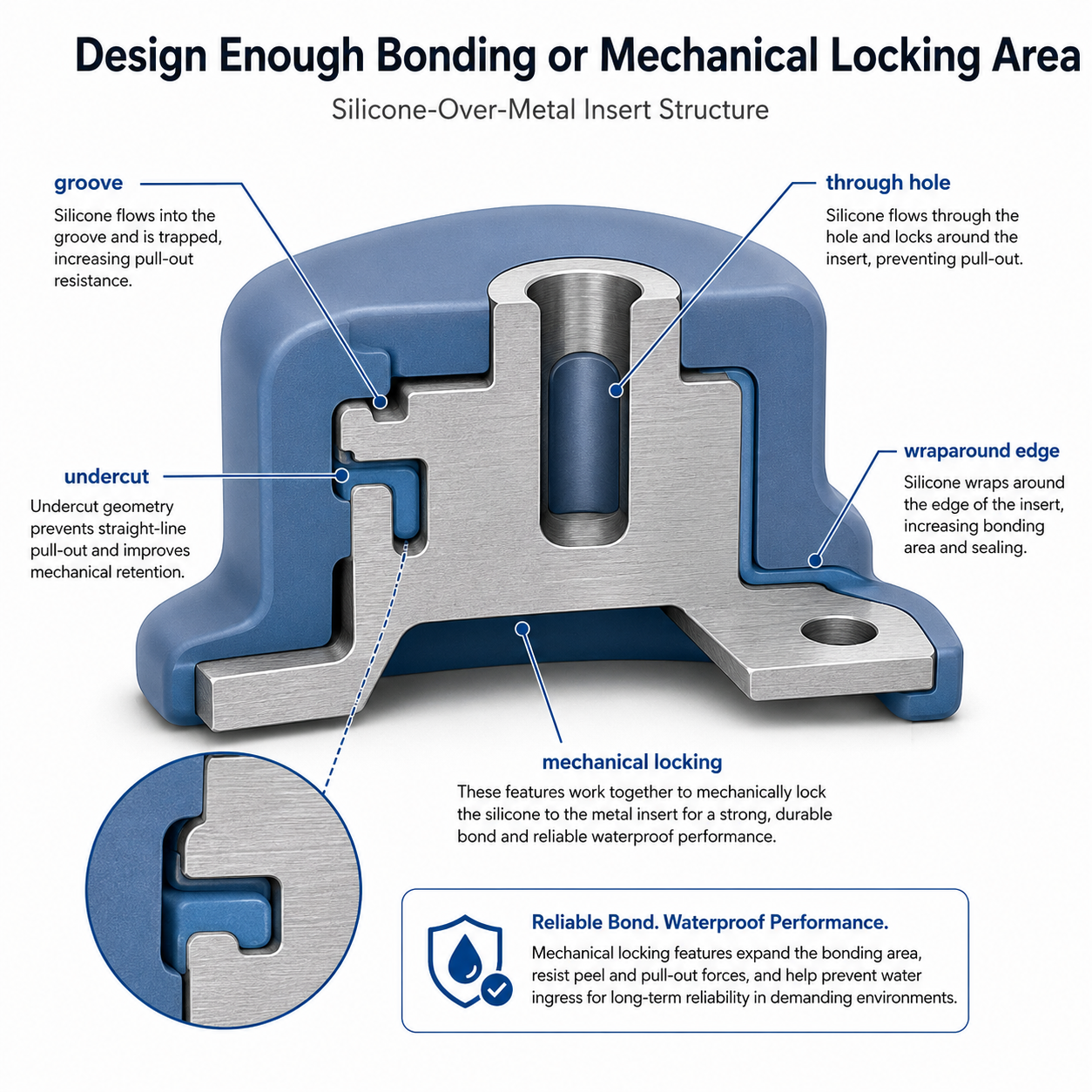
Strong overmolding does not depend only on silicone sticking to the surface. For many projects, mechanical locking is equally important.
Useful structure options include through holes, grooves, undercuts, retaining ribs, wraparound edges, side locking structures, surface texture and bonding edge extension.
If the silicone layer only sits on a flat surface with a small bonding area, peeling or delamination risk will be higher.
For metal inserts, silicone over metal usually needs mechanical locking, surface treatment or both to improve bonding reliability.
3. Control Sealing Lip Geometry
The sealing lip is one of the most important structures in waterproof silicone components.
A good sealing lip should have proper compression ratio, stable wall thickness, enough height for compression, smooth transition radius, no sharp tearing points, good contact with the mating surface and mold structure suitable for low flash.
If the sealing lip is too thin, it may tear, deform or lose compression recovery. If it is too thick, assembly force may become too high.
4. Consider Tolerance Stack-Up
Waterproof performance is not decided by the silicone part alone. The mating plastic housing, metal shell, screw force, groove size, assembly gap and compression amount all affect final sealing.
Before mold development, buyers should provide 2D drawings, 3D files, assembly drawings, mating part dimensions, target waterproof level, test method, application temperature, production quantity and insert samples if available.
This helps the manufacturer review the full sealing system instead of only quoting one silicone part.
For connector, housing and wearable projects, waterproof silicone components should be reviewed together with the full assembly structure.
5. Avoid Over-Thin Silicone Areas
Over-thin silicone areas can cause incomplete filling, tearing during demolding, weak bonding, flash risk, deformation after assembly and unstable waterproof performance.
Thin-wall silicone structures are possible, but they require precise mold design, good venting, stable material flow and controlled production parameters.
For waterproof components, thin areas should be reviewed together with the mating structure and compression amount. Otherwise, the part may pass visual inspection but fail during assembly or water testing.
6. Plan Mold Shutoff and Flash Control
For precision LSR overmolding, flash control is critical. Liquid silicone has low viscosity, so it can flow into very small gaps. If the mold shutoff is not accurate, flash may appear around sealing edges, insert holes or parting lines.
Flash control depends on mold precision, insert positioning, mold shutoff design, clamping force, venting, material viscosity, injection pressure and process stability.
For connector seals, FPC overmolding and medical silicone parts, low-flash production is especially important because excess material can affect assembly or function.
7. Test Samples Before Mass Production
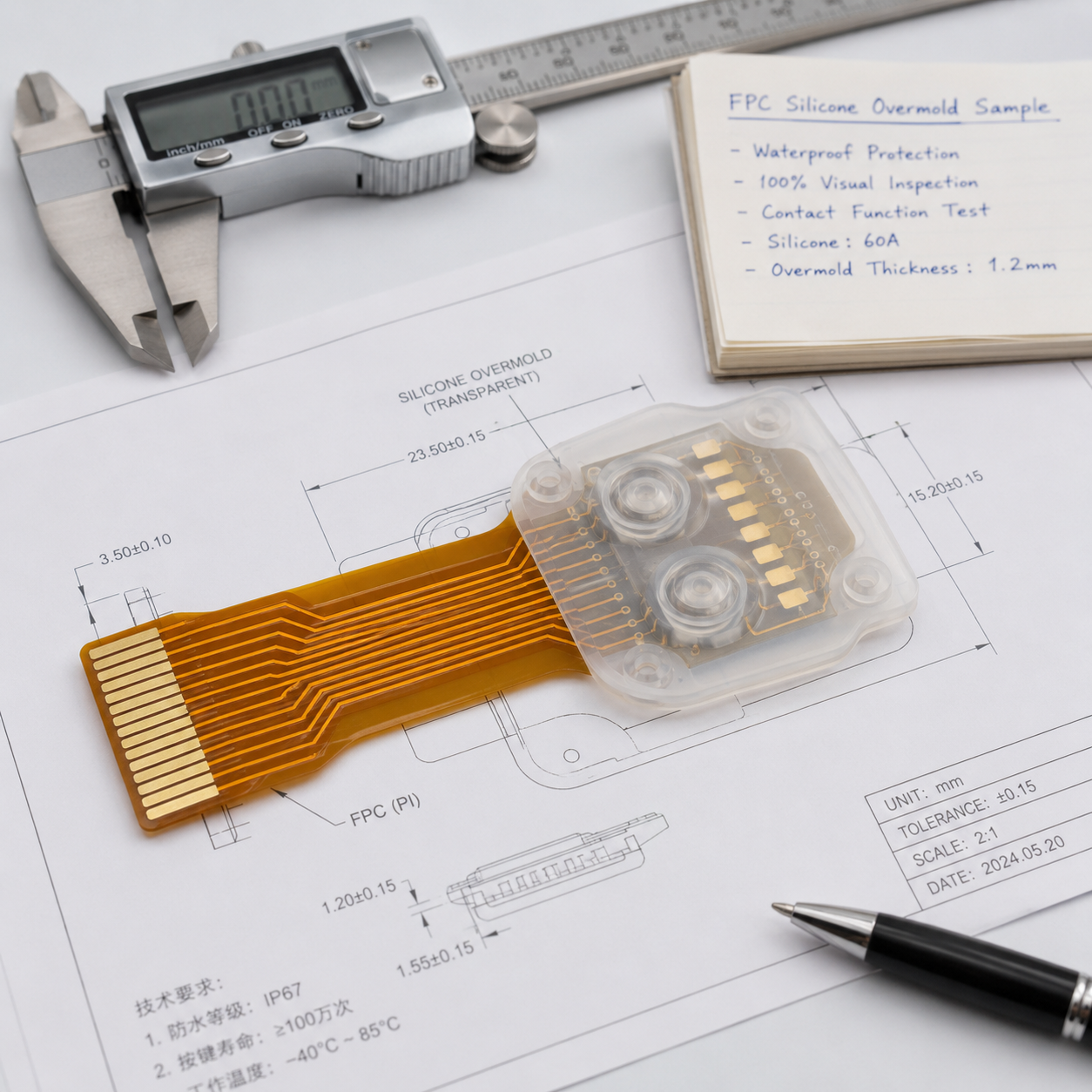
Sample testing should include more than visual inspection.
Recommended testing items include dimensional inspection, appearance inspection, insert positioning check, bonding strength check, assembly test, waterproof test, compression test, aging test if required, temperature cycling if required and pull or peel test if required.
For custom industrial silicone components, the sample approval process should simulate real product use as much as possible.
For flexible circuit protection, silicone over FPC requires accurate insert positioning, controlled molding pressure and suitable waterproof structure design.
Common Silicone Overmolding Design Mistakes
Mistake 1: Only Sending a Product Photo for Quotation
A photo can help the supplier understand the appearance, but it is not enough for accurate engineering review. For waterproof or insert-molded parts, drawings and assembly information are much more important.
If there is no 2D drawing or 3D file, the buyer should at least provide samples, application photos, assembly information and target performance requirements.
Mistake 2: Ignoring Insert Tolerance
If the plastic, metal or FPC insert varies from batch to batch, the silicone overmolding result may also vary. Insert tolerance should be controlled before mass production.
For precision waterproof parts, insert tolerance and mold positioning must be reviewed together. Otherwise, silicone thickness and sealing compression may become unstable.
Mistake 3: Making the Sealing Structure Too Small
A very small sealing lip may look clean in a 3D design, but it may not provide enough compression or long-term sealing stability.
A sealing structure should be designed based on real assembly conditions, not only appearance. Engineers should review compression, mating surface, groove size, tolerance and material hardness before mold development.
Mistake 4: Choosing Material Only by Hardness
Hardness is important, but it is not the only factor. Buyers should also consider bonding performance, compression set, tear strength, temperature resistance, transparency, color, medical grade requirement and application environment.
For overmolding projects, the compatibility between silicone and insert material is also important. Some projects may require self-adhesive LSR, primer treatment or mechanical locking design.
Mistake 5: Skipping DFM Review
DFM review helps identify risks before mold opening. It can reduce sampling failure, tooling modification and production delays.
For LSR overmolding projects, DFM review for silicone overmolding should include material selection, parting line, gate position, venting, insert positioning, bonding structure, sealing lip design, flash control and inspection method.
How SiliconePlus Supports Custom LSR Overmolding Projects
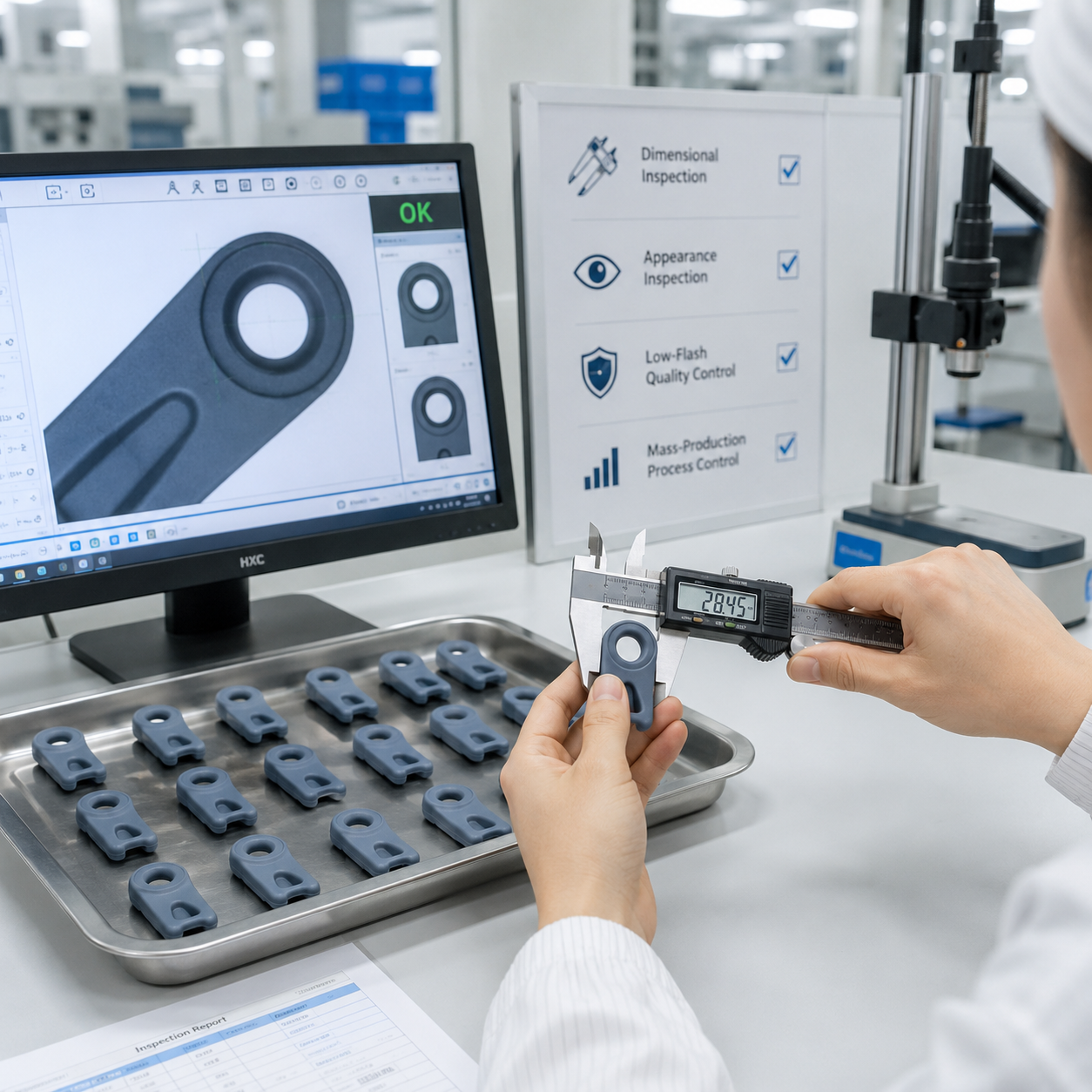
For custom silicone overmolding projects, engineering support is valuable from the beginning. A professional manufacturer should help evaluate product structure, insert material, bonding method, sealing geometry, mold design and inspection standards.
A complete LSR overmolding project usually includes drawing and sample review, DFM evaluation, material recommendation, mold design, insert positioning design, LSR injection molding, sample testing, quality inspection, mass production, packaging and shipment.
This process helps buyers reduce risk from prototype to mass production.
For automotive, medical, electronic and wearable applications, the manufacturer should not only produce the silicone part but also understand the function of the sealing structure. This is especially important for waterproof, bonding and insert-molded components.
To start a project, you can request a custom LSR molding quote with drawings, samples, material requirements and estimated quantity.
FAQ
1. What is silicone overmolding used for?
Silicone overmolding is used to create integrated sealing, waterproofing, insulation, shock absorption, soft-touch and protective structures. It is commonly used in automotive electronics, medical devices, consumer electronics, wearable devices, beauty devices and industrial components.
2. Can silicone be overmolded onto plastic?
Yes. Silicone can be overmolded onto plastic when the plastic material, heat resistance, surface condition, mold design and bonding method are suitable. Common applications include waterproof electronic housings, connector seals, button seals and soft-touch components.
3. Can silicone be overmolded onto metal?
Yes. Silicone over metal is commonly used for sealing, insulation, anti-vibration and protective structures. Metal inserts may require mechanical locking, surface treatment or special bonding design depending on the application.
4. Can FPC be overmolded with silicone?
Yes. FPC silicone overmolding can protect flexible circuits from moisture, dust, bending stress and environmental exposure. The key is accurate insert positioning, controlled molding pressure and suitable waterproof structure design.
5. What information is needed for a silicone overmolding quote?
Buyers should provide 2D drawings, 3D files, insert material, samples, application environment, waterproof requirement, tolerance requirement, hardness, color, testing standard and estimated order quantity.
6. Why is DFM review important for LSR overmolding?
DFM review helps identify risks related to material, bonding, wall thickness, sealing lip design, insert tolerance, mold shutoff, demolding and inspection before tooling. It can reduce sampling failure and tooling modification costs.
7. What causes silicone overmolding failure?
Common causes include insufficient bonding area, poor insert tolerance, unsuitable material selection, weak mechanical locking, thin sealing lips, poor mold shutoff, flash, deformation and lack of functional testing before mass production.
Conclusion
Silicone overmolding is a powerful process for waterproof electronic, automotive, medical, wearable and industrial components. It allows silicone to be integrated with plastic, metal, FPC or silicone substrates, creating reliable sealing and protection structures.
For successful custom LSR overmolding, buyers should not focus only on material hardness or unit price. The real success factors include insert stability, bonding design, sealing lip geometry, tolerance control, mold precision, flash control, sample testing and mass production inspection.
If you are developing waterproof silicone components, silicone over plastic parts, silicone over metal parts or FPC silicone overmolding parts, prepare your drawings, samples, material requirements, application environment and estimated quantity. A professional LSR overmolding manufacturer can help review the design, reduce project risk and support production from prototype to mass production.