Silicone to Plastic Bonding: Adhesive vs LSR Overmolding for Mass Production
Silicone to Plastic Bonding: Adhesive vs LSR Overmolding
Silicone to plastic bonding is a common challenge in many product development projects. Engineers, buyers, and product designers often search for how to glue silicone to plastic, what adhesive works best, and whether silicone can permanently bond to plastic in real production.
The answer depends on the application. Adhesive bonding may work for temporary repair, prototype testing, or low-stress assembly. However, when a project requires waterproof sealing, repeated use, stable bonding strength, clean appearance, and long-term durability, LSR overmolding is usually a more reliable manufacturing solution.
For OEM/ODM projects, the key question is not only whether silicone can stick to plastic once. The real question is whether the bonding structure can remain stable during mass production and real product use.
Answer Excerpt
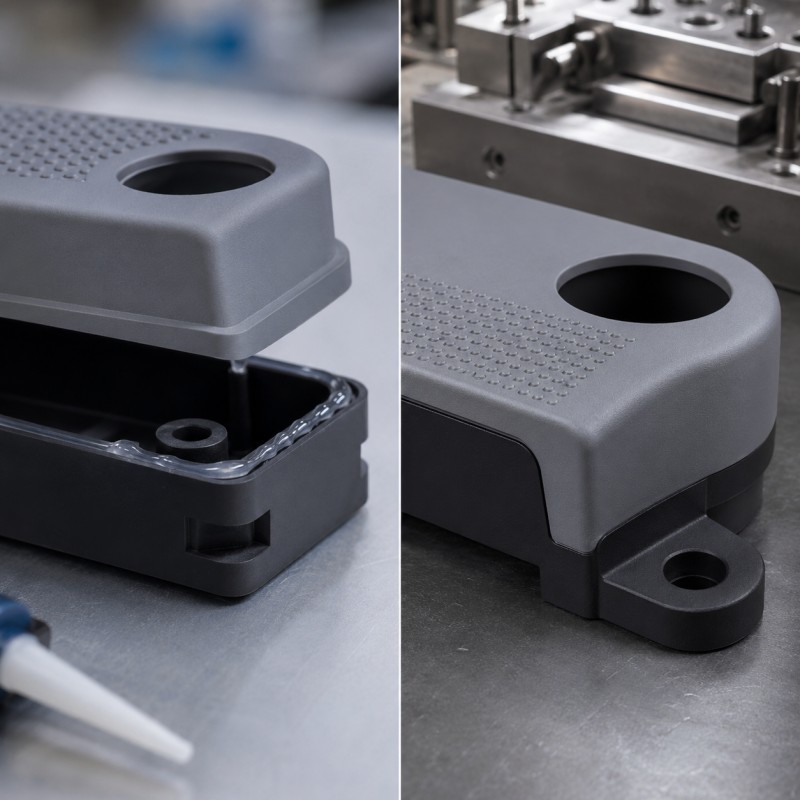
Silicone can be bonded to plastic through adhesive bonding, surface treatment, mechanical locking design, or liquid silicone rubber overmolding. Glue may be useful for temporary repair or small-volume testing. For mass production, waterproof sealing, stable bonding strength, and long-term product reliability, LSR overmolding is often preferred because the silicone is molded directly onto the plastic substrate under controlled mold, temperature, pressure, and curing conditions.
Why Is Silicone Difficult to Glue to Plastic?
Silicone is flexible, heat resistant, weather resistant, and chemically stable. These properties make silicone useful in automotive electronics, medical devices, wearable products, beauty devices, consumer electronics, and industrial sealing parts.
However, these same properties also make silicone difficult to bond with ordinary glue. Many silicone materials have low surface energy, which means adhesives may not easily wet the surface or form a strong bonding layer.
Plastic materials can also create bonding challenges. Some plastic surfaces are smooth, oily, low-energy, or not designed with enough bonding area. If the product structure is not designed correctly, the silicone may peel away even if the first sample looks acceptable.
Common silicone to plastic bonding problems include:
Silicone peeling away from the plastic surface
Weak bonding after heat aging
Bonding failure after repeated bending or pulling
Water leakage around the bonding area
Glue overflow affecting product appearance
Inconsistent bonding strength in manual production
Bonding failure after contact with sweat, oil, cleaning agents, or outdoor environments
For simple repair, glue may be enough. For a functional product that needs stable batch production, adhesive bonding can become a risk point.
When Can Adhesive Bonding Be Used?
Adhesive bonding may be considered when the part is used in a low-stress environment, the production quantity is small, or the silicone part only needs temporary positioning.
It can also be used during early prototype evaluation before the customer decides whether to invest in mold development.
Adhesive bonding may be suitable for:
Prototype repair
Temporary sample testing
Low-load silicone pads
Non-critical covers
Short-term product validation
Manual assembly for very small quantities
However, adhesive bonding depends heavily on the silicone grade, plastic type, surface treatment, glue selection, curing condition, operator skill, and working environment. If any of these factors are unstable, bonding quality may change from batch to batch.
What Is LSR Overmolding?
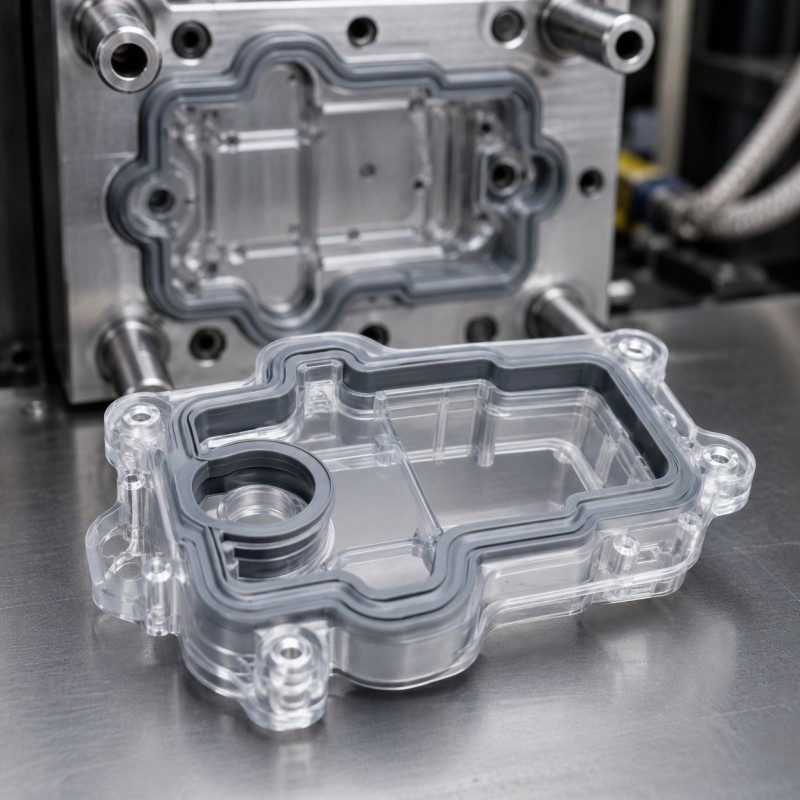
LSR overmolding is a manufacturing process where liquid silicone rubber is molded directly onto a plastic insert, metal insert, FPC, cable, or another substrate.
For silicone over plastic parts, the plastic insert is placed into a precision mold first. Then liquid silicone rubber is injected into the mold and formed around the required sealing, grip, cushioning, or protection area. After curing, the silicone and plastic become an integrated component.
Unlike manual glue bonding, LSR overmolding controls the bonding structure through mold design, insert positioning, injection pressure, curing temperature, venting, and material selection.
This process is widely used for:
Automotive connector seals
Waterproof electronic housings
Sensor sealing structures
Wearable device sealing rings
Medical device soft-touch components
Beauty device contact parts
Industrial waterproof plugs and covers
Consumer electronics buttons and protection parts
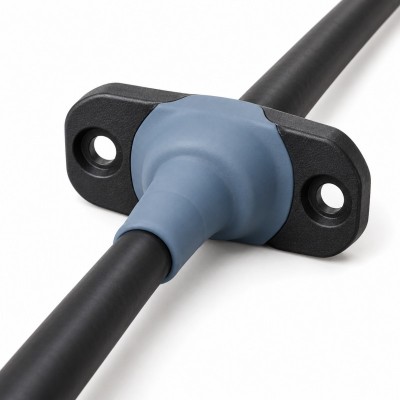
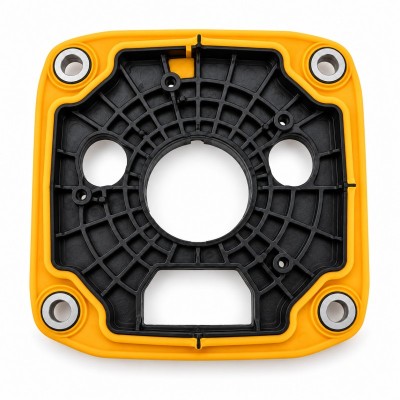
For products that require waterproofing, soft touch, shock absorption, insulation, or long-term sealing, silicone over plastic overmolding can often provide better stability than separate silicone parts or manual glue assembly.
Adhesive Bonding vs LSR Overmolding
Adhesive bonding and LSR overmolding are not the same type of solution. Adhesive bonding is mainly an assembly method. LSR overmolding is a manufacturing process.
Adhesive bonding is usually easier to start because it does not require mold investment at the beginning. But it is harder to control during mass production. Glue amount, surface cleanliness, curing time, worker operation, temperature, and humidity can all affect bonding quality.
LSR overmolding requires tooling development, but it is more suitable for repeatable production. The silicone shape, bonding area, sealing edge, thickness, and product appearance can be controlled by the mold and molding process.
For products that only need temporary bonding, adhesive may be acceptable. For products that require stable sealing and long-term reliability, LSR overmolding is usually a better choice.
Why LSR Overmolding Is Better for Mass Production
In mass production, one successful sample is not enough. The real challenge is whether every batch can maintain the same bonding strength, sealing performance, size accuracy, and appearance.
Manual adhesive bonding can be affected by many uncontrolled factors. If the glue amount is too much, it may overflow and affect appearance or assembly. If the glue amount is too little, the silicone may peel off. If the surface is not clean enough, bonding strength may drop. If curing time is unstable, product quality may vary.
LSR overmolding reduces these risks by using a more controlled process. The silicone is formed in the mold, not applied by hand. The bonding position, silicone coverage, sealing line, and appearance can be repeated more consistently.
This is especially important for B2B projects such as automotive electronics, medical devices, waterproof consumer electronics, wearable devices, and industrial components.
Design Factors for Silicone Over Plastic Parts
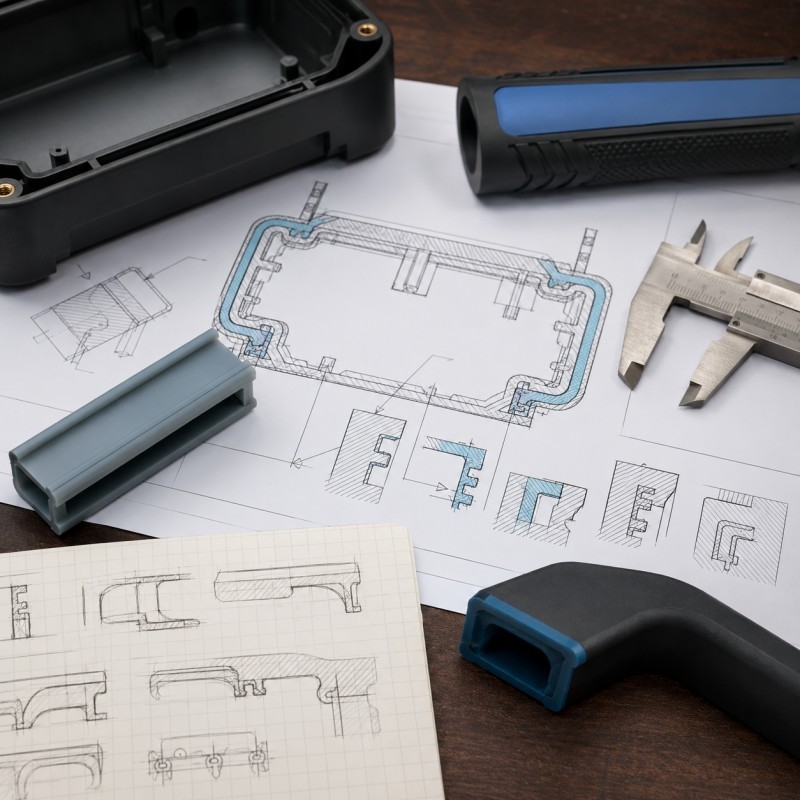
Successful silicone to plastic bonding is not only about choosing the right material. Product structure, mold design, and production process are equally important.
Plastic Material Compatibility
Different plastics have different bonding behavior. Some engineering plastics are easier to overmold with silicone, while others may require surface treatment, primer, mechanical locking design, or material adjustment.
Common plastic substrates may include PC, PA, PBT, ABS, PPS, and other engineering plastics depending on product requirements.
Bonding Area and Structure
A larger and well-designed bonding area can improve stability. If silicone only contacts a very small smooth surface, peeling risk may increase.
Grooves, holes, ribs, undercuts, slots, and mechanical locking structures can help improve bonding strength and reduce separation risk.
Silicone Thickness
Silicone thickness affects flexibility, sealing pressure, curing stability, and product assembly.
If the silicone layer is too thin, it may tear or fail during assembly. If it is too thick, it may affect curing, dimensional stability, and product fit. Thickness should be designed according to function, hardness, sealing pressure, and mold flow.
Insert Positioning
Plastic inserts must be positioned accurately inside the mold. Poor insert positioning can cause flash, uneven silicone coverage, blocked holes, product deformation, or unstable sealing edges.
For precision silicone over plastic components, stable insert positioning is critical for batch consistency.
Waterproof Sealing Requirement
For waterproof silicone overmolded parts, the sealing structure must be evaluated together with compression ratio, assembly tolerance, silicone hardness, sealing line design, and test conditions.
Waterproof sealing performance up to IP68 may be achievable depending on product structure, material, assembly design, and validation requirements.
Common Applications of Silicone Over Plastic
Silicone over plastic parts are used in many products where hard plastic needs a soft, flexible, waterproof, shock-absorbing, insulating, or skin-friendly surface.
Typical applications include:
Automotive electronic connector seals
Sensor housings with integrated silicone sealing
Waterproof buttons for consumer electronics
Smart wearable device sealing parts
Medical device handles and sealing components
Beauty device soft-touch contact parts
Industrial cable protection and sealing plugs
Compared with separate silicone gaskets or manually glued covers, integrated overmolded silicone structures can help reduce assembly steps and improve long-term reliability.
How to Choose Between Glue and LSR Overmolding
If the project is only for repair, temporary testing, or low-load use, adhesive bonding may be enough.
But if the product needs stable sealing, repeated assembly, clean appearance, high bonding consistency, and reliable mass production, LSR overmolding should be considered earlier in the design stage.
You should consider LSR overmolding when your project requires:
Waterproof or dustproof sealing
Long-term bonding between silicone and plastic
Repeated bending, pressing, pulling, or assembly
Clean appearance without visible glue marks
Stable quality in batch production
Integrated soft-touch, sealing, cushioning, or protection function
High reliability for automotive, medical, electronic, or industrial use
How SiliconePlus Supports Custom Silicone Over Plastic Projects
SiliconePlus provides custom LSR overmolding and precision silicone parts manufacturing for automotive electronics, medical devices, consumer electronics, wearable products, beauty devices, and industrial components.
We support OEM/ODM projects from drawing review, DFM suggestions, material selection, mold development, sample production, process optimization, and mass production.
Our capabilities include silicone over plastic, silicone over metal, silicone over FPC, insert molding, waterproof silicone sealing parts, and custom precision silicone components.
For silicone to plastic bonding projects, our team can help evaluate whether adhesive bonding, surface treatment, mechanical locking, or LSR overmolding is more suitable for your product structure and production requirements.
Conclusion
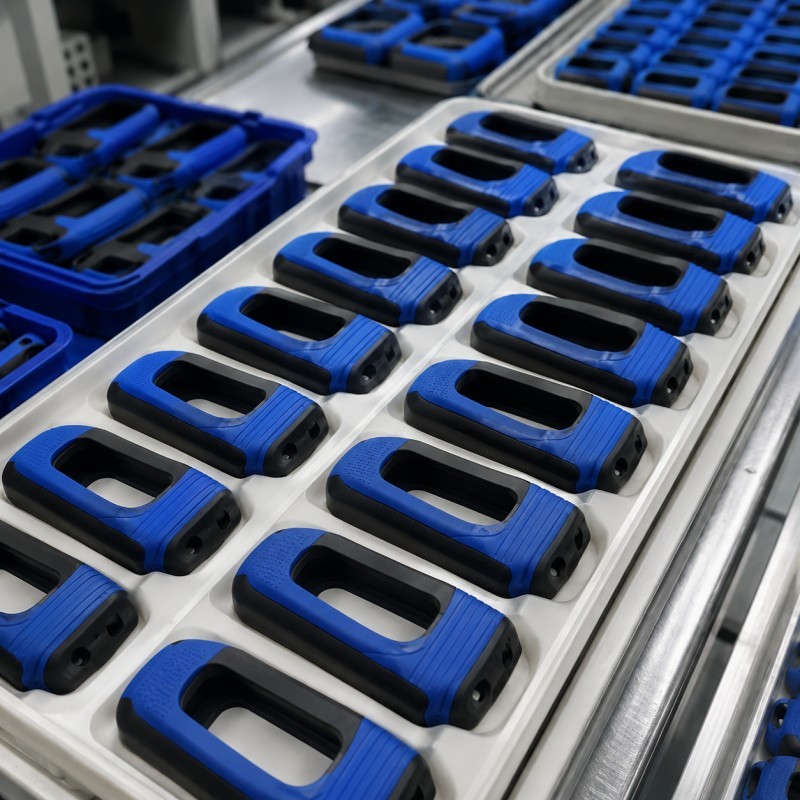
Gluing silicone to plastic may work for temporary repair or simple prototype testing, but it is not always the best solution for mass production.
When the part requires waterproof sealing, stable bonding strength, clean appearance, and long-term reliability, LSR overmolding is usually a more suitable manufacturing process.
If you are developing a silicone over plastic part, please send us your 2D/3D drawing, sample photo, plastic material, silicone requirement, application environment, and estimated quantity. SiliconePlus will review your project and provide practical manufacturing suggestions for custom silicone overmolding production.