The Complete Guide to FPC with Silicone Overmolding for OEMs
Introduction to FPC and Silicone Overmolding: A Critical Solution for OEMs
Flexible Printed Circuits (FPCs) have revolutionized electronic device design, offering unparalleled flexibility, space-saving advantages, and lightweight solutions. When combined with silicone overmolding, FPCs become even more robust, durable, and resistant to environmental stresses—making them ideal for demanding OEM applications across industries such as consumer electronics, medical devices, automotive, and industrial automation.
This comprehensive guide explores every facet of FPC with silicone overmolding, providing OEMs with the insights needed to optimize design, manufacturing, and integration processes. We delve into material selection, process steps, benefits, and best practices, ensuring your organization can leverage this advanced technology to produce superior products.
Understanding Flexible Printed Circuits (FPC): The Foundation of Modern Electronics
What Are Flexible Printed Circuits?
Flexible Printed Circuits (FPCs) are thin, lightweight circuits that utilize flexible substrates—typically polyimide or polyester films—to allow electrical connections to bend, fold, and conform to complex geometries. Their design includes conductive traces, pads, and components, all embedded on flexible substrates, enabling innovative device form factors.
Key Advantages of FPCs for OEMs
Space and Weight Reduction: Compact and lightweight, ideal for portable devices.
Design Flexibility: Can be shaped into complex forms, including curves and folds.
Reduced Assembly Time: Fewer connectors and cables streamline manufacturing.
Enhanced Reliability: Fewer mechanical joints reduce failure points.
Cost Efficiency: Mass production reduces per-unit costs.
Common Industries Utilizing FPCs
Consumer electronics (smartphones, wearables)
Medical devices (implantable sensors, diagnostic tools)
Automotive (sensor wiring, infotainment systems)
Industrial automation (robotics, control panels)
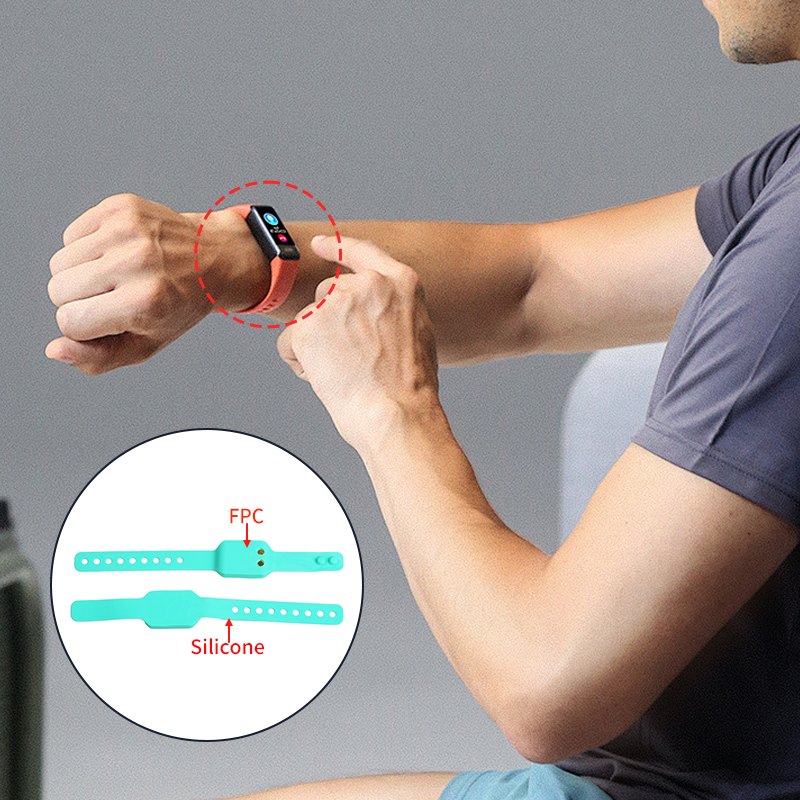
Silicone Overmolding: Elevating FPC Durability and Performance
What Is Silicone Overmolding?
Silicone overmolding involves encasing or protecting FPCs with a layer of silicone rubber. This process enhances the device's environmental resilience, mechanical durability, and user safety. The silicone layer acts as a protective barrier against moisture, dust, chemicals, and mechanical shocks.
Why OEMs Choose Silicone Overmolding for FPCs
Superior Environmental Resistance: Excellent against moisture, UV exposure, and temperature fluctuations.
Enhanced Mechanical Protection: Absorbs shocks, vibrations, and impacts.
Biocompatibility: Suitable for medical and skin-contact applications.
Aesthetic and Tactile Benefits: Soft, flexible surface improves user experience.
Design Considerations for FPC with Silicone Overmolding
Material Selection
Substrate Material: Polyimide is preferred for its high-temperature resistance, flexibility, and chemical stability.
Conductive Traces: Copper, gold, or silver inks, depending on conductivity and corrosion resistance requirements.
Silicone Rubber: Medical-grade or industrial-grade silicones, selected based on application environment, biocompatibility, and mechanical properties.
Electrical and Mechanical Design
Trace Layout: Minimize trace length and optimize routing for signal integrity.
Component Placement: Position components away from overmold edges to prevent damage.
Overmold Thickness: Balance between protection and flexibility; typically ranges from 0.5mm to 3mm.
Stress Relief Features: Incorporate strain relief zones to prevent damage during bending.
Thermal Management
Ensure the FPC design accounts for heat dissipation, especially in high-power applications, by integrating thermal vias or heat spreaders.
Environmental Sealing and Certification
Design for ingress protection (IP ratings) if required.
Select silicone formulations that meet industry-specific standards (e.g., UL, RoHS, FDA).
Manufacturing Process of Silicone Overmolded FPCs
Step 1: FPC Fabrication and Assembly
Substrate Preparation: Cutting, cleaning, and surface treatment.
Patterning Conductive Traces: Using photolithography, etching, or printing.
Component Mounting: Surface-mount devices (SMD) are placed via pick-and-place machines.
Electrical Testing: Verify circuit integrity before overmolding.
Step 2: Molding Preparation
Fixture Design: Custom molds are designed to conform to the device shape.
FPC Positioning: Secure the FPC within the mold to ensure precise overmolding.
Step 3: Silicone Overmolding
Material Preparation: Mix silicone rubber with additives if needed (e.g., colorants, curing agents).
Injection or Transfer Molding: Silicone is injected into the mold under controlled temperature and pressure.
Curing: Typically involves heat curing (e.g., 150°C for 10-30 minutes), depending on silicone formulation.
Demolding: Carefully remove the overmolded FPC, inspecting for defects.
Step 4: Post-Processing and Quality Control
Surface Finishing: Trimming excess silicone, surface smoothing.
Final Testing: Electrical, mechanical, and environmental testing.
Certification: Ensure compliance with relevant industry standards.
Critical Benefits of Silicone Overmolding for OEM Applications
| Benefit | Description | Impact on OEM Products |
| Enhanced Durability | Silicone protects against mechanical shocks and vibrations. | Longer product lifespan and reduced warranty claims. |
| Environmental Resistance | Resists moisture, dust, chemicals, and UV exposure. | Suitable for outdoor and harsh environment applications. |
Biocompatibility | Medical-grade silicones are safe for skin contact. | Enables integration into medical devices and wearables. |
Design Flexibility | Overmolding allows complex geometries and ergonomic shapes. | Better product aesthetics and ergonomic comfort. |
| Simplified Assembly | Reduced need for additional protective enclosures or coatings. | Streamlined manufacturing process and cost savings. |
Industry Best Practices for OEMs Implementing Silicone Overmolded FPCs
Early Design Collaboration: Work closely with material suppliers and manufacturers to optimize design for overmolding.
Prototyping and Testing: Conduct extensive prototypes to evaluate mechanical, electrical, and environmental performance.
Material Compatibility Checks: Ensure silicone formulations do not adversely affect FPC materials.
Process Validation: Standardize manufacturing steps with rigorous quality controls.
Environmental Testing: Include temperature cycling, humidity, and chemical exposure tests to verify durability.
Documentation and Certification: Maintain comprehensive records to meet regulatory standards.
Future Trends in FPC with Silicone Overmolding Technologies
Advanced Materials: Development of silicone composites with enhanced thermal conductivity and electrical insulation.
Miniaturization: FPC and overmolding processes evolving for ultra-thin, high-density applications.
Automated Manufacturing: Integration of robotics for precision overmolding and inspection.
Smart Overmolds: Embedding sensors within silicone layers for real-time device monitoring.
Eco-friendly Solutions: Biodegradable silicones and sustainable manufacturing practices.
Conclusion: Why OEMs Must Embrace FPC with Silicone Overmolding
The integration of FPC with silicone overmolding represents a pivotal advancement in electronic component design, offering OEMs a compelling combination of flexibility, durability, and environmental resilience. As devices become more compact, complex, and demanding, this technology provides a strategic advantage, enabling the creation of high-performance, reliable, and aesthetically appealing products.
By understanding the nuances of design, material selection, and manufacturing processes, OEMs can harness the full potential of silicone overmolded FPCs to stay ahead in competitive markets. Embracing this technology not only enhances product quality but also paves the way for innovative applications across diverse industries.
Website:www.siliconeplus.net
Email:sales11@siliconeplus.net.
Phone:13420974883
Wechat:13420974883