Top 10 Tips for Designing B2B Products with Liquid Silicone Rubber Overmolding
Introduction:
In the rapidly evolving landscape of B2B product development, Liquid Silicone Rubber (LSR) overmolding has emerged as a game-changing technology, offering unmatched benefits such as enhanced durability, superior flexibility, and improved aesthetic appeal. To fully leverage these advantages, meticulous design and manufacturing expertise are essential.
As a National High-Tech Enterprise and “Specialized & Sophisticated” certified manufacturer, Siliconeplus combines precision LSR overmolding technology, a professional engineering team, and an in-house mold workshop to deliver high-performance, reliable, and customizable solutions. Our comprehensive capabilities ensure that B2B products not only meet stringent quality and regulatory standards but also stand out in competitive markets, providing long-term innovation and performance.
1. Understand the Unique Properties of Liquid Silicone Rubber
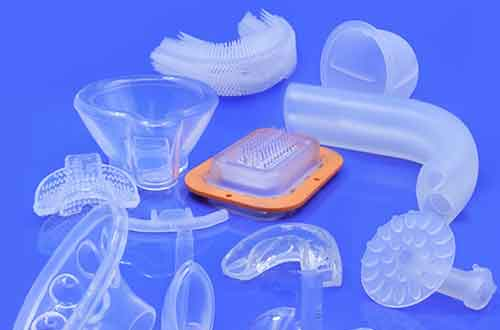
Liquid Silicone Rubber (LSR) is renowned for its exceptional thermal stability, chemical resistance, biocompatibility, and elasticity. When designing with LSR, it is crucial to capitalize on these properties to enhance product functionality.
Temperature Resistance:
LSR can withstand temperatures from -55°C to +300°C, making it ideal for harsh environments.
Chemical Resistance:
It resists oils, solvents, and other chemicals, ensuring long-term durability.
Biocompatibility:
Suitable for medical and healthcare applications where safety is paramount.
Design Tip:
When integrating LSR into your B2B products, ensure your design accounts for these properties to maximize lifespan and performance. For example, in electronic enclosures, LSR’s thermal stability helps protect sensitive components.
2. Precise Material Selection and Compatibility
Choosing the right LSR formulation is vital for product performance. Variations in hardness (durometer), transparency, and additives influence the final product.
Hardness Selection:
Use softer variants (Shore A 20-30) for flexible grips or medical seals, and harder variants (Shore A 50-70) for structural components.Design Tip:
Conduct compatibility testing early in the design phase to identify the optimal LSR formulation for your application, especially when overmolding onto plastics like ABS, PC, or POM.3. Optimize Substrate Material and Surface Preparation
The success of LSR overmolding heavily depends on the substrate material and its surface condition.
Material Choice: Select substrates with good adhesion properties. Common materials include engineering plastics with low surface energy.
Surface Treatment:
Employ abrasion, plasma treatment, or primers to enhance adhesion. Proper surface roughness increases mechanical bonding.Design Tip:
Implement pre-molding surface treatments to ensure strong, durable bonds between the substrate and the LSR layer, particularly for products exposed to mechanical stress or chemical exposure.4. Design for Overmolding: Part Geometry and Mold Features
Creating effective overmolding designs requires precise geometry considerations.
Part Geometry:
Incorporate undercuts and draft angles to facilitate mold release.Mold Features:
Design gate locations for optimal flow, avoiding air traps and voids.Wall Thickness:
Maintain uniform wall thickness to prevent molding defects such as sink marks or warping.Design Tip:
Use 3D CAD simulations to predict flow patterns and mold filling behavior. Ensure mold design accommodates venting and cooling channels for consistent quality.5. Control the Molding Process for Consistent Quality
Achieving repeatability in LSR overmolding demands precise process control.
Temperature Management: Maintain consistent mold and material temperatures to ensure uniform curing.
Injection Speed:
Use optimized injection speeds to prevent air entrapment and material degradation.Curing Time:
Adjust curing cycles based on part thickness and material properties.Process Tip:
Implement real-time monitoring systems to track temperature, pressure, and flow, enabling rapid adjustments for consistent product quality.6. Incorporate Design for Manufacturability (DFM) Principles
Designing with manufacturability in mind reduces costs and shortens lead times.
Simplify Geometry:
Minimize complex features that complicate mold fabrication.Modular Design:
Use modular components to facilitate assembly and maintenance.Tolerances:
Define realistic tolerances that account for material shrinkage and mold variation.Design Tip:
Collaborate with manufacturing engineers early in the design process to identify potential issues and optimize tooling and production workflows.7. Focus on Product Ergonomics and Aesthetics
While durability is critical, ergonomics and visual appeal significantly influence customer satisfaction.
Surface Finish:
Use smooth finishes for premium look and comfortable feel.Color Matching:
Incorporate colorants for branding and visual differentiation.Tactile Feedback:
Design contoured surfaces for better grip and user interaction.Design Tip:
Leverage color-matching and texturing techniques to create distinctive, high-end products that appeal to B2B clients seeking premium solutions.8. Address Environmental and Regulatory Compliance
For B2B products, compliance with environmental standards and regulations is non-negotiable.
RoHS and REACH:
Ensure LSR formulations meet hazardous substance restrictions.Medical Certifications:
For healthcare applications, secure ISO 10993 or FDA approval.Recycling and Sustainability:
Design for recyclability and minimal environmental impact.Compliance Tip:
Maintain up-to-date documentation and work with certified suppliers to verify adherence to relevant standards.9. Plan for Post-Molding Finishing and Assembly
Post-molding processes can enhance product functionality and appearance.
Trimming and Deflashing:
Remove excess material or flash to improve aesthetic quality.
Assembly Integration:
Design features for easy assembly, such as snap-fits or alignment features.Surface Treatments: Apply coatings or protective layers if necessary.
Post-Molding Tip:
Develop standard operating procedures for finishing to ensure consistency and efficiency.10. Partner with Experienced LSR Overmolding Specialists
The complexity of LSR overmolding warrants collaboration with industry experts.
Technical Consultation:
Engage with specialized manufacturers for design validation.Prototype Development:
Use rapid prototyping to test design concepts.Mass Production:
Rely on experienced tooling and process engineers to ensure scalability.Partnership Tip:
Choose partners with proven track records in B2B LSR overmolding to guarantee quality, consistency, and innovation.Conclusion
Designing B2B products with Liquid Silicone Rubber overmolding demands a holistic approach that integrates material science, precise engineering, and manufacturing expertise. By adhering to these top 10 tips, companies can maximize product performance, reduce costs, and accelerate time-to-market. The strategic application of these insights will position your products at the forefront of innovation, ensuring long-term success in the competitive B2B landscape.
Website:www.siliconeplus.net
Email:sales11@siliconeplus.net.
Phone:13420974883
Wechat:13420974883