Top 7 Ways Liquid Silicone Rubber Overmolding Enhances B2B Product Safety
Introduction:
In today's highly competitive industrial landscape, product safety is paramount for maintaining compliance, reducing liability, and ensuring customer satisfaction. Liquid silicone rubber (LSR) overmolding emerges as a game-changing technology that significantly elevates the safety standards of B2B products. Our comprehensive analysis highlights the seven most impactful ways that LSR overmolding transforms product safety, offering manufacturers a strategic advantage in delivering robust, reliable, and safe products across diverse sectors.
1. Superior Thermal Stability Ensures Reliability in Extreme Environments
One of the cornerstones of product safety is the ability to operate reliably under varying temperature conditions. Liquid silicone rubber boasts an exceptional temperature range from approximately -55°C to +300°C, making it ideal for applications subjected to extreme heat or cold.
Why it matters:
This thermal stability prevents material degradation, cracking, or failure during high-temperature operations, such as in automotive engine components or industrial machinery controls. It ensures the integrity of the overmolded layer, safeguarding internal electronics or delicate mechanisms from thermal stress.
2. Enhanced Electrical Insulation for Safer Electronic Products
Safety in electronic and electrical devices hinges on effective insulation. Liquid silicone rubber offers outstanding dielectric properties, providing high electrical resistance and flame retardancy.
Safety benefits:
Overmolding with LSR reduces the risk of electrical shocks and short circuits. It also limits fire hazards, especially critical in automotive, aerospace, and consumer electronics. The flexibility of silicone ensures strain relief, further reducing risks associated with mechanical stress.
3. Impact Resistance and Mechanical Durability Reduce Failure Risks
Product safety is not solely about chemical or thermal properties but also about mechanical resilience. Liquid silicone rubber provides outstanding impact absorption and flexural strength, protecting underlying components from shocks, vibrations, and wear.
Why this matters:
Overmolds act as protective buffers, reducing the chance of cracks, fractures, or dislodgment. This is vital in industrial automation equipment, power tools, or transportation components, where mechanical failure can lead to safety hazards.
4. Improved Grip and Ergonomics Minimize Handling-Related Accidents
User safety extends beyond internal product integrity to include ergonomics and handling safety. Silicone overmolds offer tactile, non-slip surfaces, reducing the risk of accidental drops or mishandling.
Significance:
In industrial settings, where operators handle tools or devices continuously, improved grip reduces operator fatigue and accidental slips, preventing injuries. This is especially critical in hazardous environments such as chemical plants or construction sites.
5. Waterproof and Sealant Properties Prevent Internal Damage
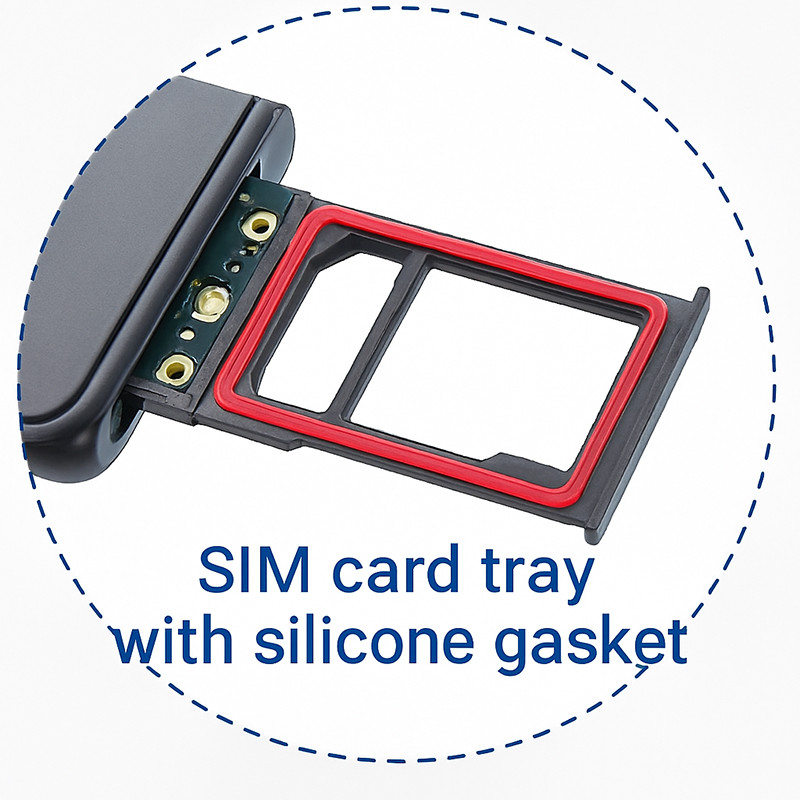
Water ingress is a major safety concern, especially for electronic components and sensitive machinery. Liquid silicone rubber's sealing capabilities create waterproof barriers that prevent moisture penetration.
Safety implications:
By sealing electronic enclosures, connectors, and switches, LSR overmolding prevents corrosion, short circuits, and mold growth, which could otherwise lead to product failure or safety hazards.
6. Regulatory Compliance and Certification Support for Safer Products
Meeting industry safety standards requires materials that are biocompatible, flame retardant, and environmentally compliant. Liquid silicone rubber can be formulated to meet various international safety certifications, such as UL94 flame retardancy, FDA approval, and RoHS compliance.
Why it boosts safety:
Using certified LSR overmolds simplifies compliance with safety regulations, reducing legal risks and product recalls. It assures clients and end-users of the highest safety standards.
Certification table:
Certification | Application Area | Safety Assurance |
| UL94 | Flame retardancy | Prevents fire hazards |
| FDA | Medical devices | Biocompatibility |
| RoHS | Environmental safety | Limits hazardous substances |
Conclusion: Why Liquid Silicone Rubber Overmolding Is the Pinnacle of B2B Product Safety
The seven key advantages of liquid silicone rubber overmolding—thermal stability, chemical resistance, electrical insulation, impact durability, ergonomic grip, waterproof sealing, and regulatory compliance—collectively set a new standard for product safety in diverse industrial sectors.
Investing in LSR overmolding not only elevates the functional performance of products but also fortifies safety protocols, reduces long-term operational risks, and enhances brand reputation. As industries evolve towards safer, more reliable solutions, embracing liquid silicone rubber overmolding remains a strategic imperative for forward-thinking manufacturers committed to excellence and safety.
Website:www.siliconeplus.net
Email:sales11@siliconeplus.net.
Phone:13420974883
Wechat:13420974883