How Do You Choose the Right Silicone Molding Process?
Introduction
Many engineers and sourcing teams know they need a custom silicone part, but they are not sure which molding process is suitable. Should the part use liquid silicone injection molding, silicone compression molding, insert molding, or silicone overmolding? The answer depends on product structure, tolerance, material, sealing function, substrate type, production quantity, and application environment. This guide explains how to choose the right silicone molding process before mold development.
Answer Excerpt
The right silicone molding process should be selected according to part structure, tolerance, material hardness, production volume, waterproof requirement, bonding need, and application environment. LSR injection molding is suitable for high-precision and high-volume parts. Silicone compression molding is useful for simpler or larger silicone parts. Silicone overmolding is used when silicone must bond with plastic, metal, FPC, or another silicone substrate.
Transition Paragraph
Below are the key questions product engineers, purchasing managers, device manufacturers, and OEM/ODM buyers usually ask before selecting a silicone molding process.
People Also Ask: What silicone molding processes are commonly used for custom parts?
Custom silicone parts are commonly manufactured by liquid silicone injection molding, silicone compression molding, silicone overmolding, insert molding, two-color silicone molding, and secondary processing. Each process has different advantages, tooling requirements, production efficiency, and suitable applications.
Liquid silicone injection molding uses two-component liquid silicone rubber. The material is mixed, injected into a heated mold, cured, and demolded. This process is often used for precision silicone seals, medical silicone components, electronic waterproof parts, wearable device gaskets, and small LSR parts requiring stable mass production.
Silicone compression molding usually uses solid silicone rubber. The material is placed into the mold cavity, compressed, heated, and cured. This process is often used for silicone gaskets, O-rings, pads, plugs, sleeves, larger molded parts, and products with simpler structures.
Silicone overmolding combines silicone with another substrate, such as plastic, metal, FPC, or silicone. The substrate is placed into a mold, and silicone is molded around selected areas to create sealing, bonding, insulation, protection, soft touch, or waterproof function.
Insert molding is closely related to overmolding. It usually means placing an insert into the mold before silicone molding. The insert may be metal, plastic, FPC, cable, connector, or another pre-made component.
Before choosing a process, silicone material selection should be reviewed together with hardness, application environment, sealing requirement, bonding need, and production method.
People Also Ask: When should buyers choose liquid silicone injection molding?
Liquid silicone injection molding is suitable when the product requires high precision, stable dimensions, thin-wall structures, complex details, clean appearance, and repeatable mass production. It is often selected for parts that need tight tolerance, small sealing lips, high consistency, or automated production.
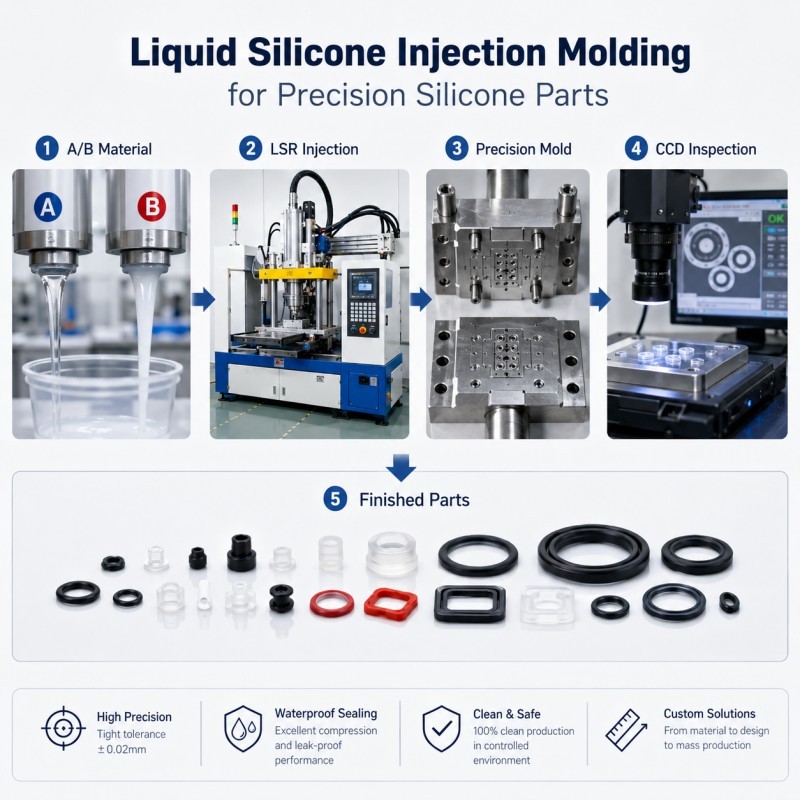
Liquid silicone injection molding is a good choice for medical silicone parts, automotive connector seals, Type-C waterproof seals, SIM tray silicone seals, wearable device gaskets, sensor seals, silicone valves, and precision electronic silicone components.
This process is also suitable when production volume is medium to high. Once the mold and process parameters are stable, LSR injection molding can support consistent production quality. For B2B buyers, this matters because the first sample is only the beginning. The real challenge is stable mass production.
However, LSR injection molding may require higher mold precision and equipment investment. If the part is simple, large, low-volume, or not sensitive to tolerance, compression molding may sometimes be more economical.
For high-precision silicone parts, liquid silicone injection molding supports complex sealing features, stable dimensions, small structures, and repeatable production.
People Also Ask: When should buyers choose silicone compression molding?
Silicone compression molding is suitable for simpler silicone parts, larger gaskets, O-rings, pads, sleeves, plugs, protective covers, and projects where the structure is not extremely complex. It is also useful for some lower-volume production projects or parts that do not require very small thin-wall details.
Compression molding can be a practical process for general silicone seals, industrial silicone pads, simple waterproof plugs, rubber feet, silicone cushions, and molded silicone accessories. Compared with LSR injection molding, compression molding may offer more flexible tooling options for some simple structures.
However, compression molding may not be the best choice for very small precision parts, thin-wall sealing lips, complex overmolded structures, or products requiring high automation and very stable dimensional repeatability.
Buyers should not choose compression molding only because it may appear cheaper at the beginning. If the product requires precision assembly, low flash, stable waterproof sealing, or long-term batch consistency, the total project cost may be higher if the wrong process is selected.
People Also Ask: When should buyers choose silicone overmolding?
Silicone overmolding should be selected when silicone needs to combine with another material to create an integrated function. The substrate may be plastic, metal, FPC, cable, connector, or another silicone part. The purpose may be waterproof sealing, insulation, bonding, soft touch, strain relief, vibration resistance, or structural integration.
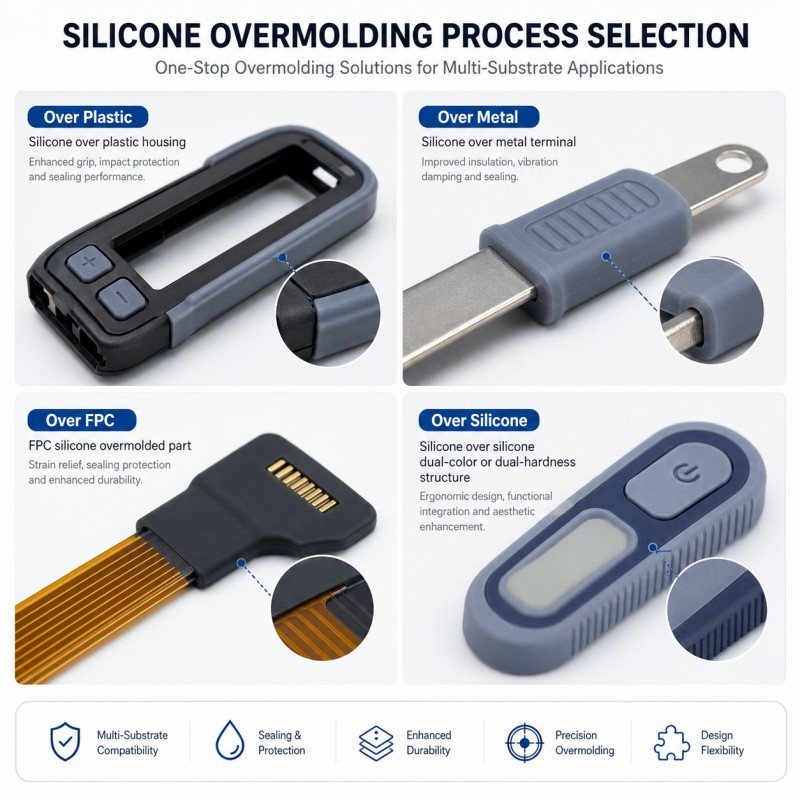
For example, silicone over plastic can be used for electronic housings, connector frames, waterproof modules, buttons, and soft-touch structures. Silicone over metal can be used for terminals, brackets, conductive contacts, medical handles, and automotive sealing parts. FPC silicone overmolding can be used for flexible electronic modules, wearable sensors, waterproof circuits, and compact smart devices.
Silicone overmolding is not only about covering a substrate with silicone. The supplier must evaluate bonding strength, insert positioning, material compatibility, surface treatment, mold temperature, flash control, and final assembly environment.
If the project requires IP67 or IP68 waterproof sealing, overmolding can help create an integrated sealing structure. However, waterproof success still depends on compression design, sealing geometry, bonding area, mating structure, and testing method.
For compact electronic modules, FPC with silicone overmolding requires accurate positioning, protected contact areas, controlled silicone flow, and careful inspection.
People Also Ask: How does product application affect process selection?
Product application has a direct impact on process selection. A silicone part for a medical device may require different material, inspection, surface quality, and production control compared with a silicone seal for a 3C electronic device or an automotive connector.
For medical device components, buyers may focus on material grade, clean production awareness, smooth surface, stable dimensions, soft contact, sealing performance, and overmolding with plastic or metal structures. Liquid silicone injection molding and silicone overmolding are often considered for precision medical components.
For automotive and transportation components, buyers may focus on waterproof sealing, temperature resistance, vibration resistance, oil resistance, aging resistance, and long-term compression recovery. Connector seals, wire harness grommets, battery pack seals, BMS sealing parts, and sensor gaskets often require careful material and process selection.
For 3C electronics, buyers usually need small size, thin-wall structure, low flash, precise sealing, stable assembly, and clean appearance. Type-C waterproof seals, SIM tray seals, button seals, speaker gaskets, microphone gaskets, and electronic housing seals often require high mold precision.
For beauty and health care devices, silicone parts may need soft touch, skin-contact comfort, waterproof sealing, aesthetic appearance, and overmolding with plastic or metal handles.
Choosing the right process means matching the molding method with the final application, not simply choosing the cheapest tooling option.
People Also Ask: How do mold design and tooling affect process choice?
Mold design and tooling strongly affect silicone process selection. The same product may require different mold structures depending on whether it is made by LSR injection molding, compression molding, or silicone overmolding.
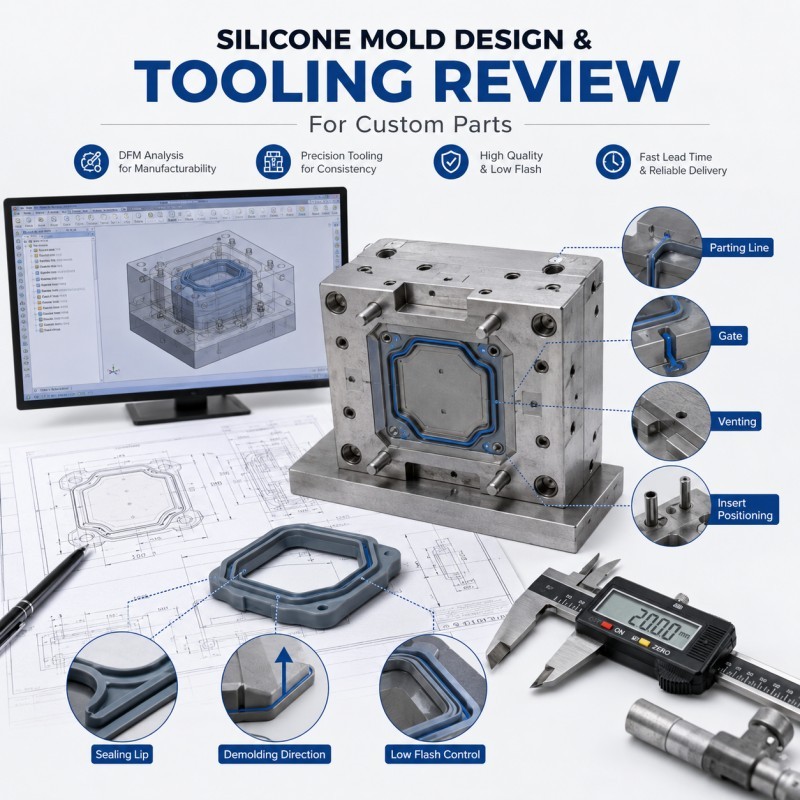
For LSR injection molding, the mold must control material flow, parting line, gate position, venting, curing, demolding, and flash. Since LSR flows easily before curing, mold precision is very important.
For compression molding, the mold must consider material loading, compression flow, curing, parting line, flash trimming, and demolding. The process can be more manual or semi-automatic depending on the part.
For silicone overmolding, the mold must hold the substrate accurately. Insert positioning is critical. If a plastic, metal, FPC, or silicone substrate shifts during molding, the final part may fail sealing, bonding, or assembly.
For complex silicone projects, design and tooling services help evaluate DFM risks, mold structure, parting line, insert positioning, sealing surfaces, and mass production feasibility.
People Also Ask: What is the difference between LSR molding, compression molding, and silicone overmolding?
LSR injection molding, compression molding, and silicone overmolding are not competing processes in every case. They solve different manufacturing problems. The right choice depends on structure, performance, production volume, and assembly requirements.
| Comparison Item | LSR Injection Molding | Silicone Compression Molding | Silicone Overmolding |
|---|---|---|---|
| Material Form | Two-component liquid silicone rubber | Solid silicone rubber compound | LSR or silicone molded over another substrate |
| Best For | Precision parts, thin-wall seals, complex structures, high-volume production | Simple gaskets, pads, O-rings, plugs, larger silicone parts | Silicone over plastic, metal, FPC, or silicone substrates |
| Tooling Focus | High-precision mold, gate, venting, curing, flash control | Mold cavity, compression flow, trimming, demolding | Insert positioning, bonding, sealing, flash control |
| Typical Applications | Medical seals, Type-C seals, connector seals, wearable gaskets | Industrial pads, silicone rings, simple plugs, larger seals | Waterproof connectors, FPC protection, soft-touch handles, integrated seals |
| Key Risk | Mold precision, flash, curing stability | Flash trimming, dimensional consistency, deformation | Bonding failure, insert shift, delamination, leakage |
| Buyer Type | Buyers needing precision and stable batch production | Buyers needing simpler silicone parts or flexible production | Buyers needing integrated multi-material components |
This table can help buyers quickly understand the basic differences. However, final process selection should still be based on drawings, samples, material, tolerance, application, and production quantity.
People Also Ask: What information should buyers provide before choosing a process?
Before choosing a silicone molding process, buyers should provide product drawings, 3D files, samples, product photos, material requirements, hardness, color, tolerance, application environment, waterproof level, expected quantity, and testing requirements.
If the project involves overmolding, buyers should also provide substrate material information. The supplier needs to know whether the substrate is plastic, metal, FPC, silicone, or another material. For plastic parts, the exact plastic type matters. For metal parts, plating and surface treatment matter. For FPC parts, pad location and bending areas matter.
If the part is used for waterproof sealing, buyers should provide the mating structure when possible. A silicone seal cannot be judged alone. Groove size, assembly gap, compression ratio, screw force, mating material, and testing method all affect performance.
A clear project brief helps the manufacturer compare process options and suggest the most suitable production route. It also reduces unnecessary mold changes and sampling delays.
People Also Ask: How does SiliconePlus support silicone process selection?
SiliconePlus supports silicone process selection by reviewing product structure, material requirements, substrate type, sealing function, tolerance, tooling feasibility, and production quantity before mold development.
Shenzhen Liyongan Silicone Rubber Products Co., Ltd. focuses on silicone overmolding manufacturing solutions, including liquid silicone injection molding, silicone over plastic, silicone over metal, FPC silicone overmolding, silicone and silicone overmolding, compression molding, mold development, sampling, inspection, and OEM/ODM production.
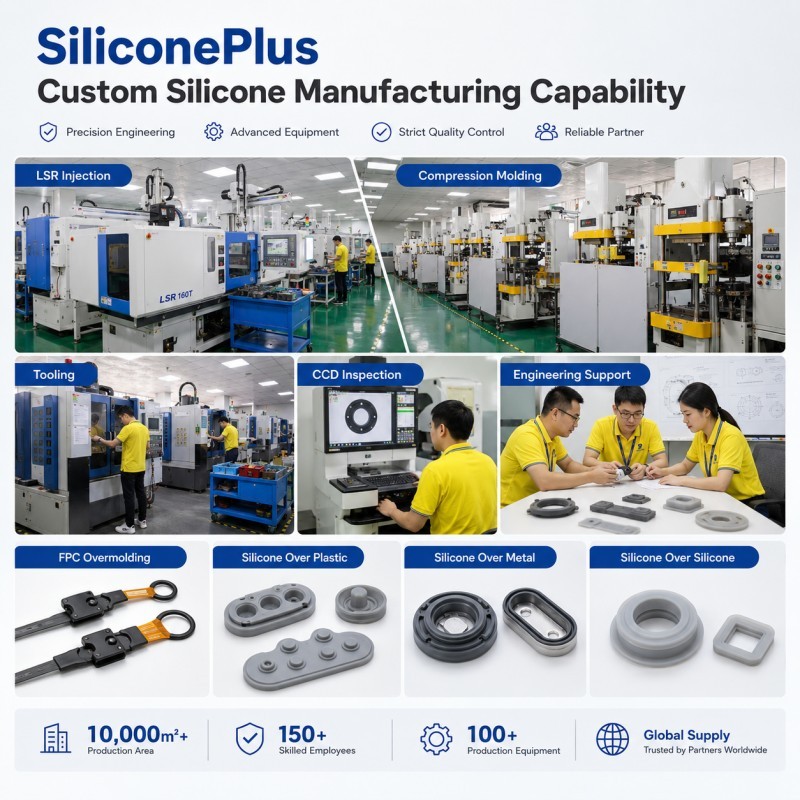
The company can support different project types, including medical silicone parts, automotive waterproof silicone seals, 3C electronic silicone components, mobile phone waterproof parts, wearable device seals, beauty and health care silicone components, and industrial custom silicone parts.
For early-stage projects, the engineering team can help buyers review whether the part is more suitable for LSR injection molding, compression molding, overmolding, insert molding, or a combined process. For existing projects, the team can evaluate samples and drawings to improve manufacturability, sealing performance, and production stability.
A suitable silicone manufacturing partner should not recommend one process for every project. The right partner should help buyers choose the process that fits the product structure, performance requirement, cost target, and mass production plan.
If you are not sure which silicone molding process is suitable for your project, you can contact SiliconePlus for process evaluation and share your drawings, samples, application requirements, and target quantity with the engineering team.
FAQ About Choosing the Right Silicone Molding Process
1. Which silicone molding process is best for high-precision parts?
Liquid silicone injection molding is usually more suitable for high-precision silicone parts, small structures, thin-wall sealing lips, complex shapes, and stable mass production. The final choice still depends on drawings, tolerance, material, and production volume.
2. When is silicone compression molding a better choice?
Silicone compression molding can be a good choice for simple silicone gaskets, O-rings, pads, plugs, sleeves, and larger parts that do not require extremely tight tolerance or complex overmolding.
3. When should silicone overmolding be used?
Silicone overmolding should be used when silicone needs to bond or integrate with plastic, metal, FPC, silicone, cable, connector, or another substrate. It is often used for waterproof sealing, insulation, soft touch, protection, strain relief, and integrated assembly.
4. Can one project use more than one silicone molding process?
Yes. Some custom silicone projects may combine multiple processes, such as compression-molded silicone substrate plus secondary LSR overmolding, or plastic insert molding plus silicone overmolding. The best route depends on structure and production needs.
5. How do I know if my part needs custom tooling?
Most custom silicone parts require tooling if the shape, size, sealing structure, overmolding area, or assembly function is unique. Standard silicone parts may not match specific waterproof, bonding, or tolerance requirements.
6. What should I send to get process suggestions?
Buyers should send drawings, 3D files, samples, product photos, material requirements, hardness, tolerance, waterproof level, substrate information, application environment, testing standard, and estimated quantity.
Conclusion
Choosing the right silicone molding process is one of the most important steps in a custom silicone project. LSR injection molding, silicone compression molding, and silicone overmolding each have different advantages and limitations. The best choice depends on part structure, material, tolerance, sealing function, substrate, production volume, and final application.
For B2B buyers, the right process can reduce tooling changes, improve sample success, control production cost, and support stable mass production. The wrong process may cause flash, deformation, poor bonding, leakage, unstable dimensions, or unnecessary project delays.
Shenzhen Liyongan Silicone Rubber Products Co., Ltd. provides custom silicone molding and silicone overmolding manufacturing solutions for medical devices, automotive and transportation, 3C electronics, mobile phone waterproofing, wearable devices, beauty and health care products, and industrial silicone applications.
If you are developing a custom silicone seal, LSR injection molded part, silicone over plastic component, silicone over metal part, FPC silicone overmolding project, or silicone over silicone structure, share your drawings, samples, and project requirements with our engineering team. We can help review the structure and suggest a suitable silicone molding process for your project.
What type of silicone part are you developing? Leave a comment, share this guide with your engineering or sourcing team, or contact SiliconePlus to discuss your custom silicone manufacturing requirements.