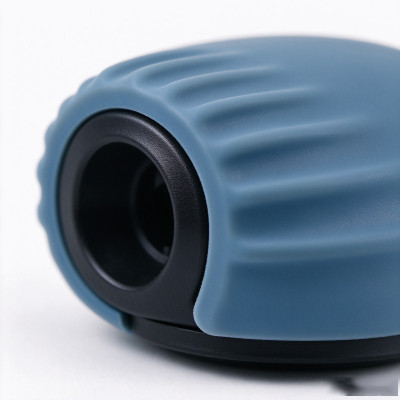
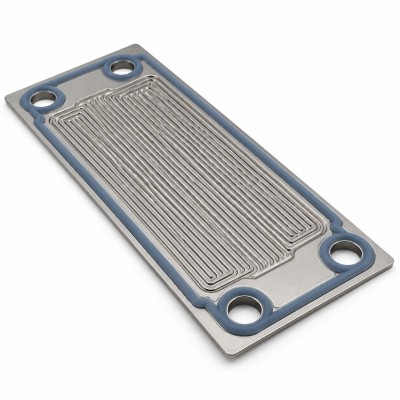
How Do You Prepare a Silicone Overmolding Project for Quotation?
Introduction
Many OEM/ODM buyers want a fast quotation for a silicone overmolding project, but the supplier cannot give an accurate price with only a product name or a simple photo. Custom silicone overmolding involves material selection, substrate evaluation, mold design, bonding method, tolerance control, waterproof testing, and mass production planning. This guide explains what information buyers should prepare before requesting a silicone overmolding quote.
Answer Excerpt
To prepare a silicone overmolding project for quotation, buyers should provide 2D drawings, 3D files, samples, substrate material, silicone coverage area, hardness requirement, color, bonding requirement, waterproof level, tolerance, testing standards, estimated order quantity, and target application. Clear project information helps the manufacturer evaluate mold feasibility, material selection, overmolding risk, tooling cost, sample lead time, and mass production price.
Transition Paragraph
Below are the key questions engineers, product developers, sourcing managers, and OEM/ODM buyers usually ask before sending a silicone overmolding RFQ.
People Also Ask: Why is a complete project brief important for silicone overmolding?
A complete project brief is important because silicone overmolding is not a standard catalog product. The price and feasibility depend on the part structure, substrate material, silicone material, bonding method, mold design, tolerance, waterproof requirement, inspection standard, and production quantity.
A buyer may ask, “How much is a silicone overmolded part?” However, the supplier needs to know what the silicone is molded onto. Is it plastic, metal, FPC, or another silicone part? Does the silicone need to bond strongly to the substrate, or is it only used as a sealing layer? Does the part need to pass IP67 or IP68 waterproof testing? Will the part be used in a medical device, automotive connector, mobile phone waterproof module, wearable device, or industrial product?
Without these details, the quotation may be inaccurate. The supplier may underestimate tooling difficulty, material cost, inspection requirements, or mass production risk. This can lead to price changes, sample delays, mold modification, or project failure later.
For a custom silicone overmolding manufacturer, a clear project brief helps engineering teams review the design faster, suggest the correct molding method, identify risk, and provide a more reliable quotation.
For complex projects, design and tooling services can help buyers review part structure, mold feasibility, DFM risk, sealing details, and production planning before mold opening.
People Also Ask: What files should buyers send for a silicone overmolding quote?
Buyers should send 2D drawings, 3D files, physical samples, product photos, assembly drawings, material information, and testing requirements whenever available. The more complete the files, the faster the supplier can evaluate the project.
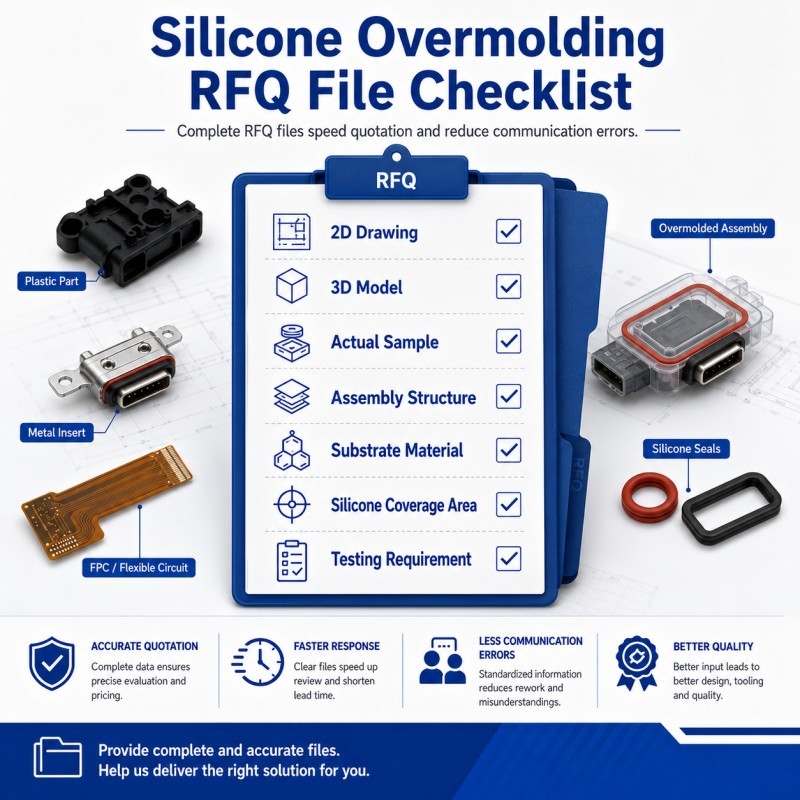
A 2D drawing is useful for checking dimensions, tolerances, material notes, surface finish, and inspection points. A 3D file is useful for mold design, parting line analysis, demolding review, insert positioning, and silicone flow evaluation. Physical samples help the supplier understand real structure, material, flexibility, surface condition, and assembly details.
If the buyer does not have a complete drawing, a clear sample or product photo can still help start the discussion. If the buyer only has an idea, the supplier may help evaluate whether the concept is suitable for LSR injection molding, compression molding, silicone overmolding, or another process.
For overmolding projects, assembly information is especially important. A silicone seal cannot be judged alone. The groove, mating part, screw force, compression gap, insert position, and final product structure all affect performance.
A strong project brief usually includes:
Product name and application
2D drawing
3D file
Physical sample or reference photo
Substrate material
Silicone coverage area
Exposed functional areas
Hardness requirement
Color requirement
Tolerance requirement
Waterproof or sealing target
Testing standards
Estimated order quantity
Annual forecast
Target sample timeline
Target mass production timeline
People Also Ask: Why does substrate material affect the quotation?
Substrate material affects the quotation because silicone overmolding difficulty changes depending on whether the insert is plastic, metal, FPC, silicone, or another material. Each substrate requires different mold design, surface preparation, bonding control, and inspection methods.
For plastic with silicone overmolding, the supplier needs to know the exact plastic type. PC, PA, PBT, PPS, ABS, PP, and other engineering plastics have different heat resistance, surface properties, shrinkage, and bonding behavior. Some plastics may deform under LSR molding temperature. Some may require primer, plasma treatment, or mechanical locking.
For electronic housings, connector frames, and waterproof modules, plastic with silicone overmolding may help integrate sealing, soft-touch, dustproofing, and assembly functions into one part.
For metal with silicone overmolding, surface condition is critical. Metal type, plating, oxidation, cleaning, oil residue, and surface roughness can affect bonding. The supplier may need to evaluate surface treatment, primer, mechanical locking, or bonding test requirements.
For FPC with silicone overmolding, insert positioning is a major quotation factor. FPC is thin and flexible, so the mold and fixture must hold it accurately without damaging copper traces, solder joints, exposed pads, or bending areas.
For silicone over silicone, material compatibility and surface condition matter. The first silicone part may need to be molded, cleaned, positioned, and overmolded with a second silicone material. Two-color or dual-hardness silicone parts require more attention to color boundary, bonding, flash, and appearance.
People Also Ask: What silicone material information should be confirmed?
Buyers should confirm silicone hardness, color, transparency, material grade, bonding requirement, temperature resistance, compression set requirement, tear strength, and special performance needs. These details affect both quotation and manufacturability.
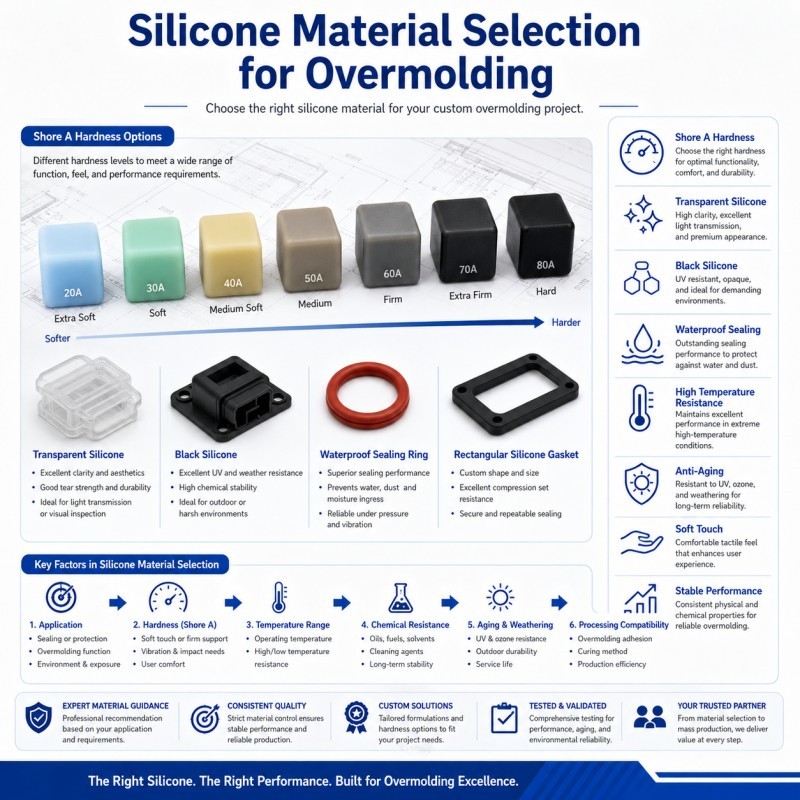
Hardness is one of the most common questions. A soft silicone may provide better sealing and touch feel, but it may deform more easily. A harder silicone may provide better support, but it may not compress enough for sealing. For waterproof seals, the correct hardness must match the groove, compression ratio, assembly pressure, and final product structure.
Color also matters. Black silicone is common in automotive, electronics, and industrial products. Transparent or translucent silicone may be used in medical, optical, or inspection-friendly applications. Custom colors may require color matching and sample approval.
Bonding requirement is another key factor. If silicone must bond firmly to plastic, metal, FPC, or silicone, the supplier needs to evaluate material compatibility, surface treatment, primer, self-adhesive LSR, mechanical locking, and curing conditions.
For projects exposed to water, sweat, heat, oil, cleaning fluids, or outdoor environments, buyers should explain the real use condition. The same silicone material may not be suitable for every application.
People Also Ask: How does waterproof testing affect silicone overmolding quotation?
Waterproof testing affects quotation because IP67, IP68, pressure testing, water immersion, aging, vibration, and assembly validation may require more precise mold design, stricter inspection, additional testing time, and higher production control.
A silicone part does not become waterproof simply because the material is silicone. Waterproof performance depends on sealing geometry, compression ratio, mating surface, assembly force, tolerance stack-up, parting line position, bonding area, and final product design.
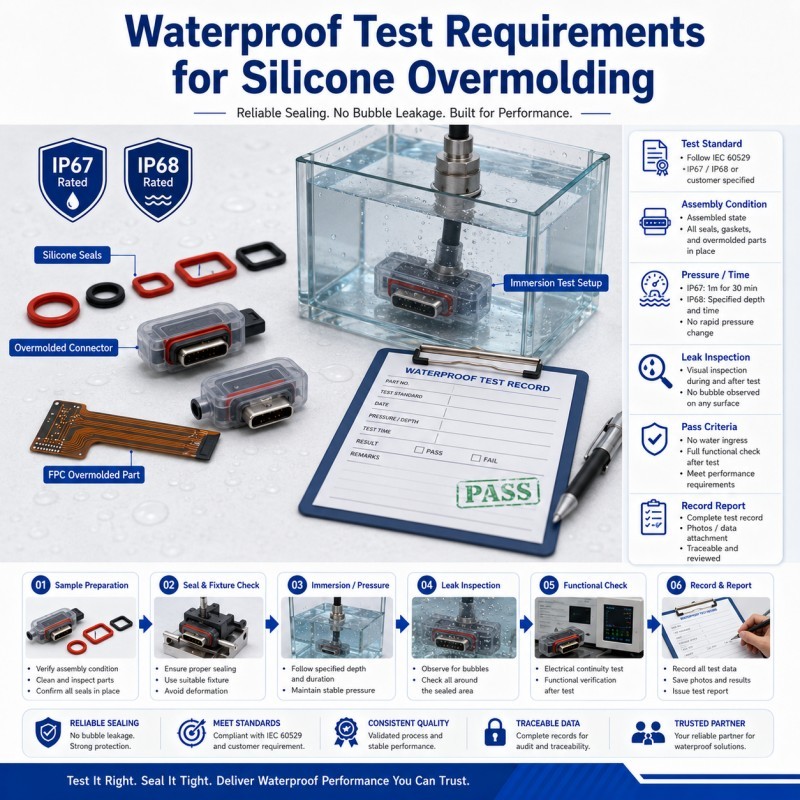
If the buyer requires IP68 sealing, the supplier should know the test condition. How deep is the water? How long is the test time? Is there pressure? Is the test done on the silicone part alone or on the final assembly? Is repeated assembly required? Will the part face temperature cycling, vibration, or chemical exposure?
For automotive connectors, EV components, outdoor electronics, and medical device seals, testing requirements may be more demanding than ordinary consumer parts. The quotation should reflect these requirements because they affect engineering review, mold precision, inspection, and validation.
For precision waterproof silicone parts, liquid silicone injection molding is often used because it supports small structures, complex sealing lips, stable dimensions, and repeatable production.
People Also Ask: What is the difference between a rough quote and an engineering quote?
A rough quote is based on limited information, such as a product photo, approximate size, or simple description. An engineering quote is based on drawings, materials, tolerance, mold structure, production quantity, testing requirements, and manufacturing risk.
| Comparison Item | Rough Quote | Engineering Quote |
|---|---|---|
| Input Information | Photo, idea, or simple description | 2D drawing, 3D file, sample, material, tolerance, and application |
| Accuracy | Only for budget estimation | More suitable for project decision and supplier comparison |
| Tooling Review | Limited or not included | Includes mold feasibility, insert positioning, parting line, and DFM review |
| Material Review | General material assumption | Confirms silicone hardness, substrate material, bonding, and performance needs |
| Testing Requirement | Usually not fully considered | Includes waterproof, bonding, dimensional, or customer-specific testing |
| Production Risk | Higher uncertainty | Lower risk because key conditions are reviewed |
| Best For | Early idea screening | Sampling, mold opening, and mass production planning |
A rough quote may be useful at the early idea stage. However, it should not be used as the final decision for tooling or mass production. If the project has waterproof requirements, tight tolerances, bonding risks, or overmolding inserts, an engineering quote is more reliable.
Buyers should also be careful when comparing quotations from different suppliers. A low price may not include mold complexity, material grade, insert positioning, testing, trimming, inspection, packaging, or mass production risk. A professional quote should explain what is included and what assumptions are being made.
People Also Ask: What factors affect tooling cost for silicone overmolding?
Tooling cost is affected by part size, cavity number, mold material, insert positioning method, parting line complexity, flash control, venting design, gate design, tolerance, surface finish, and whether the project requires single-shot molding, insert molding, or secondary overmolding.
For simple silicone parts, mold structure may be relatively straightforward. For silicone overmolded parts, the mold must hold the insert accurately and control silicone flow around the substrate. This makes tooling more complex.
If the project uses FPC, metal terminals, plastic housings, or pre-molded silicone parts as inserts, the mold may need special fixtures, loading structure, protection features, or manual/automatic insert positioning. If the silicone must avoid covering certain areas, the mold shut-off design becomes more important.
Tooling cost may also increase when the part requires low flash, tight tolerance, small sealing lips, thin-wall areas, or cosmetic surfaces. For waterproof products, parting line and venting design must be carefully considered to avoid leakage paths.
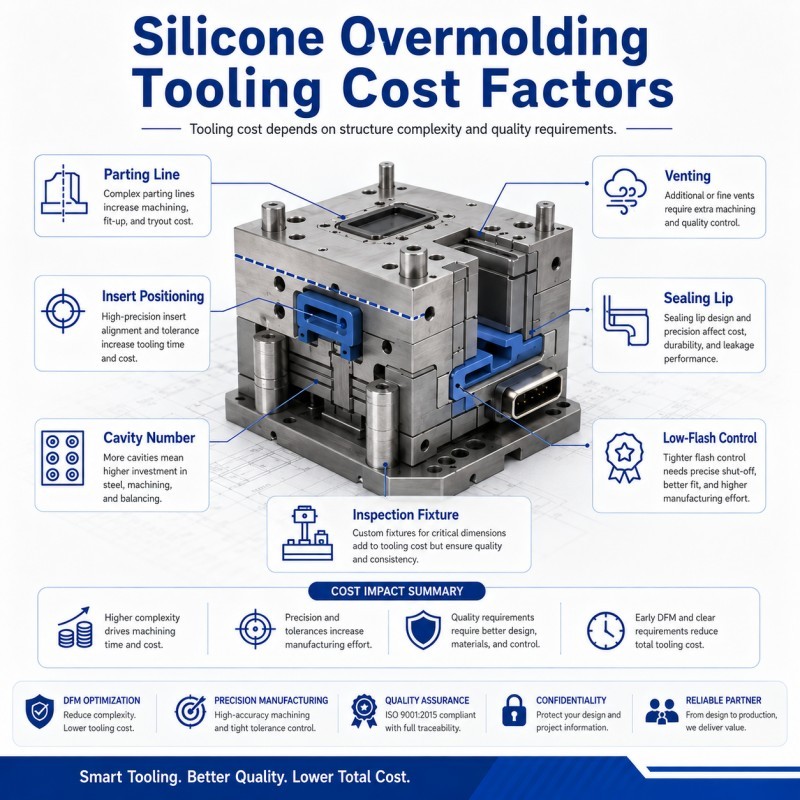
A professional manufacturer should not only quote a mold price. It should explain whether the mold is suitable for sampling, pilot production, or mass production. Sometimes a sample mold can confirm feasibility, but a mass production mold is needed for stable batch output.
People Also Ask: How should buyers compare silicone overmolding suppliers?
Buyers should compare suppliers based on engineering support, mold capability, silicone material knowledge, LSR injection molding experience, insert molding experience, quality control, communication efficiency, and mass production stability. Price is important, but it should not be the only factor.
A suitable supplier should ask technical questions before quoting. If a supplier quotes immediately without asking about substrate material, hardness, bonding, tolerance, waterproof level, testing standard, and quantity, the quotation may not be reliable.
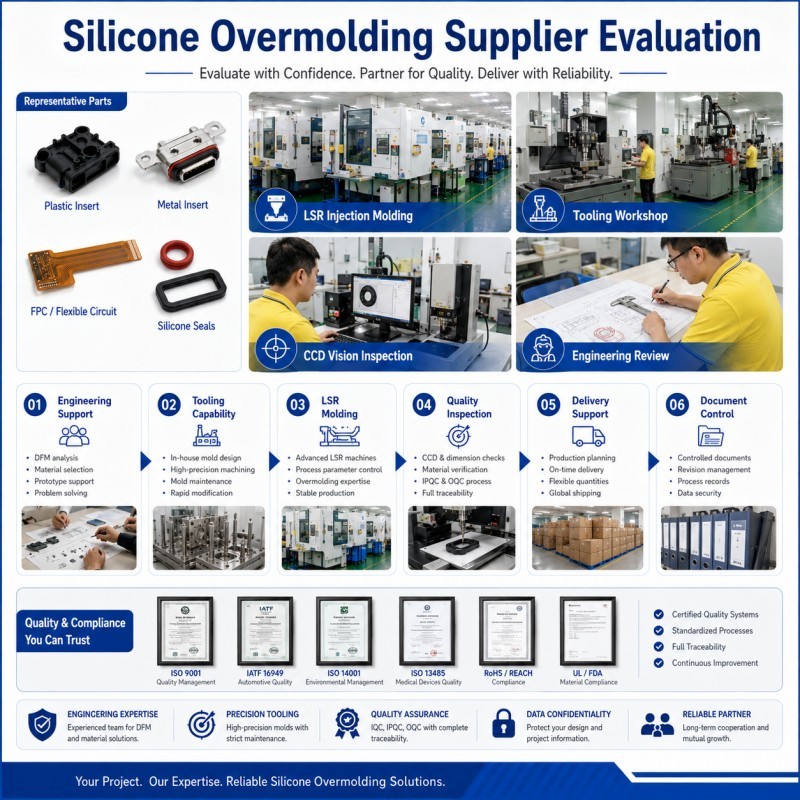
Shenzhen Liyongan Silicone Rubber Products Co., Ltd. supports custom silicone overmolding manufacturing for plastic, metal, FPC, and silicone substrates. The company provides project review, mold development, liquid silicone injection molding, compression molding, silicone overmolding, sample production, inspection, and mass production support for global B2B customers.
For compact electronic modules, FPC with silicone overmolding requires accurate positioning, pad protection, silicone flow control, and careful inspection before mass production.
A strong supplier should help buyers reduce project uncertainty. This includes reviewing the design before mold opening, identifying possible bonding risks, suggesting suitable material options, explaining tooling assumptions, and confirming inspection standards.
People Also Ask: What information should be included in a silicone overmolding RFQ email?
A silicone overmolding RFQ email should include the product application, drawings, 3D files, photos, samples, substrate material, silicone hardness, color, bonding requirement, waterproof level, tolerance, testing requirements, estimated quantity, target timeline, and packaging needs.
A clear RFQ email can save several rounds of communication. Instead of saying “Please quote this silicone part,” buyers can provide structured project information.
For example:
Project application: waterproof connector seal
Substrate: PBT plastic housing
Silicone material: black LSR, around 50 Shore A
Process: silicone over plastic
Requirement: IP68 waterproof sealing
Files: 2D drawing, 3D STEP file, product photos
Estimated quantity: 5,000 pcs for first order, 80,000 pcs annually
Testing: assembly fit, waterproof test, appearance inspection
Timeline: samples required within 3–4 weeks after tooling confirmation
This type of RFQ helps the supplier evaluate the project more accurately and respond faster.
If you already have drawings, samples, or a project idea, you can contact SiliconePlus for project quotation and share your technical requirements with the engineering team.
FAQ About Silicone Overmolding Project Quotation
1. Can I get a silicone overmolding quote with only a sample?
Yes. If you only have a physical sample, the manufacturer can review the sample, measure the structure, evaluate material, and discuss mold development. However, drawings or 3D files can help improve quotation accuracy.
2. Can I get a quote with only a product idea?
Yes, but the first quote may only be a rough estimate. For accurate tooling and production quotation, the supplier usually needs drawings, dimensions, material information, performance requirements, and target quantity.
3. Why does the supplier ask for substrate material?
The substrate material affects bonding, mold temperature, deformation risk, surface treatment, insert positioning, and mass production stability. Silicone over plastic, silicone over metal, FPC overmolding, and silicone over silicone all require different evaluation methods.
4. Do waterproof silicone parts always need custom tooling?
Most waterproof silicone parts require custom tooling because sealing geometry must match the product structure, groove, compression ratio, and assembly condition. Standard gaskets may not fit the real waterproof requirement.
5. What quantity should I provide for quotation?
Buyers should provide both first order quantity and estimated annual quantity. This helps the supplier evaluate cavity number, tooling plan, production efficiency, unit price, and long-term manufacturing strategy.
6. What makes a silicone overmolding quote reliable?
A reliable quote should be based on clear drawings, substrate material, silicone requirement, tolerance, mold structure, production volume, inspection standard, testing requirement, and packaging needs. It should also explain assumptions if some information is missing.
Conclusion
Preparing a silicone overmolding project for quotation is not only about asking for a unit price. It is about helping the manufacturer understand the product structure, substrate material, silicone function, bonding requirement, waterproof target, tooling difficulty, and production expectation.
For B2B buyers, the best way to get an accurate silicone overmolding quote is to prepare drawings, samples, material information, application details, testing standards, and quantity requirements before contacting the supplier. This reduces misunderstanding, shortens communication time, and improves project success from sampling to mass production.
Shenzhen Liyongan Silicone Rubber Products Co., Ltd. provides custom silicone overmolding, liquid silicone injection molding, silicone over plastic, silicone over metal, FPC silicone overmolding, silicone over silicone, waterproof silicone seals, medical silicone parts, automotive silicone components, 3C electronic silicone parts, wearable device seals, and industrial custom silicone products.
If you are developing a custom LSR overmolded part, waterproof silicone seal, FPC silicone overmolding part, plastic silicone overmolded component, or metal silicone insert molding project, prepare your drawings, samples, material requirements, waterproof target, quantity, and testing standards. Then contact our engineering team to review feasibility, tooling, sampling, and mass production options.
What type of silicone overmolding project are you preparing? Leave a comment, share this guide with your engineering or sourcing team, or contact SiliconePlus to discuss your custom silicone manufacturing requirements.