Does LSR Overmolding Replace Creepage and Clearance Requirements for EV Charging Terminals?
Answer Excerpt
No. LSR overmolding can create a local insulating and sealing layer around selected areas of an EV charging terminal, but it does not automatically replace required creepage distances, clearances or solid-insulation evaluation.
The electrical design must define the insulation requirements for the complete assembly. The silicone material, molded geometry, exposed contacts and final validation must all meet the customer's applicable specifications.
SiliconePlus provides custom LSR overmolded EV charging inlet terminal seals based on customer drawings and requirements.
What Do Creepage, Clearance and Solid Insulation Mean?
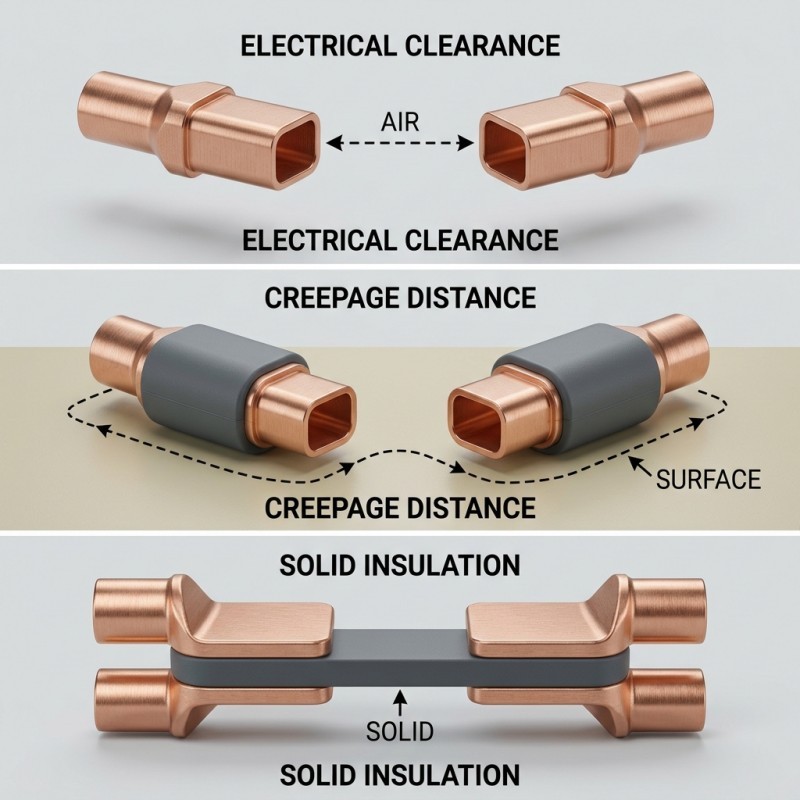
These three concepts describe different parts of electrical insulation:
- Clearance: the shortest distance through air between conductive parts.
- Creepage distance: the shortest distance along an insulating surface between conductive parts.
- Solid insulation: insulating material placed between conductive parts.
They are not interchangeable.
An LSR overmold may form part of a solid-insulation arrangement when the applicable product requirements allow it. However, its presence alone does not prove that the complete terminal meets the required insulation coordination.
The applicable standard and acceptance criteria must be selected for the actual product and target market.
What Can the LSR Overmold Actually Do?
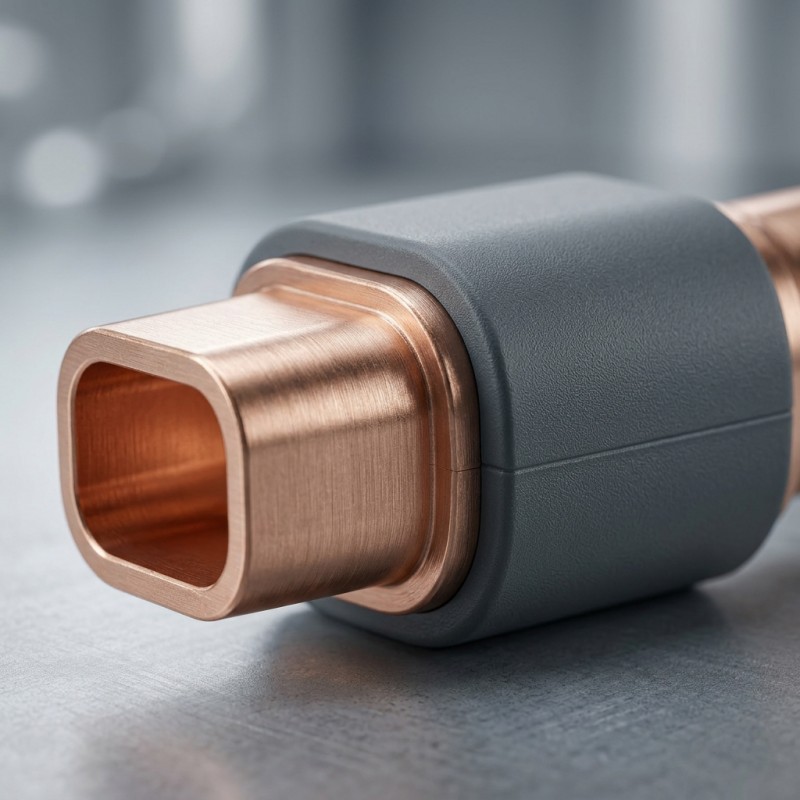
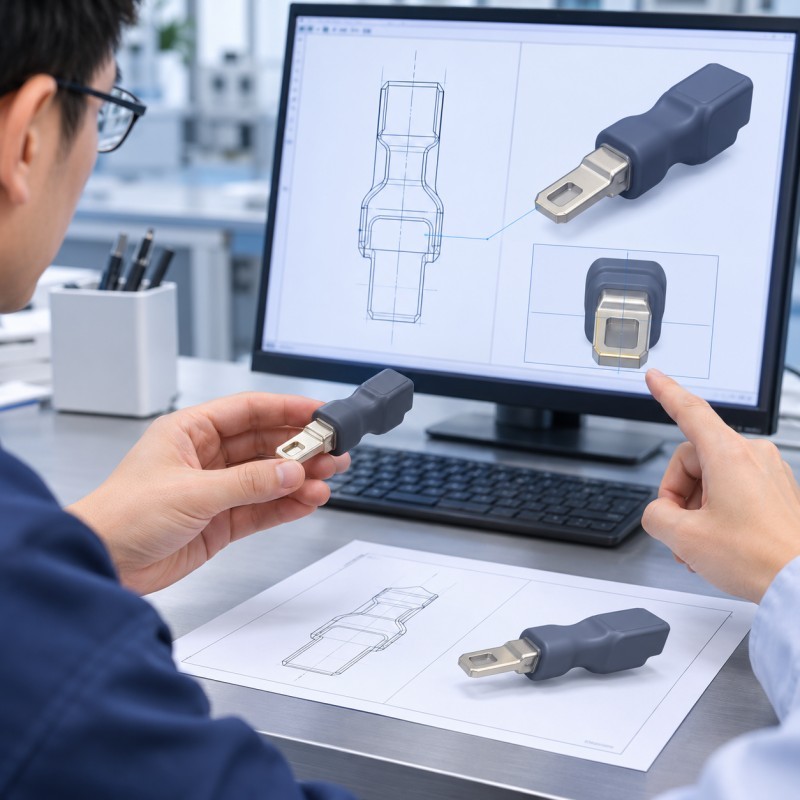
An LSR overmold can cover selected non-contact sections of a metal terminal to provide local insulation, sealing and protection.
The electrical mating contact must remain exposed when required by the connector design.
Before tooling, engineers should define:
1. The exact silicone coverage area.
2. The exposed electrical contact area.
3. The terminal reference datums.
4. The required silicone boundary and tolerance.
5. The role of the silicone in the complete insulation system.
Review the design of functional no-silicone zones and the available metal with silicone overmolding process before finalizing the structure.
What Must OEMs Define Before Tooling?
| Design item | What should be defined? | Why it matters |
Electrical requirements | Working voltage, applicable product standard and OEM specification | Establishes the insulation design basis |
Terminal geometry | Conductive surfaces, terminal position and adjacent components | Determines the actual insulation arrangement |
Silicone role | Local insulation, sealing or protection | Prevents unsupported performance assumptions |
| Coverage boundary | Silicone area and exposed contact area | Protects electrical function |
| Material and structure | Exact LSR grade, minimum wall thickness and interface design | Supports material and structural evaluation |
| Validation | Required electrical and environmental tests | Confirms the finished assembly |
How Should the Finished Terminal Be Validated?
Validation should cover both the molded component and the final electrical assembly.
Depending on the customer's requirements, the review may include:
- Silicone coverage and boundary inspection.
- Exposed contact-area inspection.
- Terminal position and dimensional checks.
- Assembly and mating-function checks.
- Insulation resistance or dielectric testing where specified.
- Environmental testing under the agreed conditions.
The electrical test method, voltage, duration and acceptance criteria must come from the applicable product specification. A visually complete silicone collar is not proof of electrical safety.
SiliconePlus supports custom liquid silicone injection molding and drawing-based engineering review for these projects.
Conclusion
LSR overmolding can provide useful local insulation and sealing around EV charging terminals, but it should not be treated as an automatic replacement for creepage, clearance or complete insulation-system evaluation.
The electrical design, silicone coverage, exposed contact areas and final validation must be reviewed together.
For automotive projects, explore our automotive silicone solutions or contact SiliconePlus with your terminal drawings, material details, insulation requirements and target quantity.
Our team can review the overmolding structure before tooling.
FAQ
Can LSR overmolding replace creepage distance?
Not automatically. Whether an overmolded material can be credited as part of the insulation system depends on the applicable product standard, material, geometry and validation requirements.
Can silicone cover the electrical mating contact?
Not when that surface must remain electrically accessible. The required contact area should be clearly defined as a protected no-silicone zone before tooling.
Does SiliconePlus manufacture complete EV charging connectors?
No. SiliconePlus focuses on custom LSR overmolded sealing and protective components manufactured according to customer drawings. The complete charging inlet or connector assembly is outside the scope of this product.