How Should OEMs Build a Quality Control Plan for LSR-Overmolded Automotive Connector Terminals?
Answer Excerpt
A quality control plan for LSR-overmolded automotive connector terminals should define inspection points for incoming metal inserts, molding operations, intermediate parts and finished products. Key characteristics include terminal position, silicone coverage, exposed metal areas, critical dimensions and surface condition. Acceptance criteria and inspection frequency should follow the approved drawing and customer requirements.
Introduction
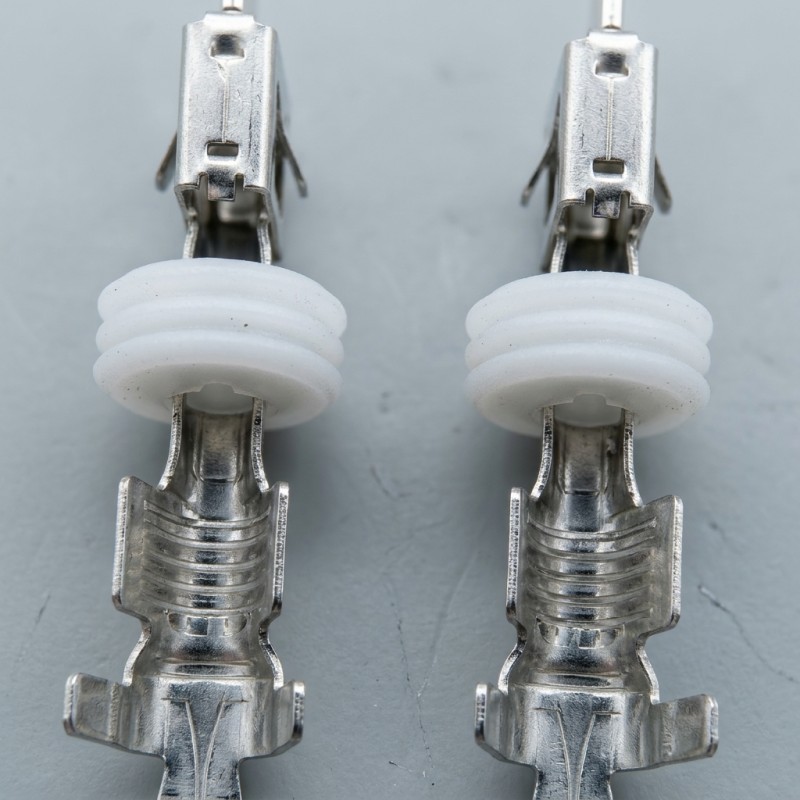
An LSR-overmolded automotive connector terminal combines a metal insert with a molded silicone section. Its quality cannot be judged by appearance alone.
The metal features must remain in the specified position, while the silicone must cover the correct areas without interfering with required exposed metal surfaces.
A practical inspection plan connects the product drawing with each production checkpoint. Explore our custom automotive connector silicone components.
1. Identify Critical-to-Quality Characteristics
Before production, identify the characteristics that directly affect the component's function and assembly:
Metal terminal position and orientation
Required spacing between terminals, where applicable
Silicone coverage start and stop positions
Exposed metal areas and no-silicone zones
Critical silicone dimensions
Flash or excess silicone near functional boundaries
Surface damage, contamination and incomplete molding
These characteristics should be marked on the approved drawing with clear datums, tolerances and acceptance requirements.
For more design considerations, see our metal terminal overmolding design guide.
2. Set Inspection Checkpoints Throughout Production
| Stage | Inspection focus |
Incoming metal inserts | Material identification, dimensions, surface condition and visible damage |
Molding process | Insert loading, orientation, silicone coverage and process consistency |
| Intermediate parts | Molded completeness, visible defects and critical dimensions |
| Finished products | Exposed metal areas, silicone boundaries, appearance and assembly-related dimensions |
| Pre-shipment | Agreed final inspection, packaging condition and batch records |
The inspection sequence should reflect the actual project risk and production process. SiliconePlus describes a quality control framework covering raw materials, production process control, intermediate inspection, finished-product inspection and factory inspection. See our SiliconePlus quality control process.
3. Which Terminal Areas Need Special Attention?
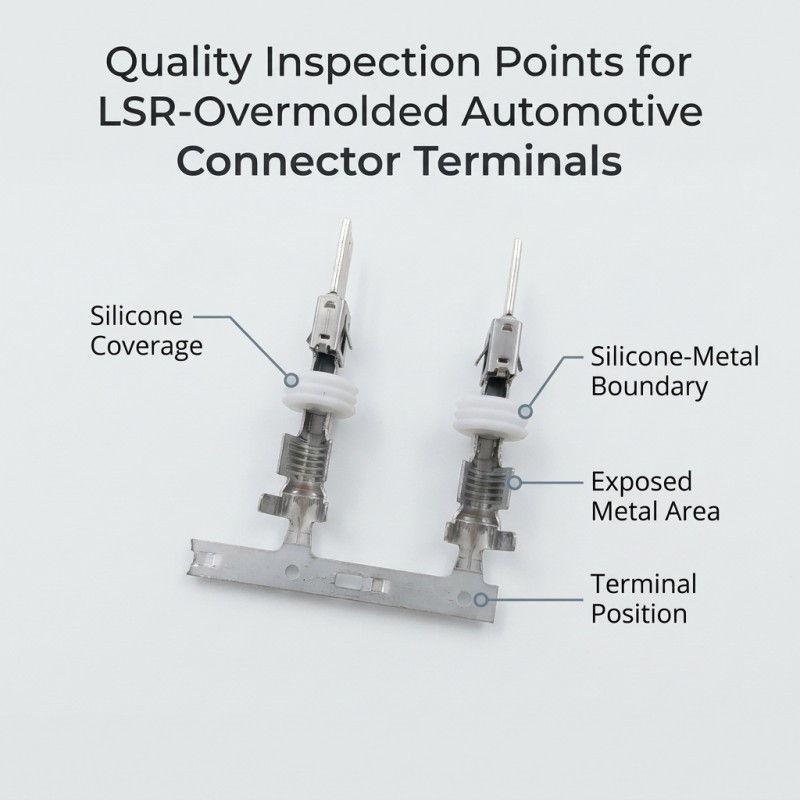
Four areas deserve particular attention:
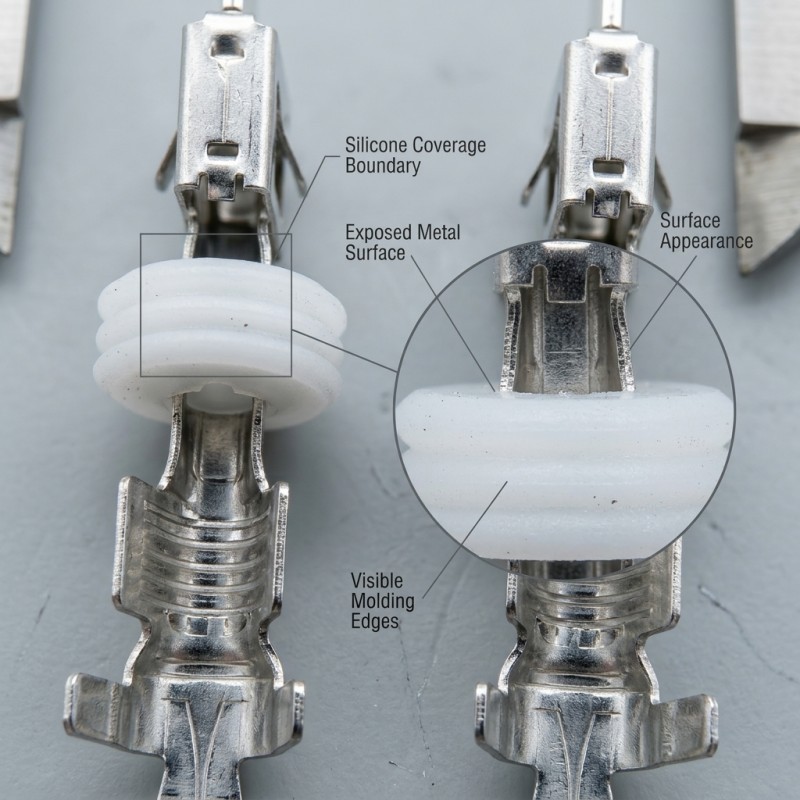
Exposed metal zones: Check that required metal surfaces remain free from unwanted silicone or flash.
Silicone coverage boundaries: Confirm that the molded section starts and stops at the specified locations.
Metal insert position: Check alignment, orientation and critical dimensions against the approved drawing.
Silicone-to-metal interface: Look for visible edge lifting, incomplete molding or damage. Any bonding or retention test should follow the agreed project specification.
Appearance defects should be judged using agreed inspection conditions and approved reference samples, not subjective descriptions such as "looks good." See our guide to cosmetic acceptance standards for LSR overmolded parts.
4. Define Acceptance Criteria and Quality Records
A useful inspection plan should specify the characteristic, drawing reference, inspection method, frequency, sample quantity, acceptance limit and response to a nonconforming result.
Where applicable, production records should connect the inspection result with the material lot, production batch and mold or cavity identification.
Electrical, waterproof and environmental validation should only be claimed when the relevant method and acceptance criteria have been defined and completed for the required product or assembly.
Conclusion and CTA
A reliable automotive connector overmolding quality plan does more than identify visible defects. It controls the relationship between the metal insert, silicone coverage and the functional areas of the finished component.
SiliconePlus supports custom automotive connector silicone projects through engineering review, tooling, sampling, dimensional inspection and manufacturing.
Send us your 2D drawing, 3D CAD file or physical sample to discuss your inspection requirements.
Contact SiliconePlus for a project review.
FAQ
Is visual inspection enough for an LSR-overmolded terminal?
No. Visual inspection is useful for surface condition and silicone coverage, but critical dimensions and functional requirements may need additional specified inspection methods.
Should every metal contact area be checked for silicone residue?
Required exposed metal areas should be identified on the drawing and inspected according to the agreed acceptance criteria.
Does every project need the same inspection frequency?
No. Inspection frequency and sample quantity should be agreed according to product risk, drawing requirements, production conditions and the customer's quality plan.
Does a visual inspection prove waterproof performance?
No. Waterproof performance requires the specified validation method on the relevant component or assembled product.