Why Does Silicone Overmolding Need Venting? Air Trap Problems and LSR Mold Design Guide
Answer Excerpt
Silicone overmolding requires proper venting because liquid silicone rubber flows through complex mold cavities and can easily trap air during injection.
Poor venting design may cause incomplete filling, bubbles, surface marks, short shots and unstable sealing performance.
For precision LSR components, mold venting is not only a tooling detail. It directly affects product reliability, appearance quality and mass production consistency.
Why Does Silicone Overmolding Need Venting?
Liquid silicone rubber has excellent flow characteristics, which makes it suitable for complex sealing structures and overmolded components.
However, during injection molding, silicone material pushes air inside the cavity.
If the trapped air cannot escape through proper venting channels, several problems may occur:
Incomplete filling
Internal voids
Surface defects
Burn marks
Unstable dimensions
Poor sealing performance
This is especially important for automotive electronics, waterproof connectors, medical components and precision silicone seals.
In these applications, even a small molding defect may affect waterproof reliability or assembly performance.
How Do Air Traps Form During LSR Injection Molding?
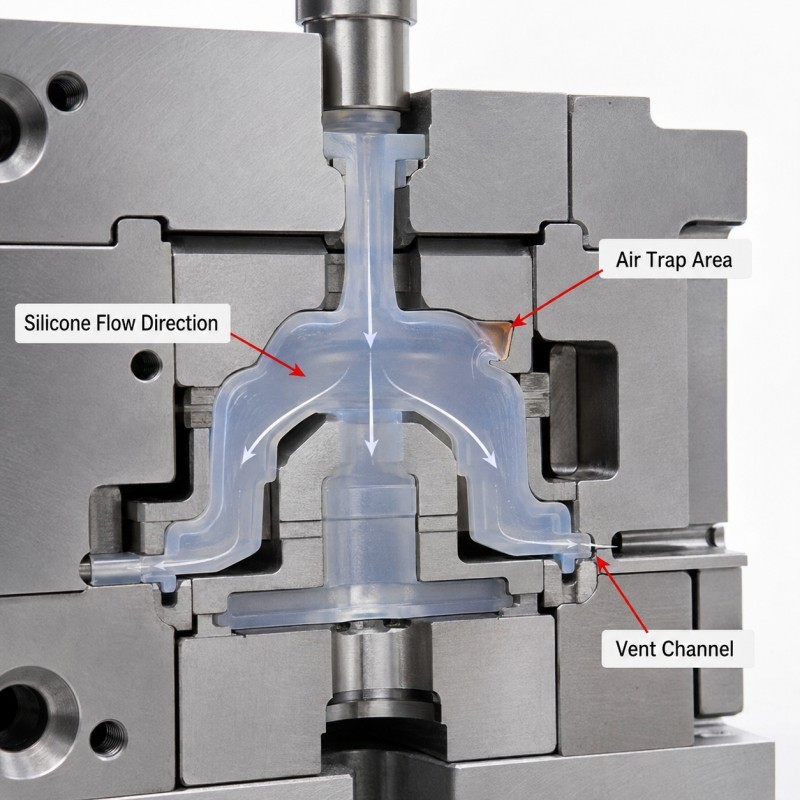
Air traps happen when air inside the mold cavity cannot escape before silicone completely fills the designed area.
Common causes include:
Complex product geometry
Deep cavities
Thin silicone sections
Incorrect gate location
Insufficient venting channels
Poor mold filling simulation
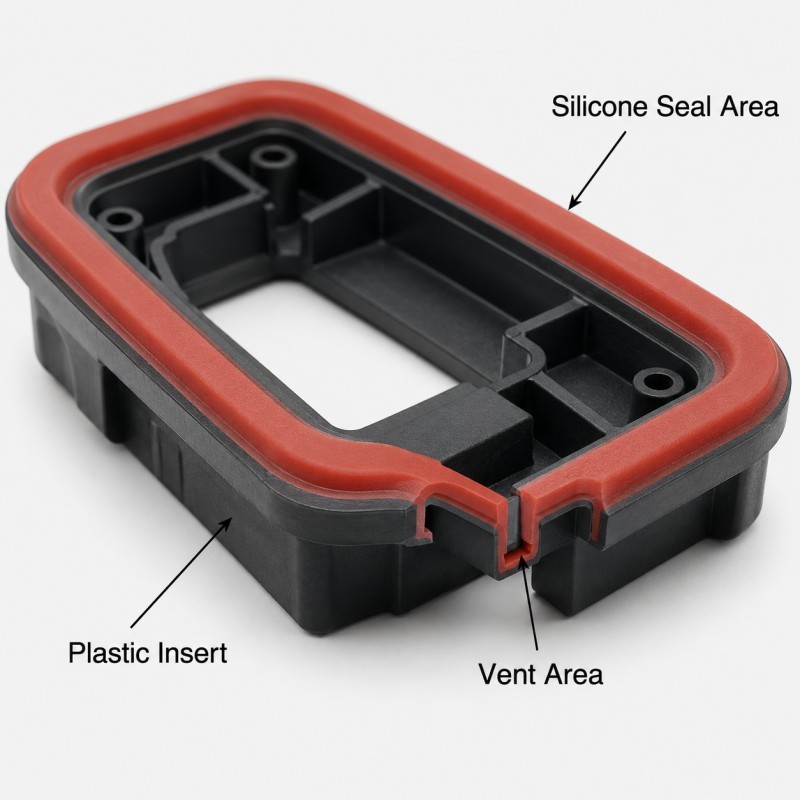
For silicone overmolded parts, the insert structure also affects air movement.
Plastic inserts, metal inserts and FPC components can create hidden areas where air becomes trapped during injection.
Engineers need to evaluate material flow, cavity filling sequence and venting position before tooling development.
What Problems Can Poor LSR Venting Cause?
Poor venting can create different production problems depending on product structure and sealing requirements.
1. Short Shot
When air blocks silicone flow, the cavity may not fill completely.
2. Surface Defects
Trapped air can create marks, bubbles or uneven silicone surfaces.
3. Seal Failure
For waterproof parts, incomplete filling around sealing areas may reduce sealing performance.
4. Appearance Problems
Visible defects can affect consumer electronics, wearable products and medical components.
Reliable LSR production requires both material control and mold engineering control.
How Should LSR Mold Venting Be Designed?
Effective LSR venting design depends on product structure, silicone flow direction and sealing requirements.
Important design considerations include:
Vent location
Vent size
Flow path
Parting line design
Mold surface finish
Injection parameters
For silicone over plastic or silicone over metal applications, venting must also avoid affecting functional areas.
The venting system should allow air removal while preventing excessive silicone flash.
A professional DFM review before tooling helps identify potential filling and venting risks early.
Venting Considerations for Silicone Over Plastic and Insert Molding
Silicone over plastic and insert molding require additional attention because the insert changes the cavity structure.
Common inserts include:
Plastic housings
Metal components
FPC circuits
Electronic parts
The insert position affects:
Silicone thickness
Flow balance
Sealing compression
Venting efficiency
Incorrect insert positioning may create hidden air pockets and unstable molding results.
For complex LSR overmolding projects, insert design, mold design and silicone flow should be reviewed together.
How SiliconePlus Controls LSR Overmolding Quality
SiliconePlus provides custom silicone manufacturing solutions from engineering review to mass production.
Our capabilities include:
Silicone Overmolding
Silicone Over Plastic
Silicone Over Metal
Insert Molding
Custom Tooling Development
During development, our engineering team focuses on:
Mold flow evaluation
Venting optimization
DFM review
Prototype validation
Production quality control
Proper mold design before mass production helps reduce defects and improve long-term product reliability.
FAQ
Why does silicone molding need venting?
Venting allows trapped air to escape during silicone injection and prevents incomplete filling and surface defects.
What happens if LSR mold venting is poor?
Poor venting can cause bubbles, short shots, flash problems and unstable sealing performance.
Can silicone overmolding defects be solved after tooling?
Some problems can be adjusted through process optimization, but proper venting design before tooling reduces modification costs.
Conclusion
LSR overmolding quality depends on more than silicone material selection.
Proper venting design ensures stable filling, better appearance and reliable sealing performance.
By evaluating airflow, mold structure, insert position and production requirements before tooling, engineers can reduce molding risks and achieve consistent mass production results.
CTA
Need help with your LSR overmolding project?
Send your 3D drawing, sample or application requirements to SiliconePlus for professional DFM evaluation and manufacturing support.