Home / All / Silicone Overmolding Products / Medical Grade Silicone Overmolding / Custom Medical LSR Overmolded Surgical Instrument Handle Grip
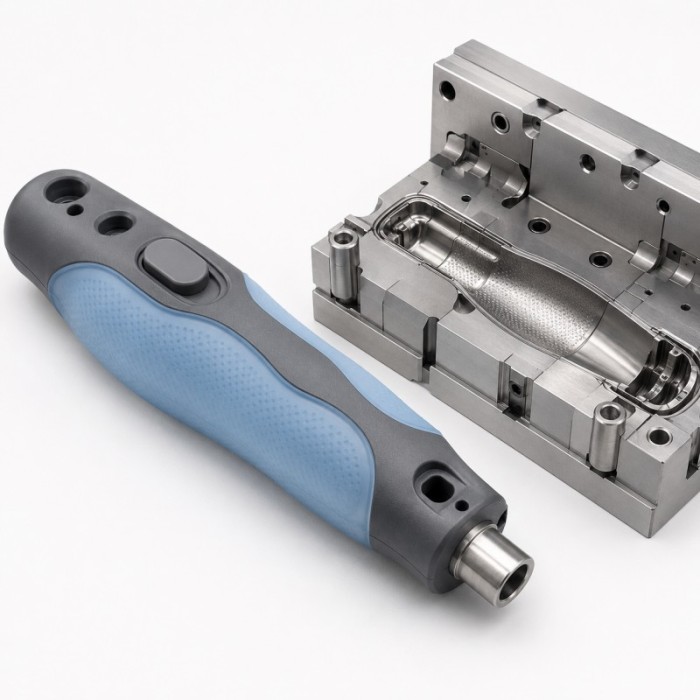
Custom Medical LSR Overmolded Surgical Instrument Handle Grip
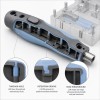
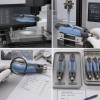
| Share | |
|---|---|
| Categories | Medical Grade Silicone Overmolding |
| Brand | SiliconePlus | Silicone OverMolding Manufacturing |
| Brand | SiliconePlus |
| Product Type | Surgical Instrument Handle Grip |
| Silicone Material | Medical Grade LSR Option |
| Substrate | High-Temperature Engineering Plastic |
| Molding Process | LSR Overmolding / Insert Molding |
| Main Function | Soft Grip / Anti-Slip / Cushioning / Protection |
| Grip Structure | Integrated Silicone Overmold |
| Silicone Hardness | Customized According to Grip Requirements |
| Surface | Smooth / Matte / Custom Anti-Slip Texture |
| Application | Reusable Surgical / Medical Instrument Handle |
| Custom Input | 2D Drawing / 3D File / Physical Sample |
| Service | DFM / Tooling / Sampling / OEM Mass Production |
| Download |  |
Detail Information
Product Overview
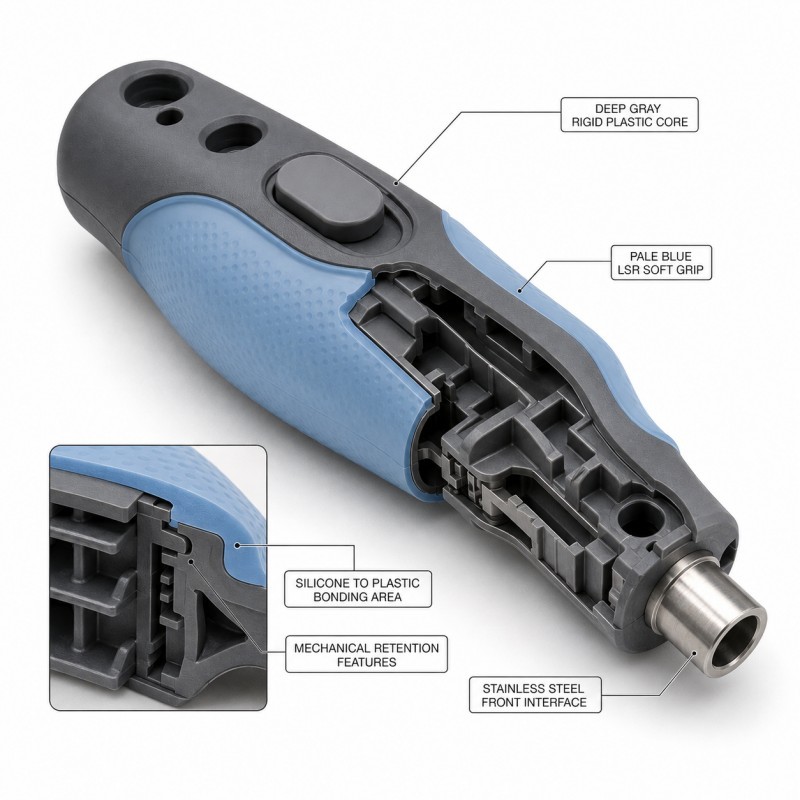
Custom medical LSR overmolded surgical instrument handles combine a rigid engineering-plastic core with a soft silicone gripping surface.
LSR is molded directly onto selected grip areas to provide anti-slip performance, cushioning and a stable soft-touch surface, while buttons, shaft interfaces, holes and assembly areas remain exposed.
SiliconePlus supports DFM review, material evaluation, custom tooling, sampling and OEM mass production through liquid silicone injection molding.
What Is an LSR Overmolded Surgical Instrument Handle?
An LSR overmolded surgical instrument handle combines a rigid plastic handle structure with a flexible silicone grip in one molded component.
Typical functions include:
Soft and anti-slip grip
Improved handling with gloves
Cushioning around rigid edges
Custom grip texture and color
Reduced separate grip components
Stable silicone positioning
The silicone covers only the designed gripping area, while functional interfaces remain exposed.
Why Use LSR Overmolding for Medical Instrument Handles?
Integrated LSR overmolding can improve grip consistency and reduce the need for separately assembled silicone sleeves.
Important design factors include:
Grip thickness
Anti-slip texture
Plastic material
Bonding performance
Cleaning requirements
Functional-area protection
The final structure should be designed according to the complete medical instrument rather than using one standard grip design for every application.
Key Design Requirements Before Tooling
Plastic Substrate Compatibility
The rigid plastic insert must remain dimensionally stable during LSR molding.
Before tooling, review:
Plastic material and grade
Heat resistance
Wall thickness
Warpage
Dimensional tolerance
Bonding compatibility
High-temperature engineering plastics can be evaluated according to the actual instrument and molding process.
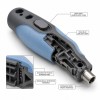
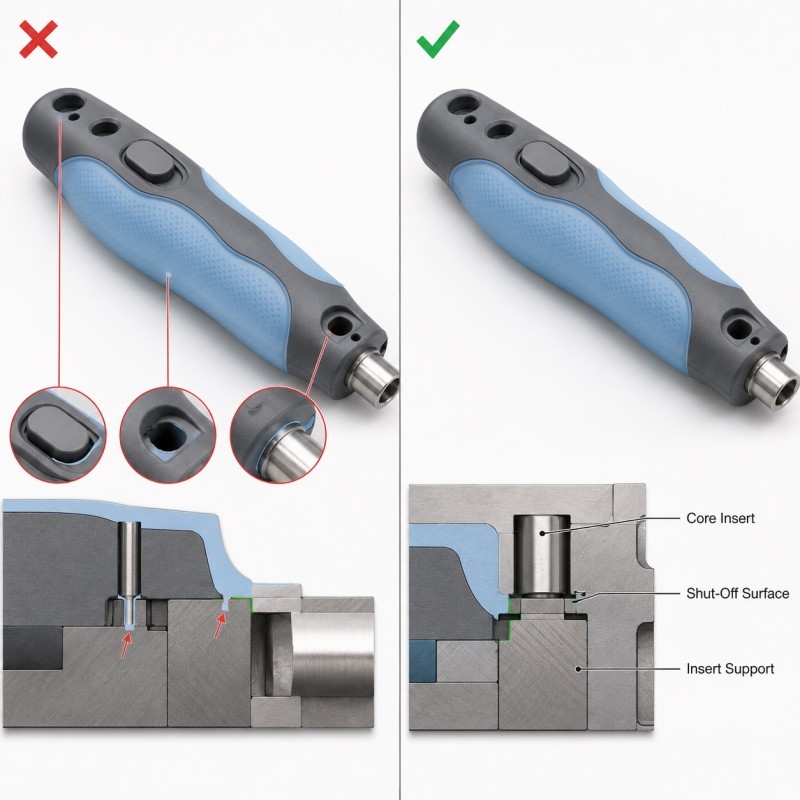
Functional Area Protection
Silicone must not enter functional areas such as:
Shaft interfaces
Buttons
Pivot holes
Screw holes
Locking structures
Assembly datums
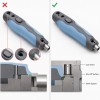
Precision insert positioning and mold shut-off are required to control the silicone boundary and reduce flash.
Grip Geometry and Surface Texture
Grip geometry should balance ergonomics, moldability and cleanability.
Key factors include:
Silicone thickness
Hardness
Grip length
Anti-slip ribs
Surface texture
Edge transition
Parting-line position
Avoid excessively thin silicone and overly deep textures that may increase tearing or cleaning difficulty.
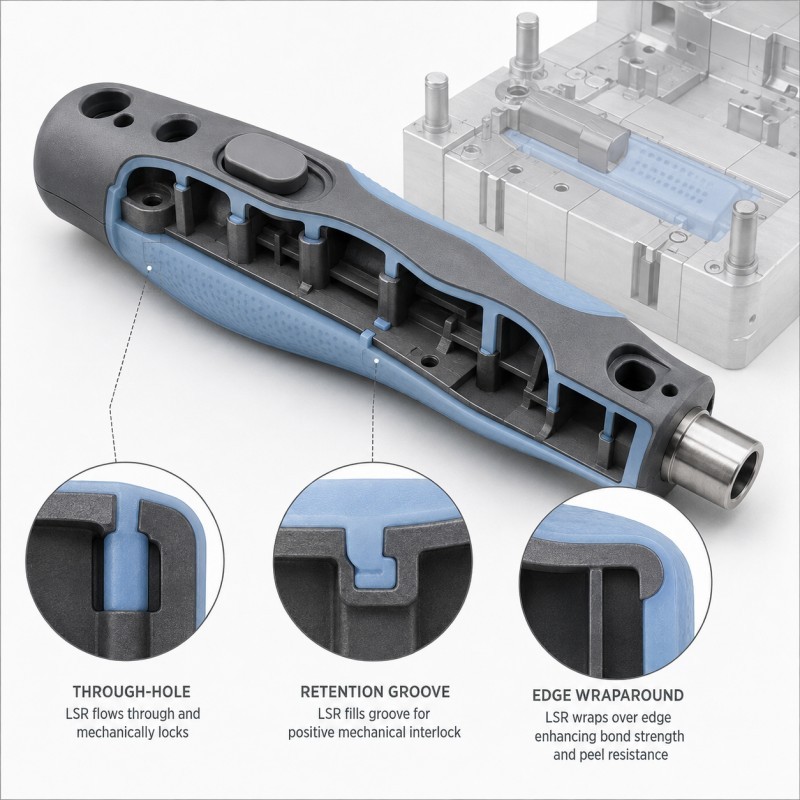
Bonding and Mechanical Retention
Silicone retention can use chemical bonding, mechanical locking or both.
Possible mechanical structures include:
Through-holes
Retention grooves
Undercuts
Edge wraparound
Locking windows
The final retention design depends on the plastic material, grip geometry and required peel or pull resistance.
Cleaning and Reprocessing
For reusable medical instruments, the customer should provide the intended cleaning, disinfection or sterilization conditions.
The selected silicone, plastic substrate and bonding system should be validated under the actual reprocessing environment.
Typical Applications
Custom LSR overmolded handles can be developed for:
Surgical instrument handles
Laparoscopic handpieces
Diagnostic instrument handles
Medical probe handpieces
Dental instrument handles
Reusable medical device grips
Laboratory medical instruments
For broader applications, see our medical grade silicone overmolding solutions.
Customization Options
Available customization includes:
Silicone material
Silicone hardness
Color
Grip coverage
Grip thickness
Surface texture
Anti-slip ribs
Mechanical retention
Bonding area
Functional-area exposure
Mold structure
Dimensional tolerance
All dimensions and materials are developed according to customer drawings or samples.
Quality Inspection and Validation
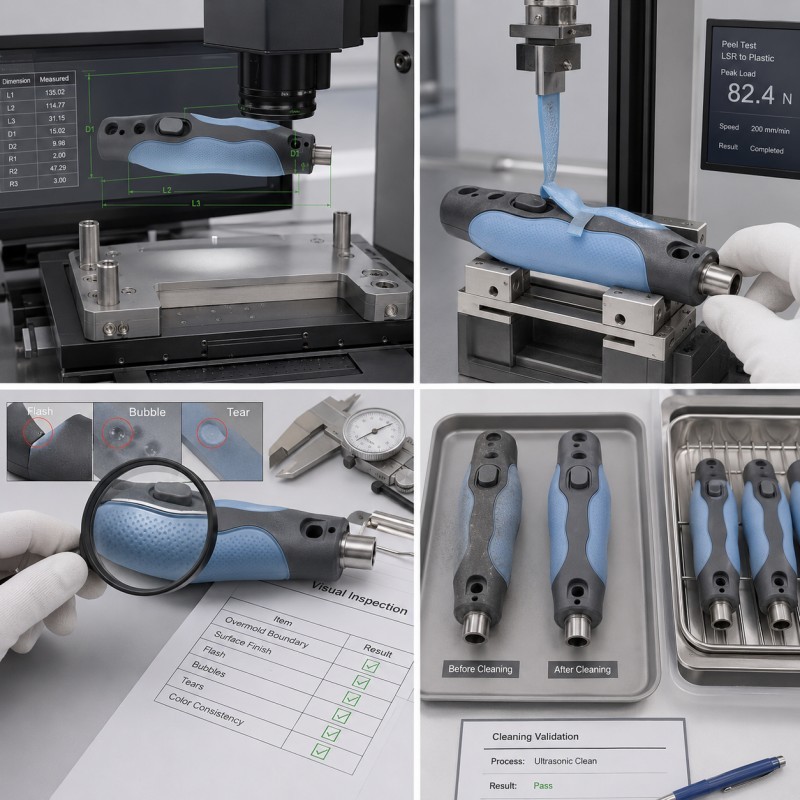
Inspection may include:
Insert-position inspection
Silicone coverage inspection
Dimensional measurement
Flash inspection
Surface inspection
Peel or pull testing
Grip evaluation
Cleaning or sterilization compatibility testing when required
Final validation should follow the actual medical-device requirements.
DFM, Tooling and Production Support
SiliconePlus supports:
2D/3D drawing review
Plastic and silicone evaluation
Grip-area DFM
Mechanical-retention design
Mold development
Prototype sampling
Dimensional inspection
Process optimization
OEM/ODM mass production
Information Required for Quotation
Please provide:
2D drawing
3D file
Plastic handle sample
Plastic material
Silicone coverage area
Required hardness
Surface texture requirement
Cleaning or sterilization condition
Estimated quantity
FAQ
Do you manufacture the complete surgical instrument?
No. We mainly manufacture the custom silicone overmolded grip, sealing and protective component.
Can LSR be molded directly onto a plastic handle?
Yes, if the plastic material, temperature resistance and bonding structure are suitable for LSR overmolding.
Can medical-grade silicone be used?
Yes. Medical-grade LSR options can be evaluated according to the application and required documentation.
Can the grip withstand sterilization?
The material combination must be validated according to the actual cleaning or sterilization method.
Can hardness and grip texture be customized?
Yes. Hardness, thickness, color, ribs and surface texture can be customized.
What is the MOQ?
Mass-production MOQ generally starts from 500 pieces, depending on structure, material and process.
Send Your Surgical Instrument Handle Project
Developing a medical or surgical instrument that requires a custom silicone grip?
Please contact SiliconePlus for a project review and send your drawing, handle sample, material requirements and estimated quantity.
Related Products
Review
- 加载中···
Please send your message to us
- *Phone
- *Title
- *Content

Silicone Empowers Excellence
Contact Person