Cold Plate Silicone Gasket Design: How to Prevent Coolant Leakage in Liquid Cooling Systems?
Title
Title
Title
A cold plate silicone gasket helps prevent coolant leakage by maintaining a continuous and controlled sealing interface between the cold plate body, cover, manifold or other mating structure.
Reliable sealing depends on more than simply selecting a soft silicone material. Engineers need to evaluate gasket geometry, groove dimensions, compression, housing flatness, assembly tolerance, silicone hardness, long-term compression recovery, thermal cycling, coolant exposure and the actual leakage test condition as one complete system.
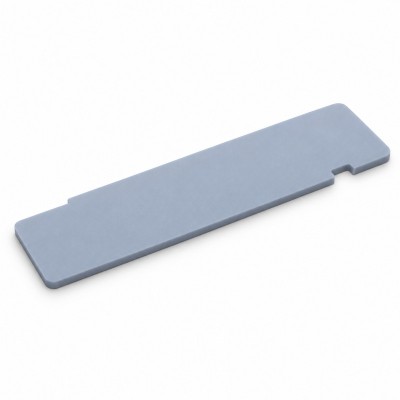
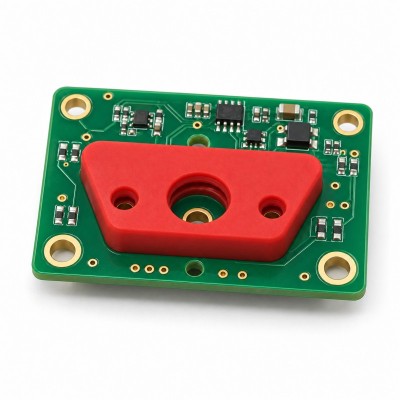
For some liquid cooling structures, silicone can be manufactured as a separate precision molded gasket. Where the substrate and assembly structure are suitable, sealing features may also be integrated onto plastic or metal carriers through LSR overmolding.
Coolant compatibility and final leakage performance should always be validated using the actual coolant, temperature, pressure and assembled cold plate.
Where Is a Silicone Gasket Used in a Liquid Cooling Cold Plate?
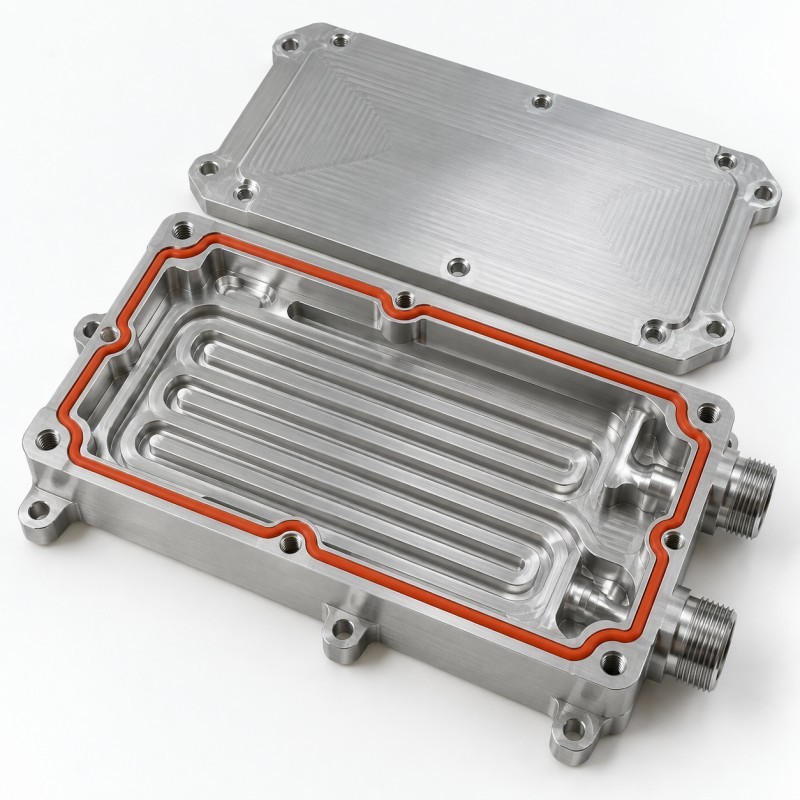
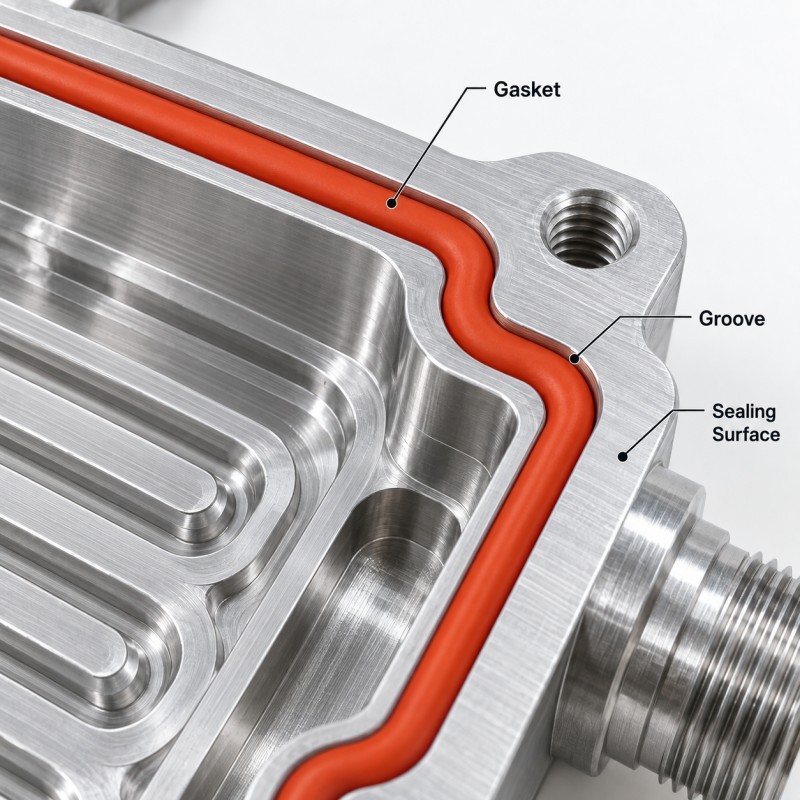
A liquid cooling cold plate contains internal fluid channels that transfer heat through circulating coolant. Wherever the coolant cavity is closed by another structural component, a controlled sealing interface is required.
Depending on the cold plate design, a silicone gasket may be located at:
• The perimeter between the cold plate body and cover
• A machined groove surrounding the internal coolant cavity
• A manifold-to-cold-plate interface
• A removable cover or service interface
• A plastic or metal connector carrier
• A cable or electrical entry area requiring environmental sealing
• A local interface around fittings or inserts
The gasket must form a continuous sealing path around the coolant-containing area.
At the same time, silicone should not interfere with coolant channels, screw holes, locating features, connector openings, thermal-contact surfaces or other functional areas that must remain exposed.
For this reason, sealing coverage should be defined together with the complete assembly before tooling begins.
Why Can a Cold Plate Silicone Gasket Leak?
Coolant leakage is rarely caused by one isolated gasket problem.
In most projects, the actual leak path is influenced by the interaction between the silicone gasket, groove, cold plate body, cover, fasteners, assembly process and manufacturing tolerances.
Typical causes include:
• Insufficient gasket compression
• Excessive gasket compression
• Uneven compression around the perimeter
• Groove dimensional variation
• Cold plate or cover warpage
• Incorrect gasket positioning
• Silicone rolling or pinching during assembly
• Long-term compression set
• Thermal expansion of surrounding components
• Surface contamination
• Coolant compatibility problems
• Poor control of mating-surface dimensions
A gasket can therefore pass an initial assembly test but still develop leakage after thermal cycling, aging or prolonged operation.
1. Gasket Compression Must Stay Inside a Controlled Working Window
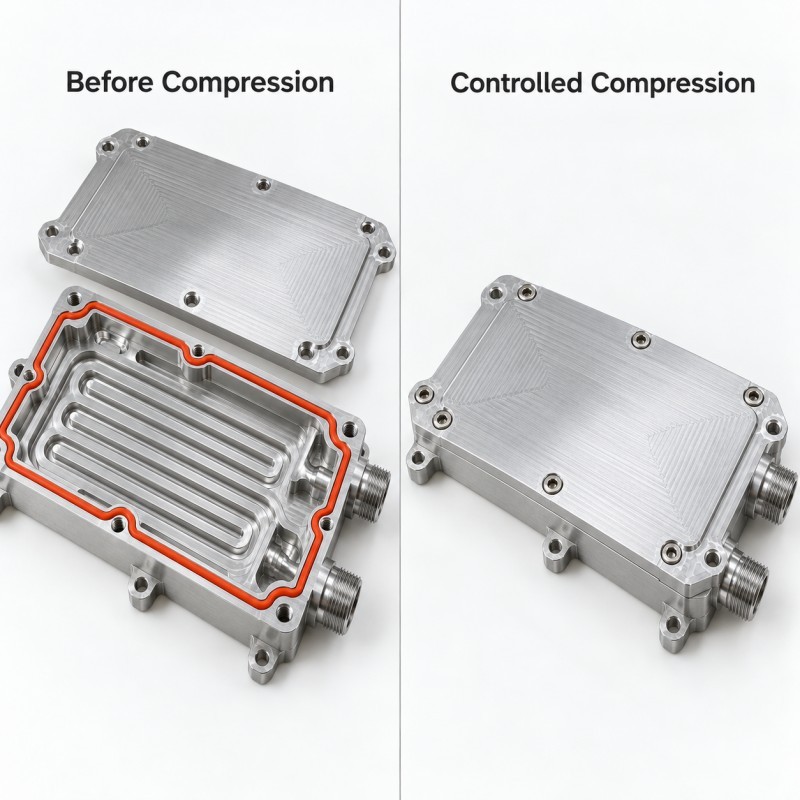
A cold plate gasket must deform enough to create continuous contact with the mating surface. However, more compression does not automatically create a more reliable seal.
If compression is too low, possible problems include:
• Incomplete contact around the sealing perimeter
• Low local sealing pressure
• Leakage at corners
• Greater sensitivity to housing flatness
• Leakage caused by tolerance variation
If compression is too high, the silicone may:
• Flatten excessively
• Roll inside the groove
• Bulge outside the sealing area
• Create excessive assembly force
• Experience high local stress
• Lose recovery after long-term loading
The engineering objective is therefore not maximum compression.
The objective is to create a repeatable compression range that remains acceptable across minimum and maximum part tolerances.
2. Groove Geometry Controls Gasket Position and Deformation
The silicone gasket should not be designed independently from the groove that controls it.
The groove helps to:
• Locate the gasket
• Control lateral movement
• Maintain the intended sealing path
• Provide space for silicone deformation
• Reduce movement during assembly
• Improve repeatability between units
Important groove variables include:
• Groove width
• Groove depth
• Corner radius
• Gasket cross-section
• Available deformation volume
• Distance from coolant channels
• Distance from screw holes
• Mating-surface geometry
• Machining tolerance
A groove that is too narrow can restrict silicone deformation.
A groove that is too wide may provide insufficient positional control and allow the gasket to shift, roll or become pinched.
The groove, gasket and mating structure should therefore be reviewed as one tolerance-controlled sealing system.
3. Corner Geometry Can Become a Local Leakage Risk
Cold plate gaskets commonly follow rectangular, rounded rectangular or irregular perimeter paths.
Corners deserve special attention because the silicone geometry changes direction while still needing to maintain a consistent cross-section and compression condition.
Poorly designed corners may create:
• Local stretching
• Material accumulation
• Uneven gasket width
• Compression variation
• Difficult demolding
• Assembly displacement
• Local sealing-pressure differences
Where possible, smooth and manufacturable corner transitions should be used instead of unnecessarily sharp directional changes.
The goal is to maintain stable sealing geometry through both straight sections and corners.
4. Silicone Hardness Should Be Selected Together With the Seal Structure
There is no single silicone hardness that is correct for every liquid cooling cold plate.
A softer silicone may conform more easily to surface variation, but excessive softness may also allow more movement, deformation or rolling during assembly.
A harder silicone may maintain its geometry more effectively, but it can require higher assembly force and may conform less easily to dimensional variation.
Material selection should therefore consider:
• Gasket geometry
• Compression range
• Groove dimensions
• Required assembly force
• Compression set
• Tear resistance
• Operating temperature
• Coolant exposure
• Surface flatness
• Required service life
Silicone hardness should be approved together with the actual gasket geometry and assembled cold plate rather than from a material sample alone.
5. Long-Term Compression Recovery Matters More Than the First Leak Test
A cold plate may remain assembled and compressed for thousands of operating hours.
The gasket therefore needs to maintain sufficient recovery and contact pressure after long-term loading, not only during the first assembly.
During service, the silicone may experience:
• Continuous compression
• Elevated temperature
• Repeated heating and cooling
• Coolant exposure
• Pressure variation
• Housing movement
• Material aging
A newly assembled gasket may pass the initial leakage test while its sealing condition changes after prolonged compression.
For this reason, initial leak testing and long-term reliability testing should be treated as different validation stages.
6. Coolant Compatibility Must Be Verified With the Actual Fluid
A statement such as “silicone is chemically resistant” is not enough to approve a gasket for direct coolant exposure.
Different liquid cooling systems may use different:
• Coolant chemistries
• Water and glycol ratios
• Corrosion inhibitors
• Additives
• Cleaning fluids
• Temperatures
• Exposure durations
Depending on the actual material and fluid combination, exposure may affect:
• Swelling
• Hardness
• Surface condition
• Mechanical properties
• Compression recovery
• Long-term sealing behavior
Before material approval, the project should define the actual coolant, concentration, operating temperature and expected exposure duration.
If SiliconePlus does not yet have validated compatibility data for the customer's specific coolant, compatibility should be confirmed through material testing rather than assumed from generic silicone properties.
7. Thermal Cycling Can Change Gasket Compression
A liquid cooling cold plate does not remain at one constant temperature.
During equipment operation, startup, shutdown and environmental testing, the cold plate body, cover, screws, connectors and silicone gasket may repeatedly expand and contract.
Because these materials do not necessarily expand by the same amount, temperature changes can affect:
• Gasket compression
• Housing flatness
• Fastener preload
• Sealing contact pressure
• Groove dimensions
• Bonding stress in overmolded structures
A cold plate that passes a room-temperature leak test should therefore not automatically be considered validated for repeated thermal cycling.
The complete assembly should be tested under conditions that represent the real application.
8. Tolerance Stack-Up Determines the Real Compression Condition
The gasket drawing alone does not determine how much silicone will actually be compressed after assembly.
The final condition is affected by the dimensional combination of:
• Cold plate body
• Cover
• Groove
• Gasket height
• Gasket width
• Fastener position
• Machined surface
• Plastic manifold
• Metal insert
• Connector interface
At nominal CAD dimensions, the sealing structure may appear correct.
However, minimum and maximum production tolerances can create very different compression conditions.
DFM should therefore evaluate the worst-case tolerance combinations instead of reviewing only the nominal model.
9. Separate Silicone Gasket or Integrated LSR Overmolded Seal?
Both a separate silicone gasket and an integrated LSR overmolded sealing structure can be suitable for liquid cooling applications.
The correct choice depends on the actual assembly.
A separate precision molded silicone gasket may be suitable when:
• The cold plate already contains a controlled sealing groove
• The gasket must remain replaceable
• Independent gasket inspection is required
• The assembly process can reliably control gasket placement
However, production must prevent missing, twisted, stretched or pinched gaskets.
An LSR overmolded sealing structure may be suitable when a silicone feature needs to be integrated directly with a plastic or metal carrier.
Potential benefits can include:
• Fewer separate sealing components
• More stable sealing-feature positioning
• Reduced manual gasket placement
• Integration of several local sealing functions
• More repeatable assembly geometry
For silicone over plastic, material compatibility, insert warpage, mold shut-off and retention structure must be reviewed.
For silicone over metal, metal material, coating, surface cleanliness, bonding method, mechanical retention, mold shut-off and exposed functional surfaces should be reviewed before tooling.
Seal Approach | Typical Structure | Main Advantage | Main Engineering Risk |
| Separate molded gasket | Silicone gasket inside machined groove | Replaceable and easy to inspect | Misplacement or pinching |
Peripheral cold plate gasket | Continuous seal around coolant cavity | Continuous leakage barrier | Uneven perimeter compression |
| LSR over plastic | Silicone molded onto plastic carrier | Reduced separate assembly | Plastic warpage and shut-off |
| Silicone over metal | Silicone molded onto metal carrier | Integrated rigid-soft structure | Surface preparation and bonding |
| Local connector seal | Silicone around fluid or cable interface | Compact sealing integration | Local tolerance and flash |
10. Parting Line and Flash Should Not Create a Leakage Path
For precision molded silicone gaskets, mold parting lines should be reviewed relative to the real sealing contact area.
Excessive flash, dimensional variation or surface irregularity on a critical sealing surface can affect the contact condition after assembly.
For LSR overmolding, flash control becomes especially important around:
• Coolant ports
• Connector openings
• Screw holes
• Plastic shut-off areas
• Metal interfaces
• Electrical contacts
• Assembly datums
Liquid silicone can enter very small uncontrolled gaps.
Insert dimensions, support, positioning and mold shut-off therefore need to remain stable across production batches.
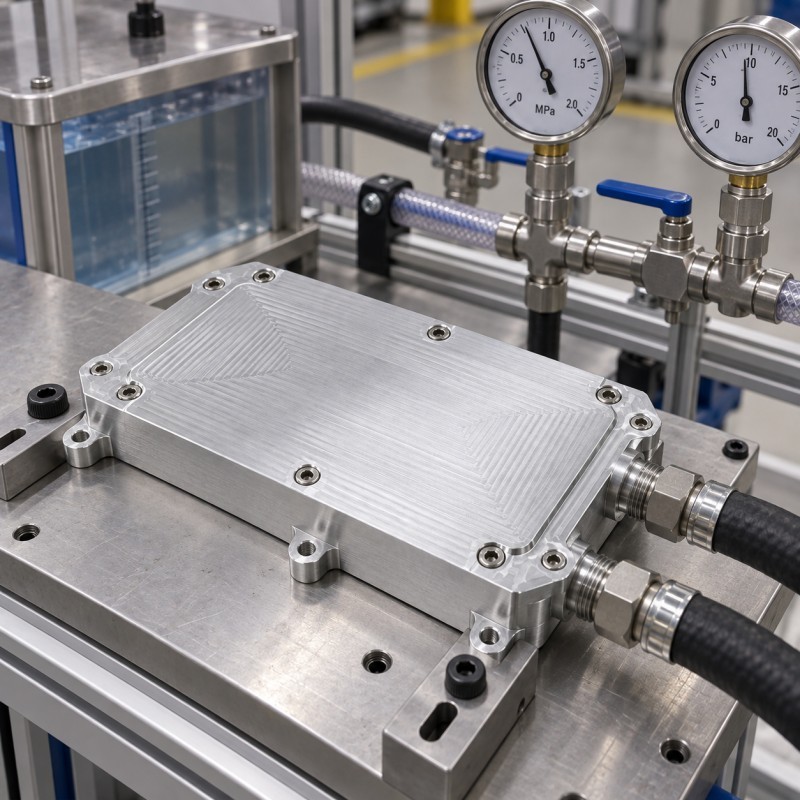
11. How Should a Cold Plate Silicone Gasket Be Validated?
Final validation should reproduce the assembled cold plate condition rather than evaluating only the loose gasket.
A validation plan may include:
1. Dimensional Inspection
Measure critical gasket dimensions such as cross-section, height, width, perimeter and local sealing features.
2. Assembly Inspection
Confirm that the gasket remains positioned correctly and does not twist, roll, pinch or enter the coolant channel.
3. Leakage Testing
Define the actual test medium, pressure, temperature, duration and allowable leakage rate.
4. Thermal Cycling
Test the assembled cold plate through the required temperature cycles and repeat leakage evaluation.
5. Coolant Exposure
Where the gasket directly contacts coolant, evaluate the material using the actual fluid or an approved representative test medium.
6. Aging and Long-Term Compression
Evaluate whether the gasket maintains sufficient recovery after extended loading.
7. Pilot Production
Review multiple production parts rather than approving the design from only one good engineering sample.**
The objective is not to manufacture one cold plate that seals successfully.
The objective is repeatable sealing performance across production.
12. IP67 or IP68 Is Not the Same as a Cold Plate Coolant Leakage Specification
IP67 and IP68 are commonly used when discussing water and dust protection for electronic enclosures.
However, an internal coolant circuit is a different sealing application.
A cold plate may operate with different:
• Internal pressure
• Coolant chemistry
• Temperature
• Pressure cycles
• Test duration
• Allowable leakage rate
For this reason, an IP rating should not automatically be treated as proof that a cold plate coolant seal meets the project's liquid leakage requirement.
The cold plate should have its own defined leak-test specification.
What Should Be Included in the RFQ for a Cold Plate Silicone Gasket?
To evaluate a custom cold plate silicone gasket or LSR integrated seal, the customer should provide as much of the following information as possible:
• 2D drawing
• 3D CAD model
• Cold plate assembly structure
• Gasket groove dimensions
• Silicone coverage area
• Areas that must remain exposed
• Silicone hardness requirement if defined
• Operating temperature
• Coolant type and concentration
• Operating pressure
• Leakage requirement
• Thermal-cycle requirement
• Assembly method
• Fastener locations
• Flatness requirement
• Estimated annual or order quantity
For an overmolded structure, the plastic or metal substrate material should also be defined.
Providing these conditions before tooling allows the engineering team to review sealing feasibility, manufacturing risk and validation requirements earlier.
How SiliconePlus Supports Liquid Cooling Silicone Sealing Projects
SiliconePlus supports custom precision silicone molding and LSR overmolding projects where sealing geometry, substrate integration and manufacturing consistency are important.
For liquid cooling applications, engineering support can include:
• Drawing and DFM review
• Custom silicone gasket development
• Precision silicone molding
• Liquid silicone injection molding
• Silicone over plastic
• Silicone over metal
• Insert positioning review
• Mold shut-off design
• Flash-control evaluation
• Dimensional inspection
• Prototype and sampling support
• Pilot production
• Mass-production support
For every overmolded project, silicone coverage and non-silicone functional areas should be defined before tooling.
Coolant channels, screw holes, locating surfaces, electrical contacts, connector openings and other required functional features should remain correctly exposed.
FAQ
What Is a Cold Plate Silicone Gasket?
A cold plate silicone gasket is a molded silicone sealing component positioned between the cold plate body, cover, manifold or another mating structure. Its purpose is to maintain a controlled sealing boundary around the coolant-containing area.
What Hardness Should a Cold Plate Silicone Gasket Use?
There is no universal Shore hardness for every cold plate. The correct hardness depends on gasket geometry, groove dimensions, compression, assembly force, mating-surface variation, temperature, fluid exposure and long-term sealing requirements.
Can Silicone Directly Contact Liquid Cooling Coolant?
Potentially, but the exact silicone grade should be evaluated against the actual coolant chemistry, concentration, temperature and exposure duration. Compatibility should be validated rather than assumed from general silicone properties.
Is an LSR Overmolded Seal Better Than a Separate Silicone Gasket?
Not automatically. A separate gasket may be appropriate for a controlled cold plate groove, while LSR overmolding can be useful when the sealing feature should be integrated directly with a plastic or metal carrier. The correct approach depends on the actual assembly and manufacturing requirements.
Does IP67 or IP68 Prove That a Cold Plate Will Not Leak Coolant?
No. IP ratings and internal coolant leakage specifications are different validation conditions. Cold plate sealing should be tested using the required fluid, pressure, temperature, duration and allowable leakage criteria for the actual system.
What Files Should I Send for a Custom Cold Plate Silicone Gasket Quote?
Send the 2D drawing, 3D CAD model, cold plate assembly, gasket groove dimensions, silicone requirements, coolant information, operating temperature, pressure, leakage requirement, validation conditions and estimated quantity.
Conclusion
Cold plate silicone gasket performance should be treated as a complete sealing-system engineering problem rather than only a silicone material decision.
Reliable coolant sealing depends on:
• Sealing-path continuity
• Gasket geometry
• Groove dimensions
• Controlled compression
• Silicone hardness
• Long-term recovery
• Coolant compatibility
• Thermal cycling
• Housing flatness
• Tolerance stack-up
• Assembly control
• Validation conditions
A gasket that passes the first leak test is not automatically ready for long-term production.
The sealing structure should be reviewed during DFM, validated using the actual assembled cold plate and confirmed under the operating conditions that matter to the final liquid cooling system.
Where an integrated seal is required, LSR overmolding onto a suitable plastic or metal carrier may also be evaluated to reduce separate assembly and improve sealing-feature positioning.
Developing a Liquid Cooling Silicone Sealing Component?
If you are developing a liquid cooling cold plate, manifold, connector, cable interface or other precision sealing component, send your 2D/3D drawing, substrate material, silicone requirements, coolant information, operating temperature, pressure, leakage specification and estimated quantity to our engineering team.